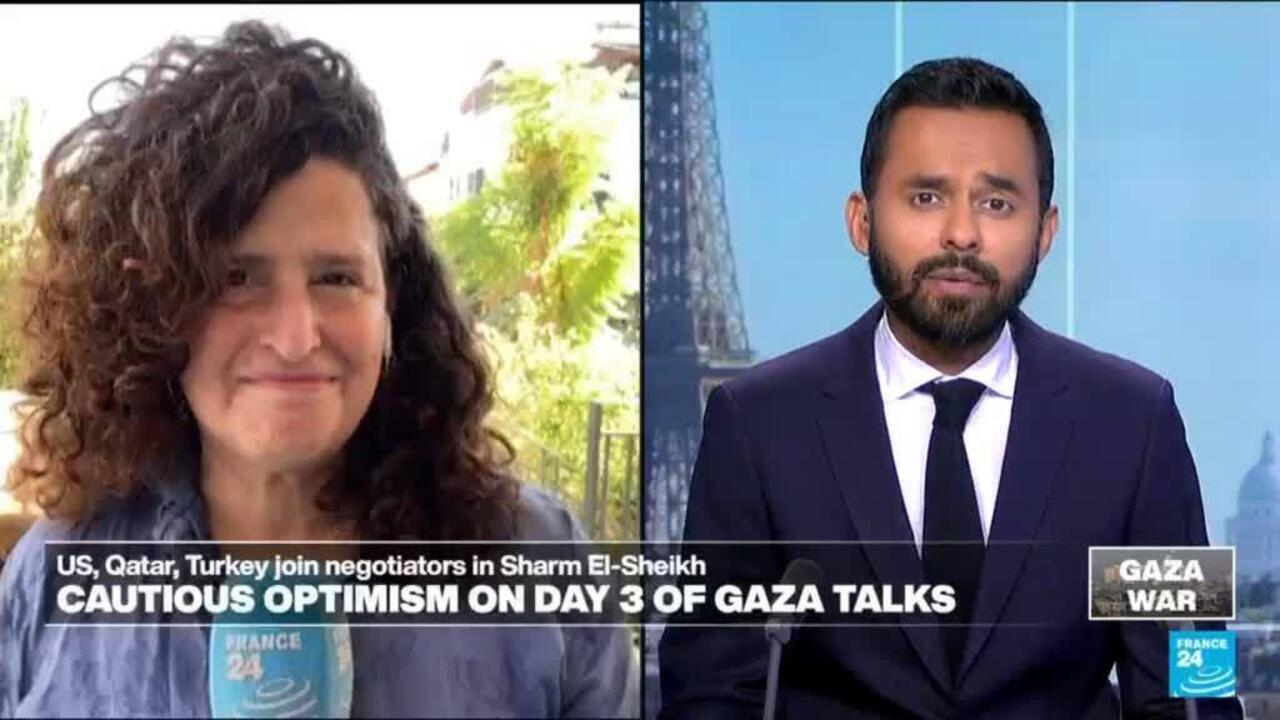
Navigating a Potential Gaza Peace Deal: Egypt’s Role and the Path Forward
Could a lasting resolution to the Gaza conflict be on the horizon? Recent diplomatic efforts, spearheaded by Egypt, are gaining momentum, possibly paving the way for a formal peace agreement. President Abdel fattah El-Sisi has extended a meaningful invitation to U.S. President Donald Trump, requesting his presence in egypt for a potential signing ceremony. This move hinges on the success of ongoing,intensive negotiations currently underway.
Egypt is currently hosting high-level delegations from both Hamas and Israel, demonstrating its central role as a mediator in this complex situation. These talks, which commenced on Monday, aim to forge a path towards conflict resolution, potentially leveraging elements of Trump’s previously proposed peace plan. Understanding the nuances of these negotiations and Egypt’s strategic position is crucial for anyone following the evolving dynamics of the Israeli-Palestinian conflict.
the Current state of Negotiations
The invitation to President Trump signals a renewed push for a comprehensive agreement. It suggests a belief that a high-profile, internationally-backed signing ceremony could solidify any progress made. However, the success of this endeavor is entirely dependent on the outcomes of the current discussions in Cairo.
Several key sticking points remain, including the future status of Gaza, the release of prisoners, and security arrangements. These are all complex issues with deep historical roots. Furthermore, the involvement of external actors, such as the United States and European nations, adds another layer of complexity to the process.
The Paris Ministerial Meeting and Post-Gaza Transition
Alongside the Egyptian-led negotiations, international discussions are also taking shape.U.S. Secretary of State Marco Rubio is scheduled to participate in a ministerial meeting in Paris on Thursday. This gathering will bring together representatives from European,Arab,and other states to discuss the critical issue of post-Gaza transition.
Specifically, the focus will be on planning for the period after a potential ceasefire. This includes addressing humanitarian needs,rebuilding infrastructure,and establishing a lasting framework for governance. The international community recognizes that a lasting peace requires a long-term commitment to supporting the peopel of Gaza. A recent report by the United nations relief and Works Agency (UNRWA) highlights the urgent need for increased funding to address the escalating humanitarian crisis in Gaza,with over 2.2 million people requiring assistance. https://www.unrwa.org/
Egypt’s Pivotal Role in Mediation
egypt has long been a key player in mediating between Israel and Palestinian factions. its geographical proximity, historical ties, and established security relationships make it uniquely positioned to facilitate dialog. You might be wondering why Egypt is so central to these talks.
Here’s a breakdown of Egypt’s advantages:
* Strategic Location: Bordering Gaza, Egypt can exert influence and facilitate communication.
* Established Relationships: Egypt maintains working relationships with both Hamas and Israel.
* Regional Influence: As a leading arab nation, Egypt carries significant weight in regional diplomacy.
* Security Concerns: Egypt has a vested interest in regional stability, particularly regarding border security.
Egypt’s commitment to a two-state solution, based on the 1967 borders, is also a driving force behind its mediation efforts. This aligns with the broader international consensus on resolving the Israeli-Palestinian conflict.
Understanding trump’s Peace plan
The potential incorporation of elements from former President Trump’s peace plan adds another dimension to the negotiations. While the plan faced significant criticism from Palestinian leaders, it did offer a framework for addressing some of the core issues.
Key features of the plan included:
* Recognition of Israel’s sovereignty over Jerusalem.
* Establishment of a future Palestinian state with limited sovereignty.
* Land swaps to accommodate Israeli settlements.
* Economic incentives for Palestinians.
whether these elements will be revisited and adapted in the current negotiations remains to be seen. However, their potential inclusion underscores the need for a thorough understanding of the plan’s provisions.