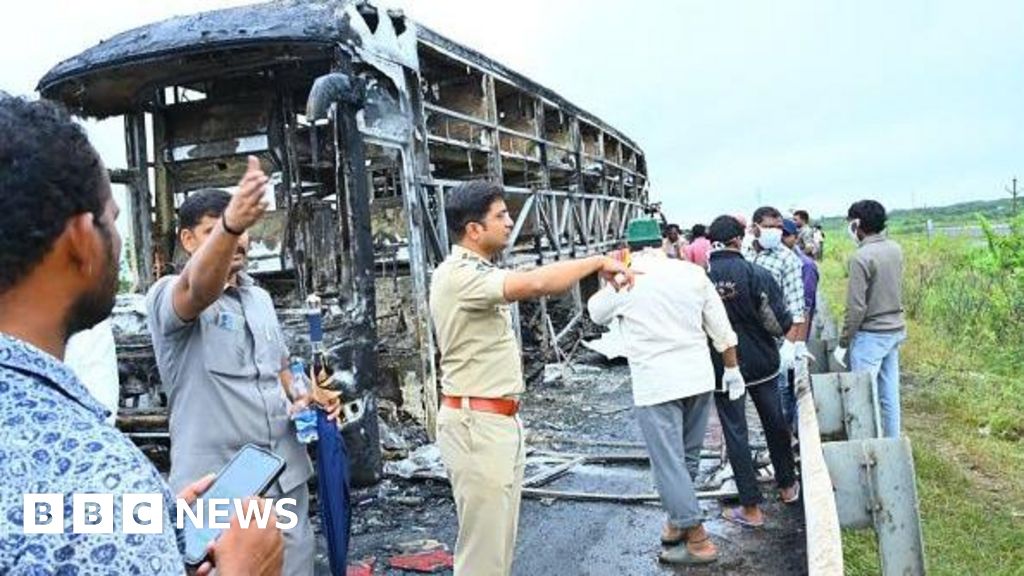
India Bus Fire: How Smartphones & Lithium-Ion Batteries Intensified the Tragedy
The recent bus fire in Andhra Pradesh,India,which claimed the lives of at least 20 people,wasn’t simply a traffic accident. Emerging reports reveal a critical, and increasingly relevant, factor: the notable role smartphones and their lithium-ion batteries played in escalating the disaster. This incident underscores growing concerns about the fire risks associated with thes ubiquitous devices, notably in mass transport scenarios.
But how exactly did phones worsen the situation? And what does this mean for passenger safety moving forward? Let’s delve into the details.
The Incident: A Collision & rapidly Escalating Flames
On Friday, a Bangalore-bound bus collided with a motorcycle, rupturing the bus’s fuel tank. This initial impact sparked an explosion, but the ensuing fire quickly became far more intense than a typical vehicle blaze. Eyewitnesses described a harrowing scene, with passengers desperately attempting to escape as locals rushed to help.
The scale of the tragedy was compounded by the sheer speed at which the fire spread. Forensic investigations have now revealed a key contributor: a large shipment of smartphones onboard.
The Role of Lithium-Ion Batteries: A Fuel for the Fire
The bus was carrying 234 mobile phones, valued at approximately 4.6 million Indian rupees (roughly $52,377 USD). These devices, and crucially, their lithium-ion batteries, significantly exacerbated the fire.
Hear’s why:
* thermal Runaway: Lithium-ion batteries are prone to “thermal runaway” when damaged. This is an uncontrollable self-heating process that can lead to fire and even explosion.
* Chain reaction: Once one battery experiences thermal runaway, it can easily spread to adjacent batteries, creating a cascading effect. This explains the rapid and intense nature of the blaze.
* Challenging to Extinguish: Customary firefighting methods are often ineffective against lithium-ion battery fires, requiring specialized extinguishing agents and techniques.
* Flammable Furnishings: Adding to the danger, flammable materials within the bus itself contributed to the fire’s spread, as noted by Kurnool Superintendent of Police Vikrant Patel. (https://www.cnn.com/)
Furthermore, the bus’s own electrical system – specifically, the batteries powering the air conditioning – also experienced explosions, compounding the problem. As P Venkataraman,Director-General of the Andhra Pradesh Fire Services Department,chillingly described,”We saw bones and ash dropping through the melted sheets.”
India’s Road Safety Crisis & The Growing Lithium-Ion Risk
This tragedy occurs within the context of a broader road safety crisis in India. The country has the highest number of road accident deaths globally. Contributing factors include:
* Overcrowding: Buses are frequently overcrowded, hindering escape efforts.
* Safety Violations: Operators often disregard safety regulations.
* Aging Infrastructure: roads and vehicle maintenance can be inadequate.
The increasing prevalence of lithium-ion batteries in everyday devices – from smartphones and laptops to electric vehicles – adds a new layer of complexity to these existing challenges. The potential for rapid, intense fires demands a re-evaluation of safety protocols. (https://www.worldbank.org/)
What Can Be Done to Mitigate the Risk?
Addressing this emerging threat requires a multi-faceted approach:
* Stricter Regulations: Implement regulations governing the transportation of lithium-ion batteries, particularly in public transport.
* Fire Suppression Systems: Equip buses with advanced fire suppression systems specifically designed to handle lithium-ion battery fires.
* Battery Safety Standards: Enforce rigorous safety standards for the manufacturing and handling of lithium-ion batteries.
* passenger Education: Educate passengers about the risks associated with damaged lithium-ion devices.
* Driver Training: Provide drivers with training on how to respond to fires involving lithium-ion batteries.
* Inquiry & Accountability: Thoroughly investigate the cause of the fire and hold those responsible accountable, including addressing potential negligent driving.
Evergreen Insights: The Future of Lithium-Ion Battery safety
The India bus fire is a stark reminder that the convenience of lithium-ion technology comes with inherent risks. As we become increasingly reliant on these batteries, proactive safety measures are paramount.
Beyond transportation, consider these points:
* Proper Disposal: Incorrectly disposing of lithium-ion batteries can lead to fires in waste facilities. Always recycle them responsibly