Ancient Roman Tomb Unearthed in Bavaria: A Rare Glimpse into Provincial Life
A remarkably well-preserved Roman-era tomb has been discovered during construction work in Wolkertshofen, a village in the southern German state of Bavaria. This unexpected find is generating excitement among archaeologists,offering a unique window into Roman funerary practices and provincial life.
an Unexpected discovery
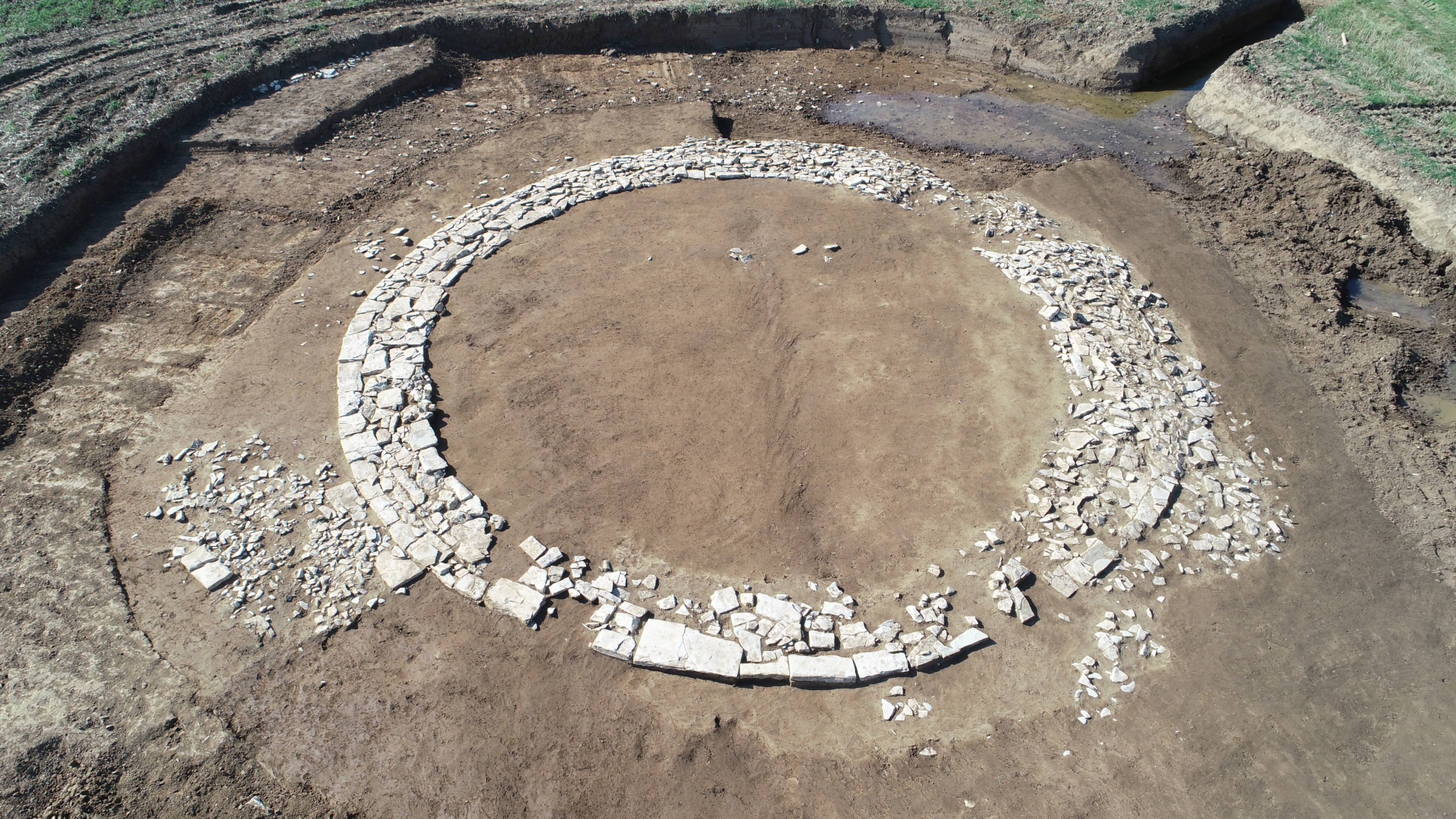
Construction crews initially uncovered fragments of ceramics in the fall of 2024. Further excavation revealed a massive stone foundation measuring 39 feet (12 meters) in diameter. Adjacent to the circular structure, archaeologists found a stone square, likely the former location of a statue or grave marker.
Mathias Pfeil, curator general of the Bavarian state Office for monument preservation, expressed surprise at the discovery. “We hadn’t expected to discover a funerary monument of this age and size here,” he stated.
Why This Find Matters
This tomb’s significance lies in its rarity within Germany. While similar burial mounds exist in Central Europe and Italy,such structures are exceptionally uncommon in this region. Typically, burial mounds discovered in Bavaria date back to much earlier periods.
The tomb’s location next to a roman road further strengthens its connection to the Roman period, specifically the province of Raetia. This strategic placement suggests a purposeful effort to create a visible memorial.
A cenotaph? The Mystery of the Empty Tomb
Interestingly, the tomb was found empty – containing no human remains or grave goods. This, combined with its proximity to both a Roman road and a Roman country estate, leads experts to believe it may be a cenotaph.
What is a cenotaph, you ask? It’s a symbolic tomb erected to commemorate someone buried elsewhere. The family may have wanted a prominent, visible memorial along a major travel route, even if the actual burial took place in another location.
Pfeil explains, “The tumulus [burial mound] was located directly on an critically important Roman traffic route, and the family thus created a widely visible memorial for the deceased.”
What’s Next?
Ongoing research will focus on the tomb itself and the surrounding area. This investigation aims to provide a more comprehensive understanding of Roman life in Bavaria. You can expect further insights into:
* Funerary customs: How Romans honored their dead in this specific province.
* Social structures: The status and wealth of the family who commissioned the tomb.
* Trade and travel: The importance of the Roman road network in the region.
This discovery promises to enrich our knowledge of Roman history and offers a tangible connection to the past. It’s a testament to the enduring power of archaeological finds to illuminate the lives of those who came before us.
Worth a look