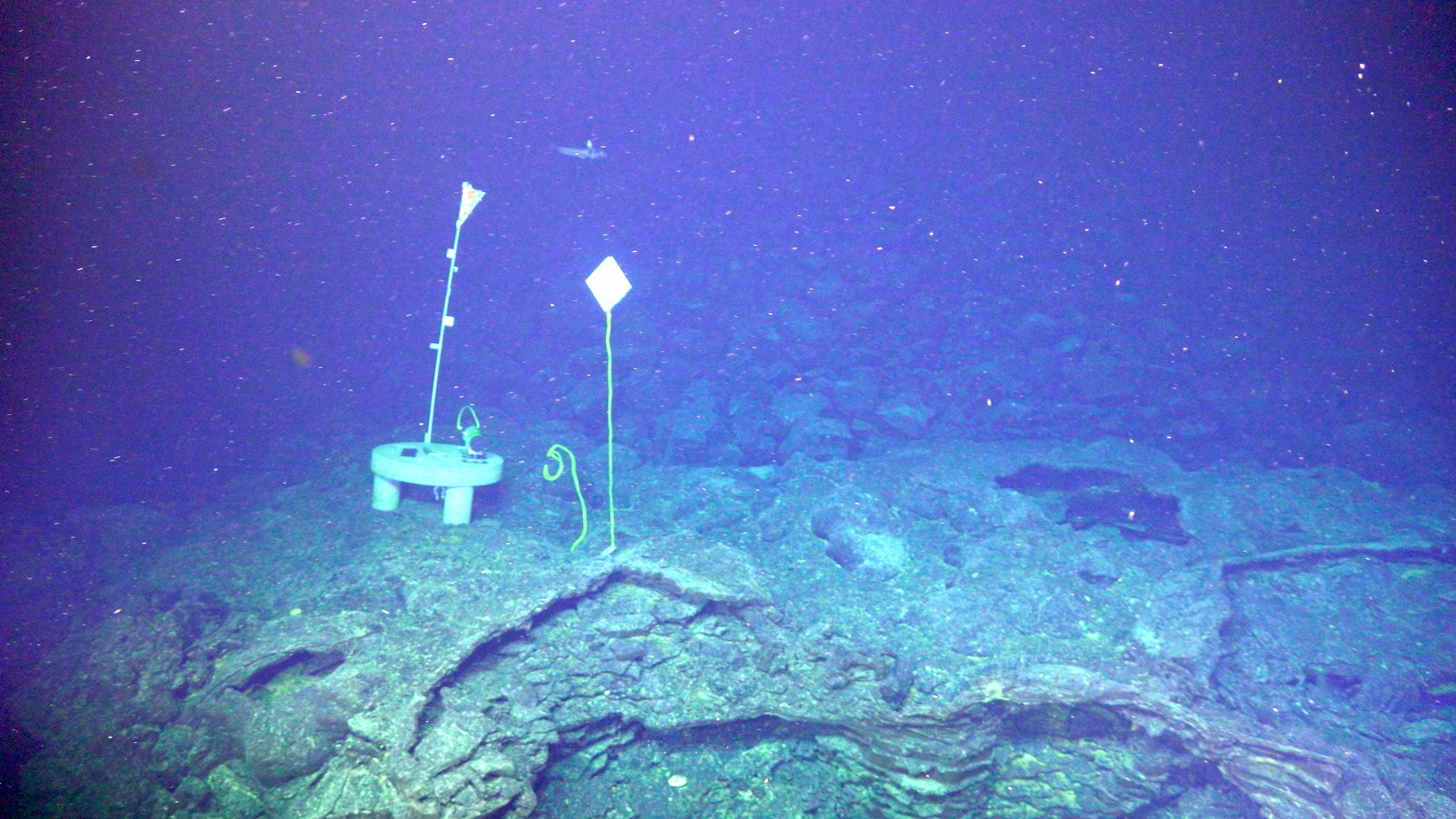
Decoding the Signals: Predicting eruptions at axial Seamount
Underwater volcanoes pose unique challenges for eruption prediction. However, scientists are making significant strides in understanding the subtle signals these seamounts send before blowing their tops. Axial Seamount, a major volcano on the Juan de Fuca Ridge off the coast of Oregon and Washington, is at the forefront of this research.
The Language of Inflation
One key indicator of impending activity is ground inflation – the swelling of the seafloor as magma accumulates beneath the surface. You might wonder, how does this work? Essentially, rising magma pushes against the surrounding rock, causing it to bulge upwards.
Observations reveal a fascinating pattern at Axial Seamount: the amount of inflation needed to trigger an eruption appears to be increasing with each successive event. This suggests that as magma repeatedly rises and solidifies, it compresses the surrounding crust. Consequently, more pressure is required to initiate another eruption in the same location.
However, this increase isn’t limitless. The spreading of the Juan de Fuca Ridge itself releases stress on the crust, preventing inflation thresholds from climbing indefinitely.
The Challenge of Forecasting
Predicting exactly when an eruption will occur remains a complex undertaking. Inflation rates and the specific thresholds are inherently unpredictable. Current forecasting relies heavily on recognizing patterns from past monitoring data and extrapolating those into the future.
It’s a bit like reading tea leaves, but with sophisticated instruments! While helpful, this approach is still largely based on educated speculation.
A New Era of Prediction: Physics-Based Modeling
Fortunately, a new generation of models is poised to revolutionize eruption forecasting.These aren’t simply pattern-recognition tools; they’re built on a foundation of physics,simulating the complex processes happening beneath the seafloor.
One such model, developed by a team of researchers, has already demonstrated remarkable accuracy in retroactively predicting past eruptions at Axial Seamount. It leverages historical monitoring data to reconstruct the conditions leading up to previous events.
real-Time Testing Underway
Starting this November, this advanced model is being put to the ultimate test. Researchers are now analyzing real-time data streaming from Axial Seamount, attempting to predict it’s next eruption.
The results will be kept confidential until after the event occurs. this ensures an unbiased assessment of the model’s success or failure. Only by waiting for the eruption can the true predictive power of this new approach be validated.
what This Means for You
Understanding the behavior of underwater volcanoes like Axial Seamount is crucial for several reasons:
* Hazard assessment: While Axial Seamount is far offshore, eruptions can still impact submarine infrastructure and perhaps generate distant tsunamis.
* Scientific advancement: Studying these systems provides valuable insights into the basic processes driving volcanism on Earth and beyond.
* Improved Monitoring: The development of more accurate prediction models will enhance our ability to monitor and respond to volcanic activity globally.
The ongoing research at Axial Seamount represents a significant leap forward in our ability to anticipate and understand the dynamic forces shaping our planet. It’s a testament to the power of scientific innovation and a crucial step towards mitigating the risks associated with underwater volcanoes.
Keep reading