The Evolving Image of Edmontosaurus: What new Discoveries Reveal About This Elephant-Sized Dinosaur
Have you ever wondered what dinosaurs really looked like? For decades, our understanding of these prehistoric giants has been shaped by artistic interpretations and fossil evidence. But thanks to groundbreaking advancements in imaging technology, the picture is becoming remarkably clearer – and sometimes, surprisingly different. The recent re-evaluation of Edmontosaurus, a large herbivorous dinosaur from the Late Cretaceous period, is a prime example. Prepare to have your perceptions challenged as we delve into the latest discoveries that are reshaping our understanding of this “delicate elephant,” as paleontologist Paul Sereno describes it.
From Artistic License to Scientific Precision
For years, depictions of Edmontosaurus varied. Charles R. Knight’s early 20th-century illustrations showcased a prominent fleshy crest running along the dinosaur’s back. later, paleontologist Jack horner proposed a spikier version, envisioning a row of spines instead of a smooth crest. which depiction was closer to reality?
The answer, it turns out, is both. And neither.
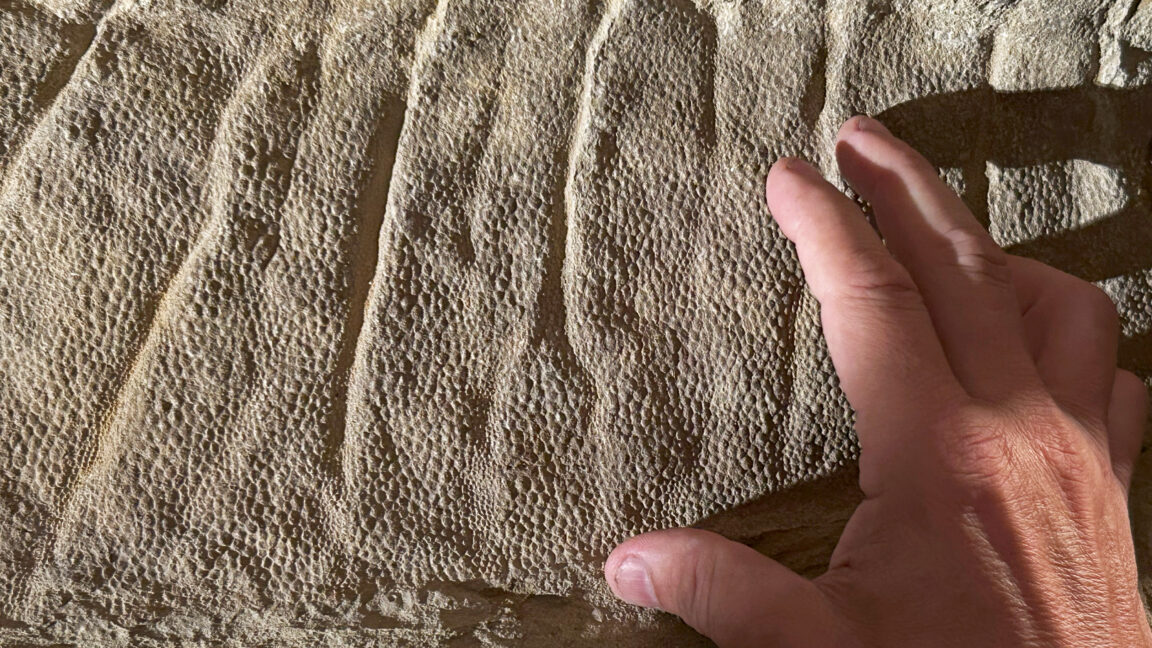
Recent analysis of exceptionally well-preserved Edmontosaurus mummies – fossils retaining impressions of skin and soft tissues – has revealed a fascinating combination of features. Sereno’s team utilized cutting-edge techniques like CT scans, X-rays, and photogrammetry to reconstruct the dinosaur’s appearance with unprecedented detail. these technologies, largely unavailable even a decade ago, have allowed scientists to ”wrap” a detailed skin model around the skeletal structure, resulting in a dramatically updated image of Edmontosaurus.
Unveiling the details: Crest, Spikes, and Surprisingly Small Scales
The new research confirms Knight was partially correct about the crest.It did originate at the top of the head and extend backward along the spine. However, the crest transitioned into a row of spines, aligning with Horner’s vision. These spines weren’t random; each one corresponded directly to a vertebra, much like the spines found on modern chameleons.
But the surprises didn’t stop there. The team discovered that Edmontosaurus possessed remarkably small scales, ranging from just 1 to 4 millimeters in diameter. even towards the tail, they rarely exceeded 1 centimeter.
“You can find such scales on a lizard,and we’re talking about an animal the size of an elephant,” Sereno explains,highlighting the unexpected delicacy of this massive creature’s skin. The skin itself was also incredibly thin, evidenced by the wrinkles observed in the imaging data.
The Biggest Revelation: Edmontosaurus Had Hooves!
Perhaps the most astonishing discovery was the presence of hooves. Forget the clawed feet frequently enough associated with dinosaurs. Edmontosaurus sported structures remarkably similar to those found in modern mammals.
Here’s a breakdown of the hoof structure:
* Forelegs: featured a single, central hoof with a “frog” – a triangular, rubbery pad – underneath. This closely resembles the hooves of horses.
* Hindlegs: Supported the majority of the animal’s weight and had three wedge-shaped hooves surrounding three digits, plus a fleshy heel, mirroring the feet of modern rhinoceroses.
“They looked very much like equine hooves, so apparently these were not invented by mammals,” Sereno states. “Dinosaurs had them.” This finding fundamentally challenges our understanding of the evolution of hoofed animals.
What Does This Mean for our Understanding of Dinosaurs?
The updated image of Edmontosaurus isn’t just about correcting past artistic interpretations. It’s a testament to the power of modern technology in paleontology. It demonstrates that:
* Dinosaurs were far more complex and nuanced in their appearance than previously imagined.
* Features we once thought were unique to mammals – like hooves – actually evolved independently in dinosaurs.
* Continued research and technological advancements will undoubtedly reveal even more surprising details about these fascinating creatures.
Evergreen section: The Future of Paleontological Discovery
the story of Edmontosaurus is a microcosm of the broader revolution happening in paleontology. We are moving beyond simply finding bones to reconstructing entire ecosystems and understanding the intricate details of dinosaur biology. Expect to see even more incredible discoveries in the coming years as researchers continue to apply advanced imaging techniques, genomic analysis, and biomechanical modeling to unlock the secrets of the past. The field is poised for a golden age of discovery, and the