Chimpanzees Demonstrate Rational Thinking: A New Understanding of Cognitive Evolution
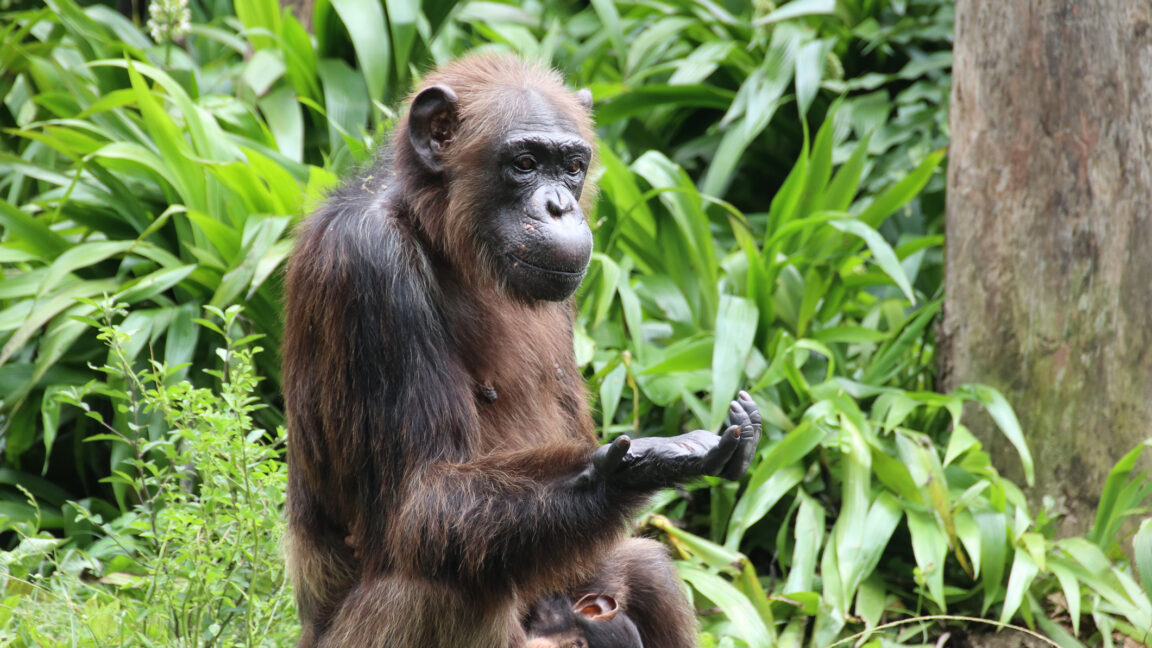
For decades, rationality has been considered a uniquely human trait. However, groundbreaking research published in Science (DOI: 10.1126/science.aeb7565) is challenging that assumption. A team led by researcher Johannes Engelmann has demonstrated that chimpanzees exhibit a remarkable capacity for rational thought, specifically the ability to revise their beliefs in the face of new evidence – a skill known as defeater reasoning. This discovery isn’t just about chimpanzees; it offers profound insights into the evolution of rationality itself and where humans fit within the broader cognitive landscape of the animal kingdom.
The Experiment: How Chimps Outsmarted the puzzle
Engelmann’s team designed a series of experiments centered around a simple choice: two containers, one holding a desirable food reward (peanuts) and the other empty. The chimps were initially presented with auditory cues – a rattling sound emanating from one container. This sound suggested the presence of peanuts. Concurrently, they received indirect visual evidence: a trail of peanuts leading towards the other container.
Interestingly, the chimpanzees consistently chose the container associated with the auditory cue first. This suggests they initially prioritized sound as a stronger indicator of reward. However, the crucial part of the experiment came next. Researchers removed a rock from the first container, revealing the rattling wasn’t caused by peanuts, but by the rock itself.
“At this point, a rational agent should conclude, ‘The evidence I followed is now defeated and I should go for the other option,'” explains engelmann. And remarkably,that’s precisely what the chimpanzees did. They switched their choice to the container indicated by the peanut trail.
Beyond Chance: The Statistical Significance of Chimpanzee Rationality
The study involved 20 chimpanzees across five experiments. The results were compelling: the chimpanzees followed the evidence and adjusted their choices based on new information in approximately 80% of cases. ”At the individual level, about 18 out of 20 chimpanzees followed this expected pattern,” Engelmann reports, highlighting the consistency of this behavior. This isn’t simply random guessing; it’s a statistically significant exhibition of rational decision-making.
Levels of Rationality: From Rudimentary to Reflective
Engelmann’s research suggests that rationality isn’t an all-or-nothing phenomenon. Rather, it exists on a spectrum. The initial experiments demonstrated a “rudimentary” form of rationality – the ability to follow evidence. However, later, more complex experiments revealed a “reflective rationality,” requiring the chimps to consider why their initial belief was incorrect.
“Experiments four and five are quite arduous and show a more advanced form of reflective rationality I expect only chimps and maybe bonobos to have,” Engelmann notes. This suggests a cognitive sophistication previously underestimated in our closest primate relatives.
Where Do Humans Fit In? Social Rationality and Beyond
While chimpanzees demonstrate notable rational capabilities, Engelmann believes humans possess an even higher level of cognitive function: “social rationality.” This refers to our unique ability to discuss, debate, and critique each other’s reasoning, leading to collective improvements in rational thought.
however, this social aspect isn’t always beneficial. Human interactions can also introduce biases and irrationality. Intriguingly, chimpanzees don’t seem to suffer from this same vulnerability. Engelmann’s team is currently investigating whether chimpanzees are influenced by the choices of others, and initial findings are revealing.
“The chimps only followed the other chimp’s decision when the other chimp had better evidence,” Engelmann says. “In this sense, chimps seem to be more rational than humans.” This observation raises fascinating questions about the complexities of social cognition and the potential downsides of our advanced social structures.
Implications for Understanding Cognitive Evolution
This research represents a crucial step in unraveling the evolutionary history of rationality. By studying the cognitive abilities of chimpanzees, we can begin to understand when and how the first sparks of rational thought emerged in the animal kingdom. It challenges the notion that rationality is a uniquely human invention and suggests it evolved gradually, with different species exhibiting varying degrees of cognitive sophistication.
evergreen Insights: the Ongoing Quest to Understand animal Cognition
The study of animal cognition is a rapidly evolving field. Researchers are continually discovering new evidence of complex thought processes in a wide range of species, from
Keep reading