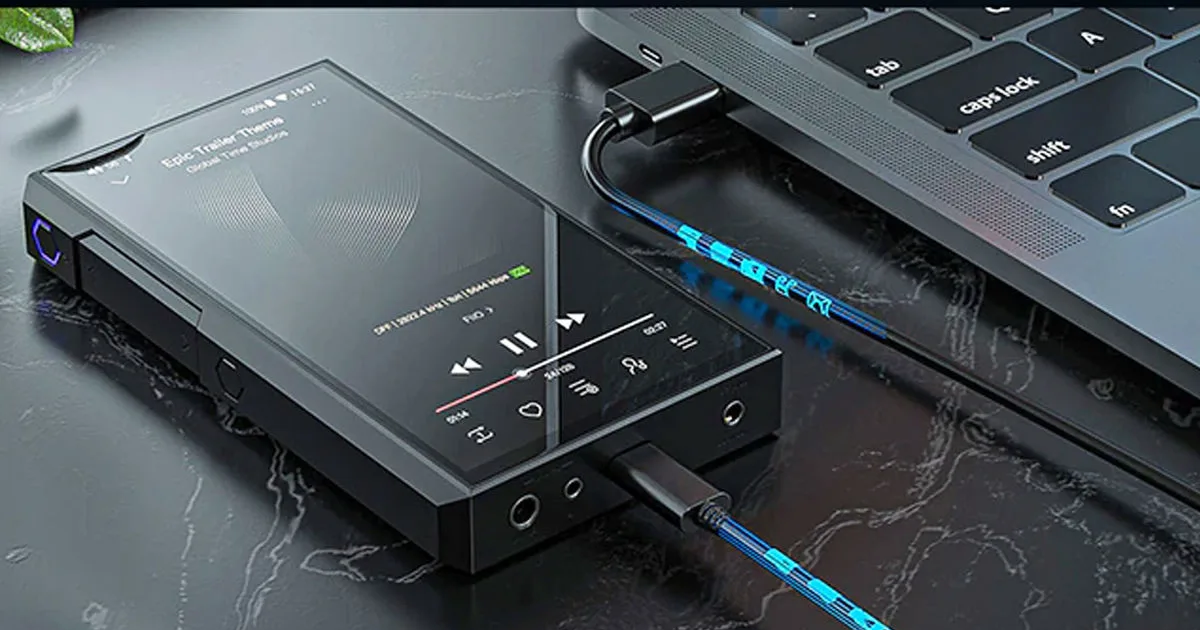
The high-end portable audio market has shifted following price reductions on flagship hardware, bringing desktop-class amplification into a more accessible bracket. The FiiO M17 portable digital audio player, which originally launched at a standard retail price above its current thresholds, is now frequently found below the 1,000-euro mark across major European electronics retailers and specialized high-fidelity audio shops. According to audio equipment market tracking, this adjustment positions the substantial media player more competitively against dedicated desktop components for consumers seeking uncompromising headphone drive capabilities without a permanent stationary setup.
Designed primarily for stationary or semi-portable listening rather than daily mobile commuting, the device weighs approximately 700 grams and integrates a desktop-grade Digital-to-Analog Converter (DAC) alongside a robust headphone amplifier architecture. Audio industry analysts note that units of this caliber are engineered specifically to power high-impedance planar magnetic and multi-driver dynamic headphones that normally require plugged-in desktop stacks. By dropping below four figures, the hardware appeals directly to audiophiles who want laboratory-grade signal processing that can move between rooms or home offices easily.
At its core, the audio subsystem utilizes dual ES9038PRO DAC chips—one for each channel—alongside THX AAA-788+ amplifier modules. FiiO designed the hardware architecture to run on a dual power supply system, allowing users to switch between standard battery power and a dedicated DC desktop power mode. When connected to external wall power via the included adapter, the unit unlocks its enhanced desktop output mode, driving demanding loads with significantly higher voltage swings than typical portable players can sustain on battery alone.
Hardware Architecture and Desktop Integration
Evaluating the physical footprint of the M17 reveals why it diverges sharply from pocket-sized streaming devices like typical smartphones or compact digital audio players. Measuring significantly larger and heavier than standard mobile phones, the chassis accommodates an array of physical connections that mirror high-end desktop preamplifiers. Users find standard 3.5mm and 6.35mm single-ended headphone jacks alongside balanced 2.5mm and 4.4mm outputs, plus coaxial input and output ports as well as dual USB Type-C connections for data transfer and power delivery.
Running on an open Android operating system powered by a Qualcomm Snapdragon 660 processor paired with 4GB of RAM, the hardware supports high-resolution local file playback as well as third-party streaming applications like Qobuz, Tidal, and Spotify. However, industry reviewers consistently emphasize that standard lossy streaming services underutilize the player’s native decoding capabilities. The system supports full MQA unfolding and PCM decoding up to 32-bit/768kHz alongside native DSD512 support, making local FLAC and DSD libraries the ideal medium for testing its acoustic limits.
Thermal management plays a crucial role in maintaining performance during sustained high-gain playback sessions. The aluminum chassis incorporates custom-machined heat dissipation fins and a concealed copper cooling plate to manage internal temperatures generated by the dual DACs and high-current amplifier circuits. This engineering approach prevents thermal throttling during extended listening periods when the device operates in its highest desktop gain setting.
Market Positioning and Competitive Landscape
The price correction below 1,000 euros alters the competitive dynamics within the high-resolution portable audio segment. Competitors in this tier include flagship offerings from brands like Astell & Kern and Hiby, many of which command higher price points while offering varying trade-offs in sheer output power versus battery efficiency. While lighter competitors prioritize pocketability and battery longevity, FiiO concentrated engineering resources on raw amplification muscle and versatile connectivity options.
For consumers weighing an investment in high-end personal audio gear, the decision often rests on listening habits. Portable audio specialists point out that users who primarily listen through sensitive in-ear monitors (IEMs) may find the M17’s output overly powerful, occasionally introducing a low noise floor with ultra-sensitive transducers. Conversely, owners of power-hungry full-size headphones benefit immediately from the clean headroom and dynamic authority delivered by the dual THX amplifier topology.
Retail availability at the reduced price point varies by region, with authorized dealers updating inventory listings as part of standard product lifecycle management. Prospective buyers should verify whether units include the mandatory desktop cooling stand and external power supply, as these accessories are required to access the device’s peak operational modes.
Technical Specifications and Connectivity Options
- DAC Chipset: Dual ESS Sabre ES9038PRO (one per channel)
- Amplification: Dual THX AAA-788+ modules
- Operating System: Customized Android 10 with Global Bypass Audio (DROPS)
- Processor & Memory: Qualcomm Snapdragon 660, 4GB RAM, 64GB internal storage (expandable via microSD up to 2TB)
- Headphone Outputs: 3.5mm and 6.35mm single-ended; 2.5mm and 4.4mm balanced
- Power Modes: Battery power, standard USB power, and Enhanced Over-Ear DC Desktop Power Mode
As audio manufacturers prepare new firmware updates and hardware revisions for upcoming industry trade shows, consumers monitoring high-fidelity gear can track official announcements directly through FiiO’s corporate channels and authorized dealer networks. Industry analysts expect further price adjustments across the premium portable audio category as manufacturers refresh their flagship lineups throughout the fiscal year.
Keep reading