Global Momentum Builds Towards Cervical Cancer Elimination: A Year of Notable Progress
Cervical cancer remains a significant global health challenge, yet a wave of enterprising national initiatives and international collaborations is rapidly shifting the landscape. The past year has witnessed remarkable progress in expanding access to HPV vaccination, screening, and treatment – cornerstones of the World Health Association’s (WHO) Global Strategy to eliminate this preventable disease. This momentum,solidified by the recent establishment of World Cervical Cancer Elimination Day,provides a powerful foundation for sustained action and ultimately,a future free from cervical cancer.
The 90-70-90 Targets: A Roadmap for Success
The WHO’s Global Strategy centers around achieving three ambitious, yet attainable, targets by 2030:
* 90% HPV vaccination coverage: Ensuring 90% of girls are vaccinated against HPV before age 15.
* 70% screening coverage: Providing high-quality screening for 70% of women aged 35-45.
* 90% treatment coverage: Treating 90% of women identified with cervical disease.
Recent country-level actions demonstrate a clear commitment to reaching these goals, signaling a turning point in the fight against cervical cancer.
National Initiatives Driving Change
Across the globe, nations are implementing innovative and impactful programs. here’s a snapshot of recent developments:
* Angola: Launched a nationwide HPV vaccination campaign in October, targeting girls aged 9-12, a crucial step in building long-term immunity.
* China: Integrated HPV vaccine into its national immunization program, extending protection to all 13-year-old girls – a significant public health achievement.
* Cuba: Preparing for a complete HPV vaccination rollout in October 2025, targeting all girls in Grade 4, demonstrating a proactive approach to prevention.
* Ghana: Aimed to reach 2.4 million girls aged 9-14 through a nationwide vaccination campaign in October 2025, showcasing a commitment to large-scale impact.
* Indonesia: Reaffirmed its dedication to elimination by 2030 through its robust National Cervical Cancer Elimination Plan 2023-2030. This plan emphasizes a holistic approach, encompassing vaccination, screening, and treatment, supported by strong partnerships and substantial investment. Link to Plan
* Nepal: Introduced the HPV vaccine into its national immunization schedule in February 2025, marking a significant expansion of preventative care.
* Nigeria: Demonstrated strong leadership with the launch of a national elimination effort,bolstered by a US$700,000 investment from the First Lady’s ‘renewed Hope Initiative’. Nigeria’s co-leadership in establishing World Cervical Cancer Elimination Day further underscores its commitment.
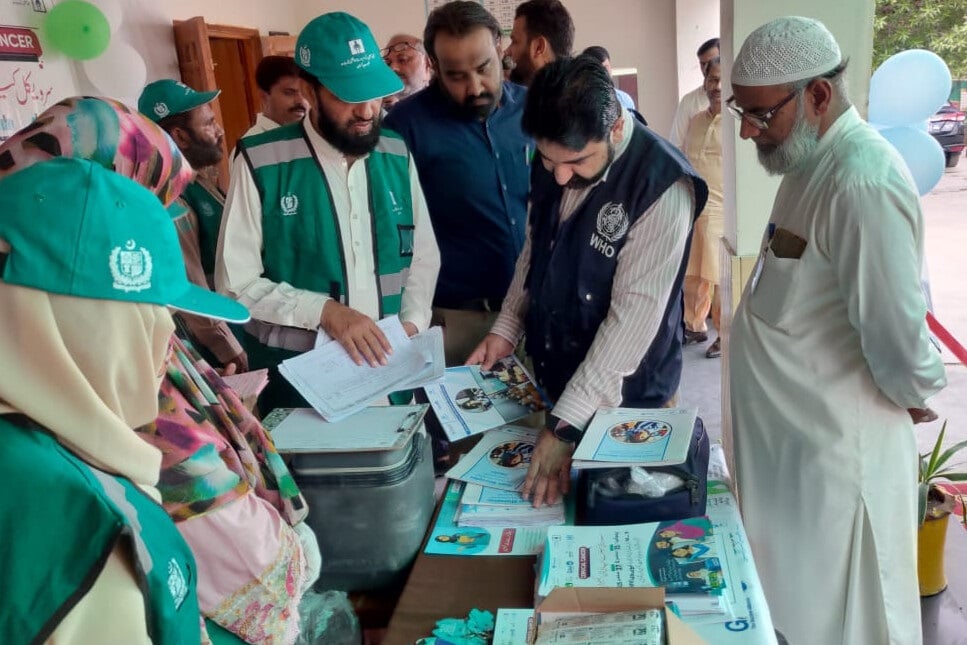
* Pakistan: Achieved a historic milestone with the largest single HPV vaccination campaign to date, reaching over 9 million girls aged 9-14. This demonstrates the potential for rapid progress through focused, large-scale initiatives.
* rwanda: Is accelerating towards elimination with Mission 2027, an ambitious plan to meet the 90-70-90 targets three years ahead of the global deadline. This proactive approach highlights the power of accelerated action. Link to Plan
* Spain: Is contributing to global efforts through a three-year investment via the Spanish Agency for International Development Cooperation (AECID), strengthening access to HPV vaccination, screening, and treatment in the WHO African and Eastern mediterranean Regions.
* South Africa: championed cervical cancer elimination on the G20 health agenda and is finalizing its National Strategic Framework, solidifying its commitment to the WHO Global strategy.
* Tajikistan: Integrated HPV vaccination into its routine immunization schedule for girls aged 10-14, starting in October
Related reading