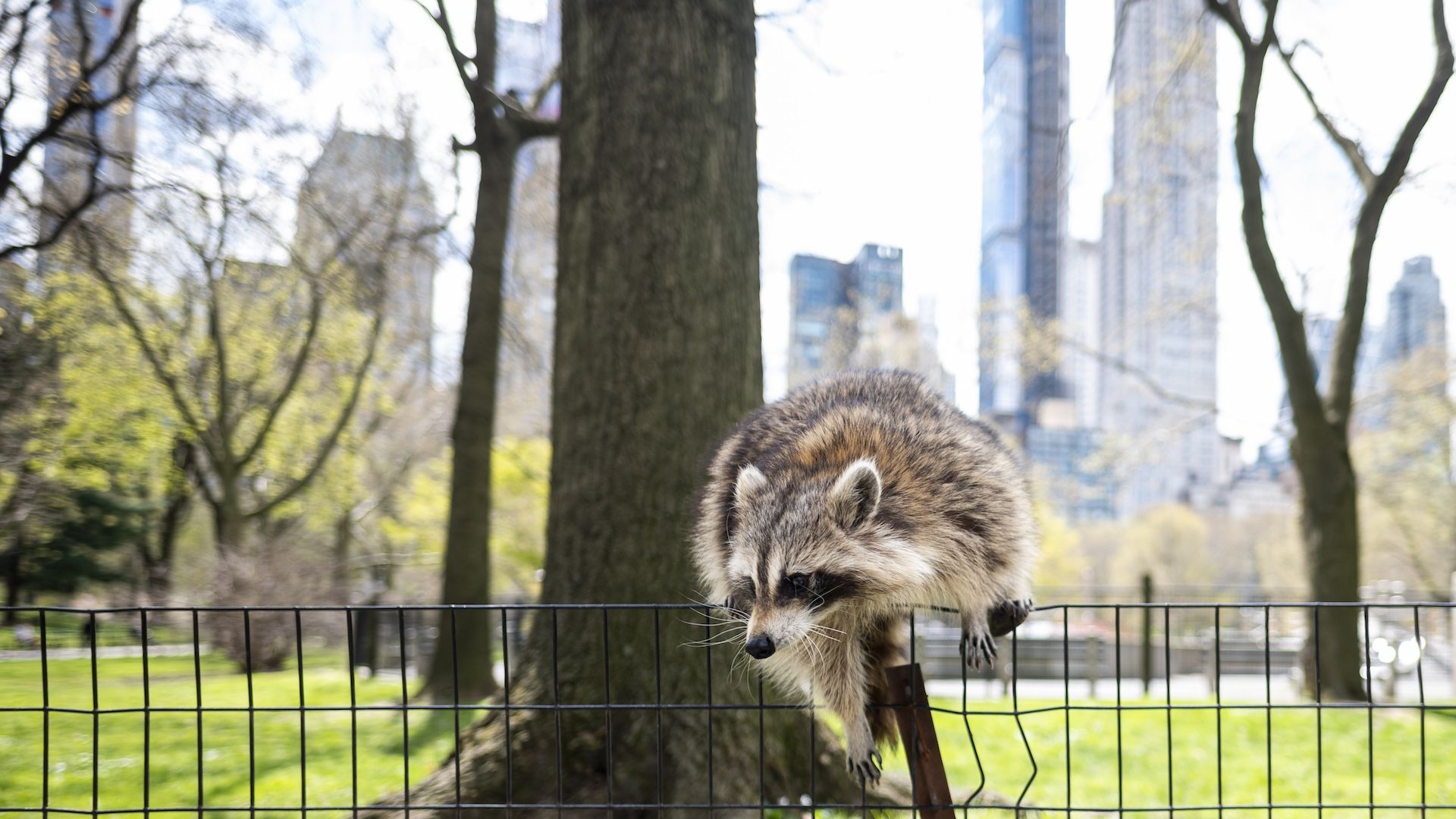
Are Raccoons Becoming Domesticated? New Research Suggests We Might Be Witnessing It Happen
For centuries, raccoons have been resourceful neighbors, frequently enough seen scavenging near human settlements. But a captivating new study from the University of Arkansas at Little Rock suggests this proximity isn’t just coexistence – it could be the very beginning of domestication. Could simply hanging out near humans be enough to alter a wild animal’s evolutionary path? The answer, according to researchers, may be a surprising yes.
The dawn of Domestication: It Starts With Trash
domestication isn’t about taming a wild animal. It’s a complex evolutionary process where a species adapts to a new ecological niche created by humans. Think about it: for raccoons,that niche increasingly involves exploiting readily available resources – like the contents of our trash bins.
“Trash is really the kickstarter,” explains Dr. Lesch, lead researcher on the study. It provides an easy, reliable food source.All a raccoon needs to do to benefit is tolerate our presence and avoid aggression, allowing them to feast on our discarded waste.
Identifying Early signs: Domestication Syndrome
But how do scientists know if a species is actually on the path to domestication? They look for a suite of physical and behavioral traits known as “domestication syndrome.” These often include:
* Shorter snouts: A more compact facial structure.
* Floppy ears: Less rigid ear cartilage.
* White spotting: Patches of white fur.
* Reduced fear response: Less wary of humans and novel situations.
these traits aren’t random.They often appear together early in the domestication process and may be linked by underlying genetic mechanisms.
iNaturalist data reveals a Trend
dr. Lesch and a team of 16 students analyzed nearly 20,000 raccoon photos uploaded to iNaturalist, a citizen science platform. Their findings were striking. Raccoons living in densely populated areas had snouts approximately 3.5% shorter than those in more rural environments.
This subtle difference, while seemingly minor, is a significant indicator. It suggests that urban environments are exerting selective pressure on raccoon morphology.
The Role of Neural Crest Cells
Scientists believe these domestication syndrome traits may be connected to mutations in neural crest cells. These are a type of stem cell crucial for progress in vertebrate embryos. A 2014 study proposed that changes in these cells could explain the constellation of traits seen in domesticated animals.
The new raccoon research supports this hypothesis. A reduced fear response allows raccoons to thrive in human-dominated landscapes. If bravery is favorable, natural selection will favor it. The observed changes in snout length could be a linked byproduct of this selection.
What Does This Mean for Urban Wildlife?
This research isn’t just about raccoons. It has broader implications for understanding how wildlife adapts to urbanization. Future studies will investigate whether similar patterns are occurring in other urban mammals, such as opossums.
“This will help inform us if human presence is enough to already start the process of domestication in a species,” Dr. Lesch states.
Implications and Future Research
The study raises vital questions about the long-term consequences of human-wildlife interactions. Are we inadvertently driving the domestication of species like raccoons? And what does that mean for their future evolution and our relationship with them?
Further research will focus on:
* genetic analysis: Identifying the specific genes involved in these changes.
* Behavioral studies: Quantifying the differences in fear response between urban and rural raccoons.
* Comparative studies: Examining other urban mammal populations for similar trends.
Ultimately, this research highlights the powerful and often unexpected ways in which humans are shaping the evolution of the natural world around us. It’s a reminder that even seemingly harmless interactions, like leaving out trash, can have profound consequences for wildlife.
resources:
* University of Arkansas at Little Rock News Release
* iNaturalist
* [NeuralCrestCellMutation[NeuralCrestCellMutation[NeuralCrestCellMutation[NeuralCrestCellMutation
Worth a look