The Rising Influence of Gulf States in global Diplomacy: A New Model for Conflict Resolution
For decades, international conflict resolution has often been framed by direct negotiation, public pressure, and swift, decisive action. However, a quiet shift is underway, spearheaded by the Gulf States – Saudi Arabia, Qatar, and the United Arab Emirates – who are demonstrating a uniquely effective approach to navigating complex global standoffs. Recent diplomatic successes, including securing UN Security Council approval for a Gaza peace plan and facilitating crucial prisoner exchanges, highlight a growing influence and a distinct methodology that prioritizes patience, relationship-building, and discreet dialog.
A Strategic Exchange: Access, Recognition, and the Gaza Plan
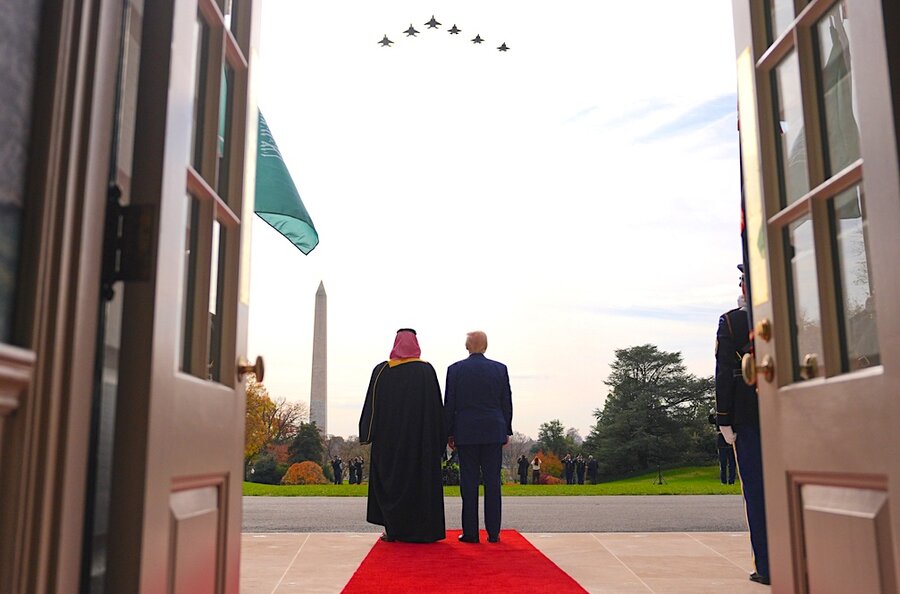
A recent visit by Saudi Crown Prince Mohammed bin Salman to the United States underscored this evolving dynamic.The Prince secured key agreements regarding access to advanced American fighter jets and microchips, alongside a meaningful boost in the US perception of Saudi Arabia as a “major ally.” This access wasn’t simply granted; it was, in part, a reciprocal benefit stemming from saudi Arabia’s diplomatic efforts. crucially, the Crown Prince’s visit coincided with, and directly contributed to, the approval of President Trump’s Gaza peace plan by the UN security Council.
The Gulf States’ ability to navigate potential vetoes from China and Russia wasn’t achieved through forceful lobbying, but through careful cultivation of relationships and a demonstrated commitment to multilateralism. This highlights a critical lesson: maintaining open lines of communication, even with potential adversaries, remains a cornerstone of effective international relations.
Beyond Transactional Diplomacy: A Cultural and Strategic Approach
The Gulf States’ success isn’t accidental. It’s rooted in a deeply ingrained cultural approach to conflict resolution, one that emphasizes understanding, cooperation, and interdependence. As former UN Mideast peace envoy Nickolay Mladenov explains, these nations view conflict resolution not as a singular event, but as a sustained process – one requiring the careful nurturing of trust and rapport.
This approach is both culturally ingrained and strategically astute. It prioritizes respect, consensus-building, and avoids public condemnation, recognizing that such tactics can often escalate tensions rather then resolve them. This contrasts sharply with the often-polarized environment of modern international relations, where public pressure and rapid-fire negotiations are frequently favored.
Recent Successes: From Afghanistan to ukraine
The impact of this “quiet diplomacy” is increasingly evident in recent global events. Qatar successfully mediated a 2020 deal between the United States and Afghanistan, paving the way for crucial negotiations. Oman has consistently served as a vital bridge-builder between the US and Iran, facilitating discreet communication channels. The UAE played a pivotal role in orchestrating a prisoner exchange between Russia and Ukraine, demonstrating an ability to navigate even the most fraught geopolitical landscapes.
Even the Trump administration, with its “America First” policy, acknowledges the indispensable support provided by these Arab allies. As US Ambassador to the United Nations, Mike Waltz, stated, their support was “absolutely indispensable” in securing a UN mandate for key steps in Gaza, including the establishment of a governing Board of Peace and a stabilization force comprised of troops from Arab and Muslim-majority countries.
Financial Capacity and a Long-Term Vision
the gulf States’ influence isn’t solely based on diplomatic skill. Their considerable financial resources also play a critical role,particularly in post-conflict reconstruction. The International Center for Dialogue Initiatives notes that their ability to fund peacetime rebuilding efforts, such as those anticipated in Gaza, is a significant asset. This long-term vision, coupled with a commitment to stability, positions them as crucial partners in addressing complex global challenges.
The Power of Confidentiality in a Hyper-Connected World
Perhaps the most understated lesson offered by the Gulf States’ approach is the value of “quiet” in “quiet diplomacy.” In an era dominated by social media and instant communication, the emphasis on “dignified discussion” and confidentiality proves remarkably effective. Mladenov argues that this discretion is particularly crucial in resolving disputes that might otherwise escalate under the intense scrutiny of public opinion and global attention. By fostering an environment of trust and allowing for open, honest dialogue away from the spotlight, the Gulf States are demonstrating a powerful alternative to the often-counterproductive dynamics of public diplomacy.
Evergreen Insights: The Future of Multilateralism
the rise of the Gulf States as key diplomatic players signals a potential shift in the landscape of multilateralism. Traditional power structures are evolving, and new actors are emerging with unique perspectives and approaches. This trend underscores the importance of inclusivity and the need to move beyond rigid ideological frameworks. The success of the Gulf States’ model suggests that a more nuanced, patient, and relationship-focused approach to international relations might potentially be better suited to addressing the complex challenges of the 21st century. The emphasis on long-term stability,coupled
Keep reading