Indiana Republicans Push Aggressive Congressional Map, igniting Senate showdown & National Redistricting Battle
December 2, 2024 – Indianapolis, IN – A deeply contentious battle over Indiana’s congressional districts has erupted, as House Republicans unveiled a new map on Monday designed to eliminate the state’s remaining Democratic representation in the U.S. House. This move, widely seen as a direct response to pressure from former President Donald Trump, is setting the stage for a perhaps explosive showdown with the state Senate, and underscores a broader national trend of aggressive mid-cycle redistricting.
The New Map: A Clear GOP offensive
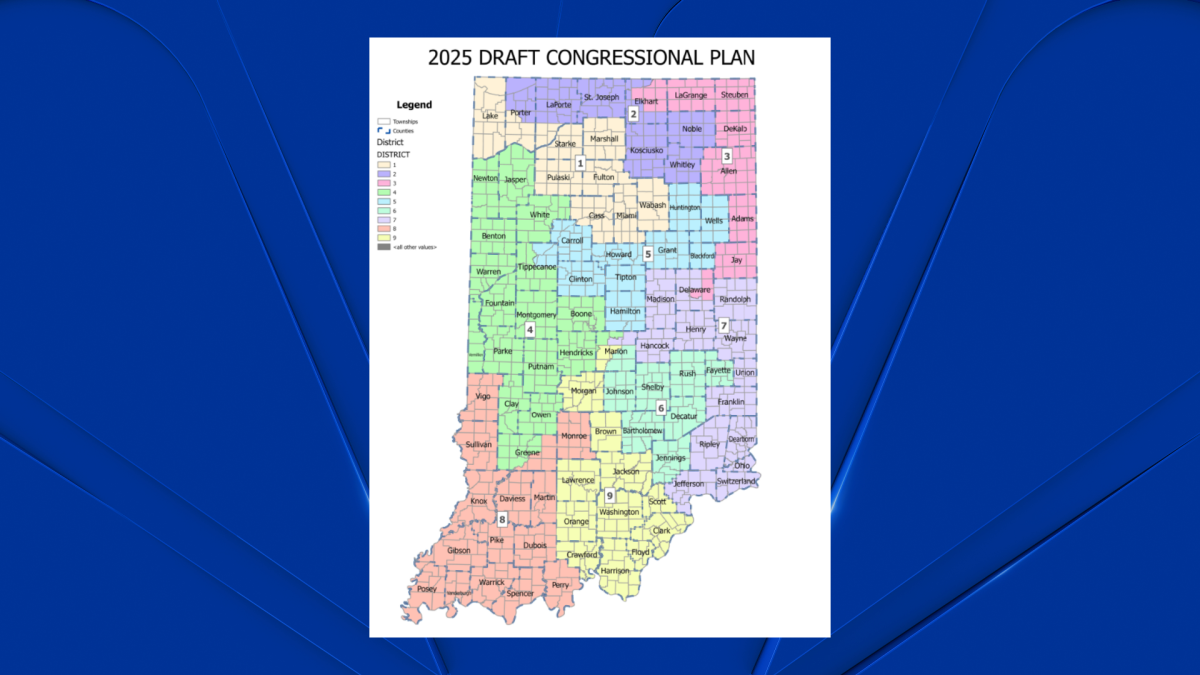
The proposed map dramatically reshapes Indiana’s nine congressional districts, aiming to convert the current 7-2 Republican advantage into a sweeping 9-0 GOP dominance ahead of the crucial 2026 midterm elections.Key features of the plan include:
* Indianapolis Fragmentation: the traditionally Democratic stronghold of Indianapolis would be fractured, divided amongst four different congressional districts.This is a significant departure from the current map where the city forms the core of the 7th District, represented by long-serving Congressman André Carson.
* Northwest Indiana Overhaul: The state’s other Democratic-held district, located in the northwest corner near Chicago, would be radically altered.The proposal groups traditionally Republican counties in northern Indiana with the cities of East Chicago and Gary, fundamentally changing the district’s political composition.
“It’s clear these orders are coming from Washington, and they clearly don’t know the first thing about our community,” stated Congressman Carson in response to the proposed changes, highlighting the perception that the map is being dictated by national political interests rather than local considerations.
Senate Resistance & Trump’s Intervention
While House Republicans appear confident in their ability to pass the redistricting bill – with a committee hearing scheduled for Tuesday and a potential House vote as early as Friday – the path forward in the Senate remains deeply uncertain. For months, Senate Republicans have resisted calls for redistricting, despite increasingly forceful demands from President Trump and national Republican strategists.
Trump has publicly threatened to endorse primary challengers against any senators who oppose the new map, escalating the pressure.This has been accompanied by a disturbing wave of threats, including “swatting” incidents - hoax calls designed to dispatch law enforcement to the homes of dissenting senators, and even threats against those supporting the redistricting effort and Governor Mike Braun. These tactics underscore the high stakes and intensely polarized nature of the debate.
Initially, the Indiana Senate refused to convene a special session on redistricting, citing a lack of consensus. Though, facing mounting pressure, Senate leadership has agreed to reconvene on December 8th, though the outcome remains far from guaranteed. Senate President Pro Tem Rodric Bray previously acknowledged the chamber lacked the votes for redistricting, and his office has yet to clarify whether that position has changed.
National Implications: A Widening Redistricting War
Indiana’s struggle is not isolated. Across the country, both parties are engaged in a fierce battle over redistricting, attempting to leverage map-drawing to maximize their electoral advantages.
* GOP-Led Efforts: Indiana joins states like Texas, Missouri, ohio, and North Carolina, where Republicans are actively pursuing maps designed to bolster their congressional delegations.
* Democratic Countermoves: In response, democrats in California and Virginia have initiated their own redistricting efforts, aiming to create more favorable conditions for their candidates.
Early analysis suggests that mid-cycle redistricting efforts thus far have the potential to add nine seats to the Republican column and six to the Democratic column, resulting in a net gain of three seats for the GOP. However, these gains are far from certain, as the new maps are facing legal challenges in multiple states.The ultimate impact will depend on the outcome of these lawsuits and the evolving political landscape.
Expert Analysis: The Erosion of Competitive Districts
“What we’re seeing in Indiana, and across the nation, is a concerning trend towards increasingly partisan map-drawing,” explains Dr. Emily Carter, a political science professor specializing in redistricting at Indiana University.”The goal is no longer to create competitive districts that reflect the diversity of the electorate, but rather to engineer outcomes that favor one party over the other. This undermines the principles of representative democracy and reduces voter choice.”
Dr. Carter further notes that the fragmentation of cities like Indianapolis, as proposed in the Indiana map, is a common tactic used to dilute the voting power of urban areas and create more favorable conditions for suburban and rural voters.
Looking Ahead: A December Decision
The coming weeks will be critical in determining the fate of Indiana’s congressional map.
Worth a look