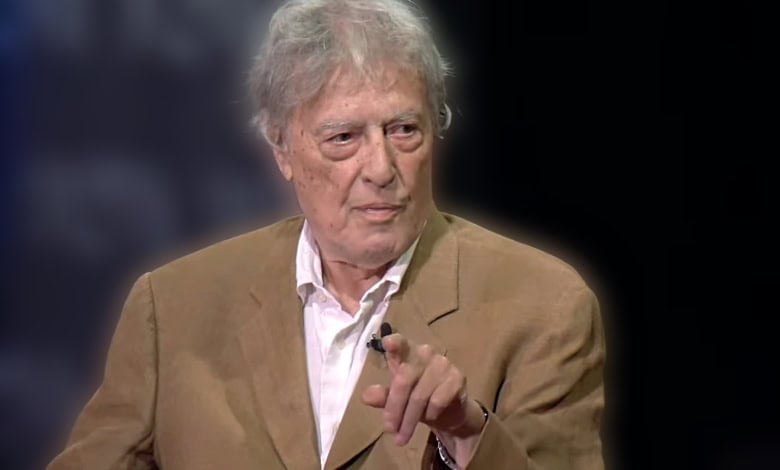
Tom Stoppard: A Champion of Free Speech in an age of Restriction
Tom Stoppard, the celebrated playwright behind masterpieces like “Rosencrantz and Guildenstern Are Dead,” wasn’t just a literary giant. He was a staunch defender of free expression,a principle he upheld throughout a career spanning decades and navigating increasingly turbulent cultural waters. His story offers a compelling case study in artistic integrity and the importance of resisting censorship, even – and especially – when it comes cloaked in good intentions.
Early Career Challenges & Political Leanings
Stoppard’s initial success faced headwinds due to his early support for margaret Thatcher in the 1980s. While not a “cancellation” in the modern sense, his political views undeniably created obstacles. Some within the artistic community actively sought to exclude his work.
the former artistic director of the Royal court Theater, a bastion of radical drama, reportedly adopted a policy of simply refusing to produce any play written by Tom Stoppard. This demonstrates how readily political alignment could impact an artist’s career, even without overt public condemnation.
However, Stoppard wasn’t an ideologue. He preferred to explore diverse arguments in his writing, letting ideas clash and allowing audiences to draw their own conclusions. He didn’t see himself as an activist, but as a playwright interested in the complexities of thought.
A Shift in Perspective & Bold Resistance to “Woke” Culture
Interestingly, Stoppard later acknowledged embracing elements of socialism.Whether this was a genuine evolution of his beliefs or a strategic move to navigate the artistic landscape remains open to interpretation. Nonetheless, his commitment to free speech only intensified.
In his later years, Stoppard became a vocal critic of what he termed “woke restriction.” He actively defended J.K. Rowling against intense backlash and expressed regret over the proliferation of the term “hate speech.” He believed these trends eroded the foundations of open discourse.
Defending the Core Principles of Free Expression
Stoppard articulated his concerns powerfully, stating that “cancel culture erodes free speech.” He also questioned the necessity of “trigger warnings,” arguing they reflected an overprotective approach to intellectual engagement.
He believed individuals should be able to express themselves without fear of reprisal, and that robust debate – even uncomfortable debate – is essential for a healthy society. As he eloquently put it:
* “People are now deemed to be much more needful of protection from any kind of a rebuke, reproach, criticism.”
* “There’s a great sensitivity about how you can talk about anything which might obscurely offend part of the readership.”
His philosophy was simple: if you disagree, challenge the idea, don’t silence the voice. He believed the best response to “nonsense” isn’t censorship, but reasoned argument. “The way I was brought up was that you can say anything you like, and then anybody can tell you are talking nonsense, and to speak better.”
A life Shaped by Loss of Freedom
Perhaps Stoppard’s unwavering commitment to free speech stemmed from his personal history. He grew up in Czechoslovakia, and his family fled the country during World War II following the Nazi invasion.
Experiencing firsthand the suppression of freedom undoubtedly instilled in him a deep recognition for the principles of open expression. This background provided a powerful context for his later advocacy.
Tom Stoppard’s life and work serve as a potent reminder that defending free speech isn’t just about protecting the right to say what you believe, but safeguarding the ability of everyone to participate in the marketplace of ideas. His legacy encourages us to embrace intellectual courage and resist the impulse to silence dissenting voices, ensuring a vibrant and truly open society.
Worth a look