Unlock Unused AI Power: Introducing Elastic Training with Amazon SageMaker HyperPod
For organizations investing in AI infrastructure, maximizing the utilization of expensive AI accelerators (like GPUs) is paramount. Traditionally, machine learning training jobs have been rigidly tied to their initial compute allocation. This means valuable GPU capacity frequently enough sits idle,hindering your return on investment. Now, Amazon SageMaker HyperPod introduces Elastic Training, a game-changing approach to dynamically leverage available resources and optimize your AI workflows.
The Problem with Traditional Training
Imagine a scenario where your training job isn’t fully utilizing your GPU cluster. This is common. Traditional methods require manual intervention to scale up or down, leading to:
* Wasted resources: Idle GPUs represent lost investment.
* Delayed insights: training takes longer than necessary.
* Operational overhead: Constant monitoring and manual adjustments are time-consuming.
Elastic Training solves thes challenges by automating resource allocation, ensuring you get the most out of your infrastructure.
How Elastic Training Works: A Dynamic Approach
Elastic Training fundamentally changes how training jobs interact with your compute cluster. It allows your jobs to automatically:
* Scale up: Utilize newly available accelerators to accelerate throughput.
* Scale down: Gracefully relinquish resources when higher-priority workloads need them,without interrupting training.
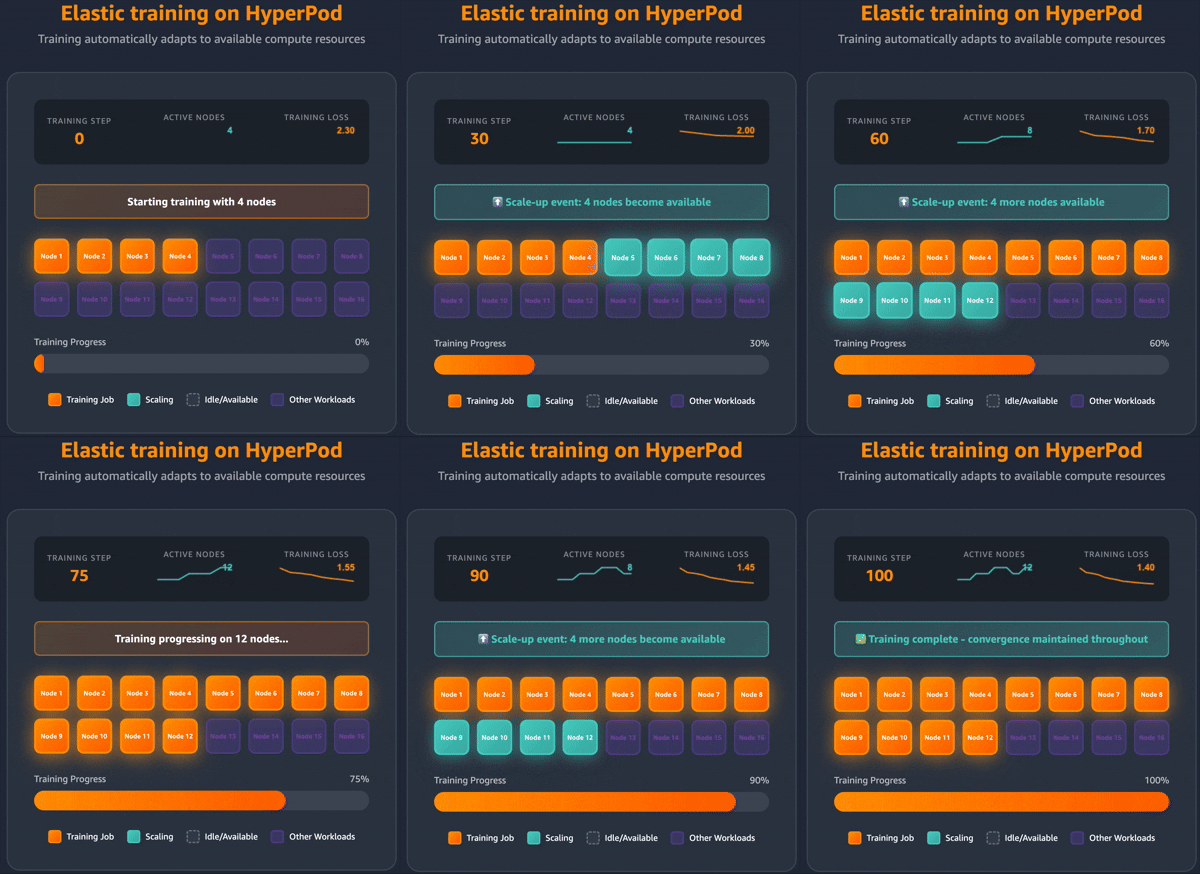
This dynamic scaling is powered by the HyperPod training operator,which integrates seamlessly with Kubernetes. It continuously monitors your cluster through:
- Pod lifecycle events: Tracking the status of your training jobs.
- Node availability changes: Detecting newly available compute resources.
- Resource scheduler priority signals: Responding to requests from higher-priority workloads.
This comprehensive monitoring enables near-instantaneous scaling decisions.
Maintaining Training quality During Scaling
A key concern with dynamic scaling is maintaining model accuracy.Elastic Training addresses this by:
* Preserving global batch size: Ensuring consistent training dynamics.
* Adapting learning rates: Preventing convergence issues during scale-up or scale-down events.
You can confidently scale your workloads without compromising training quality. The system intelligently adds or removes data parallel replicas – essentially, copies of your training job – to adjust capacity.
Getting Started with Elastic Training
implementing Elastic Training is easier than you might think. You can leverage it in a few ways:
* HyperPod Recipes: Utilize pre-built recipes for popular foundation models (FMs) like Llama and GPT-OSS.
* PyTorch Script Modification: Add elastic event handlers to your existing PyTorch training scripts for custom scaling behavior.
Resources to help you begin:
* HyperPod Elastic Training Documentation: https://docs.aws.amazon.com/sagemaker/latest/dg/hyperpod-elastic-training.html
* HyperPod Recipes GitHub Repository: https://github.com/aws/sagemaker-hyperpod-recipes
Availability and Cost
The best part? Elastic Training is now available in all AWS Regions where Amazon SageMaker HyperPod is offered, at no additional cost.
Explore the following resources to learn more:
* SageMaker HyperPod Product Page: [https://aws.amazon.com/sagemaker/hyperpod?trk=769a1a2b-8c19-4976-9c45-b6b1226c7d20&sc_channel=el](https://aws.amazon.com/sagemaker/hyper
- CRYMACHINA 3rd Anniversary Sale: Huge Discounts on PS and Nintendo Switch Until August 12
- M17 Headphones Review: High-End Audio for Audiophiles
- Why Nighttime Heat Is Rising Faster Than Daytime Highs in US Cities (daybreakwire.com)
- Tour de France Stage 21: Results and Training Tips for Repeatable Efforts (archynewsy.com)