Assessing Functional Impact and Motor Development in Spinal Muscular Atrophy: A Detailed Look at Study Methodology
Spinal Muscular Atrophy (SMA) presents critically important challenges for both patients and their caregivers. Rigorous assessment of functional impact and motor development is crucial for understanding disease progression and evaluating the effectiveness of therapeutic interventions. This article details the methodologies employed in a recent study investigating these key areas, providing a comprehensive overview for clinicians, researchers, and those interested in the evolving landscape of SMA management.
Measuring Caregiver Burden: The ACEND Instrument
Understanding the daily impact of SMA on caregivers is paramount. This study utilized the Assessment of Caregiver Experiance with Neuromuscular Disease (ACEND) instrument.
* ACEND comprehensively evaluates the burdens faced by caregivers,encompassing both physical and general impact domains.
* The physical impact domain assesses challenges in areas like feeding, grooming, mobility, and play.
* The general impact domain considers the impact on time, emotional well-being, and financial resources.
* Scores, derived from a six- or five-point ordinal scale, are designed to reflect the degree of impact, with higher scores indicating less caregiver burden.
This nuanced approach allows for a detailed understanding of the specific challenges faced by those providing care for individuals with SMA. (Matsumoto, H.et al. Development and initial validation of the assessment of caregiver experience with neuromuscular disease. J. Pediatr.Orthop.31, 284-292 (2011).)
Evaluating Motor Milestones: The Developmental Milestone Checklist
Alongside caregiver burden, tracking motor development is essential. The study incorporated an exploratory motor objective using the Developmental Milestone Checklist.
* This checklist draws upon items from the World Health Organization Multicentre Growth Reference Study.
* It provides a standardized method for assessing the achievement of key motor milestones.
* Data collected focused on the exhibition of these milestones at baseline and week 52, offering a snapshot of motor progress.
this objective assessment complements the caregiver-reported outcomes,providing a holistic view of the patient’s functional status. (Wijnhoven, T. M. et al.Assessment of gross motor development in the WHO Multicentre Growth Reference Study. Food Nutr. Bull. 25, S37-S45 (2004).)
Data analysis: A Robust Approach
The study employed a rigorous analytical framework to ensure the reliability and validity of the findings.
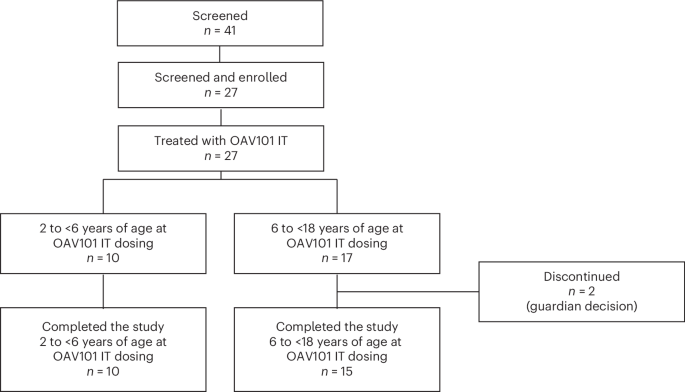
* FAS Population: All analyses were conducted on the Full Analysis Set (FAS),including all enrolled participants who received the investigational therapy (OAV101 IT).
* Timing of Analysis: The primary analysis was performed after all participants had completed the study or discontinued prior to week 52.
* Descriptive Statistics: Categorical data were summarized as frequencies and percentages.Continuous data were presented with mean, standard deviation, median, quartiles, and range.
* Statistical Modeling: Change from baseline in key outcome measures (HFMSE,RULM,ACEND) was analyzed using a mixed model with repeated measurement (MMRM). This approach accounted for individual variability and provided adjusted Least Squares Means (LSMs) with 95% confidence intervals.
* Motor Milestone Analysis: Motor milestone data were analyzed descriptively, comparing demonstration rates at baseline and week 52 – without formal hypothesis testing.
* Safety Analysis: Adverse events (AEs),serious AEs (SAEs),and AESIs were summarized by frequency,percentage,and MedDRA system organ class.
Post-Hoc Analysis for Deeper Insights
To explore potential relationships between disease characteristics and outcomes, post-hoc analyses were conducted.
* Age at symptom Onset: Participants were divided into two groups based on age at symptom onset (≤6 months and >6 months) to assess potential differences in HFMSE scores.
* Pre-Therapy Scores: HFMSE scores were also analyzed for patients at their last visit before initiating add-on therapy, providing a baseline comparison.
These analyses aimed to identify potential factors influencing treatment response and refine our understanding of the disease course.
Transparency and Reporting
the study adhered to high standards of transparency and reporting.
* A Nature portfolio Reporting Summary is available, providing further details on the research design and methodology. (Available at:[http://wwwnaturecom/articles/s41591-025-04119-[http://wwwnaturecom/articles/s41591-025-04119-[http://wwwnaturecom/articles/s41591-025-04119-[http://wwwnaturecom/articles/s41591-025-04119-
Related reading