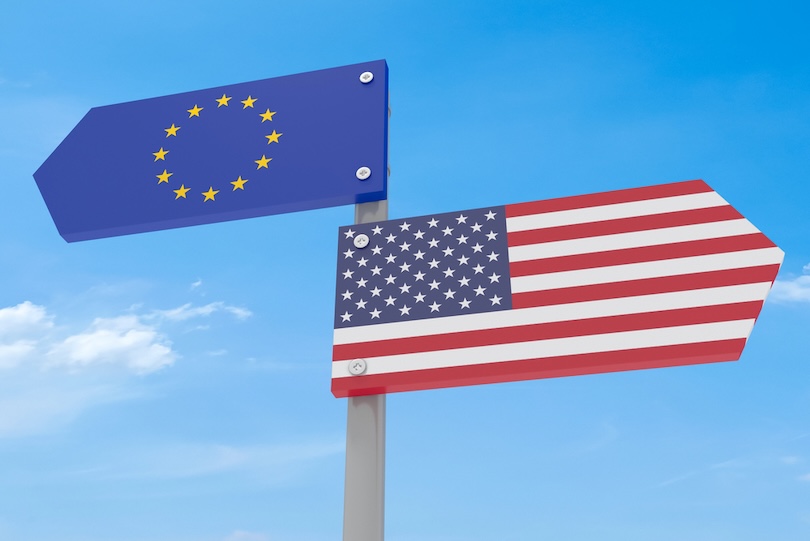
Anchored Autonomy: Europe’s Path to Strategic Resilience in a Shifting World Order
The return of Donald Trump to the political stage, coupled with Russia’s ongoing aggression in Ukraine, has irrevocably altered Europe’s security calculus. The era of strategic complacency is over, forcing EU leaders to confront the urgent need for credible strategic autonomy. However, achieving this is not a matter of swift independence, but a complex process of incremental self-reliance that strengthens, rather than fractures, the transatlantic bond. This requires a pragmatic assessment of existing limitations – persistent capability gaps, political divisions, and reliance on U.S.assets - and a commitment to translating ambitious declarations into tangible results.
for decades, Europe has benefited from the security umbrella provided by the United States. Yet, recent events have exposed the vulnerabilities inherent in this dependence. The July 2025 trade ultimatum,where the EU effectively accepted higher tariffs to maintain U.S. security guarantees, served as a stark reminder that economic leverage can be readily weaponized against a strategically reliant partner. This experience underscored a critical truth: without a credible deterrent of its own, Europe remains susceptible to coercion across multiple domains – economic, political, and military. Addressing this asymmetry is now central to the pursuit of strategic autonomy.
The path forward demands a fundamental shift in approach. Ambitious initiatives like Readiness 2030 and the 5% NATO spending pledge are insufficient in themselves. True progress hinges on demonstrable improvements in force integration and pragmatic burden-sharing. Rather than pursuing redundant capabilities, member states shoudl specialize, leveraging their unique strengths. Southern European nations could bolster NATO’s eastern flank, while others focus on strategic lift, logistics, or intelligence gathering – maximizing limited resources through focused investment.
Crucially, this internal strengthening must be accompanied by a frank and open dialogue with Washington. Any planned drawdown of U.S. forces must be phased, transparent, and allow Europe sufficient time to develop credible contingency arrangements. This includes prioritizing the advancement of an enlarged, high-readiness multinational reaction force capable of responding to emerging crises.Managed effectively, such adjustments would not weaken NATO, but rather enhance its resilience by allowing the United States to concentrate its resources on the increasingly critical Indo-Pacific theater.
Though,military capability is onyl one piece of the puzzle. Domestic legitimacy is equally vital. Governments must articulate a clear narrative that frames stronger European defense not as a rejection of the transatlantic alliance, but as a mature assumption of responsibility.Sustained investment in defence requires broad societal support, and reassurance to Eastern European partners that increased EU agency will complement, not supplant, the American pillar of NATO. A less dependent Europe will possess greater bargaining power,enabling it to negotiate transatlantic deals based on mutual respect rather than asymmetric pressure.
Ultimately, Europe’s strategic future lies in what can be termed “anchored autonomy” – a concept that balances credible self-reliance with robust transatlantic engagement. This is not about choosing between the United States and Europe, but about recognizing that a stronger, more capable Europe is a more valuable ally.
The security landscape of 2025 demands realism. Europe’s security infrastructure is deeply intertwined with that of the United States,and a rapid disentanglement is neither feasible nor desirable. Therefore, the focus must be on achievable milestones, targeted capability enhancements, and pragmatic integration. Fundamental limitations in areas like nuclear deterrence, strategic logistics, interoperability, and advanced military technologies will persist for the foreseeable future.
Achieving anchored autonomy also necessitates bolstering economic resilience. The trade ultimatum of 2025 highlighted the dangers of economic dependence.Europe must diversify its supply chains, invest in critical technologies, and reduce its vulnerability to external pressure. This will require a concerted effort to strengthen the EU’s internal market, promote innovation, and foster strategic partnerships with like-minded nations.
Europe stands at a pivotal moment. The challenges are notable, but so too are the opportunities. By embracing a strategy of anchored autonomy – one that prioritizes credible self-reliance while preserving a strong transatlantic partnership – Europe can navigate the increasingly volatile geopolitical landscape and secure its future as a responsible, resilient, and influential global actor. This is not merely a matter of defence; it is a matter of ensuring that the transatlantic partnership remains a conscious choice, not a compelled vulnerability.
Keep reading