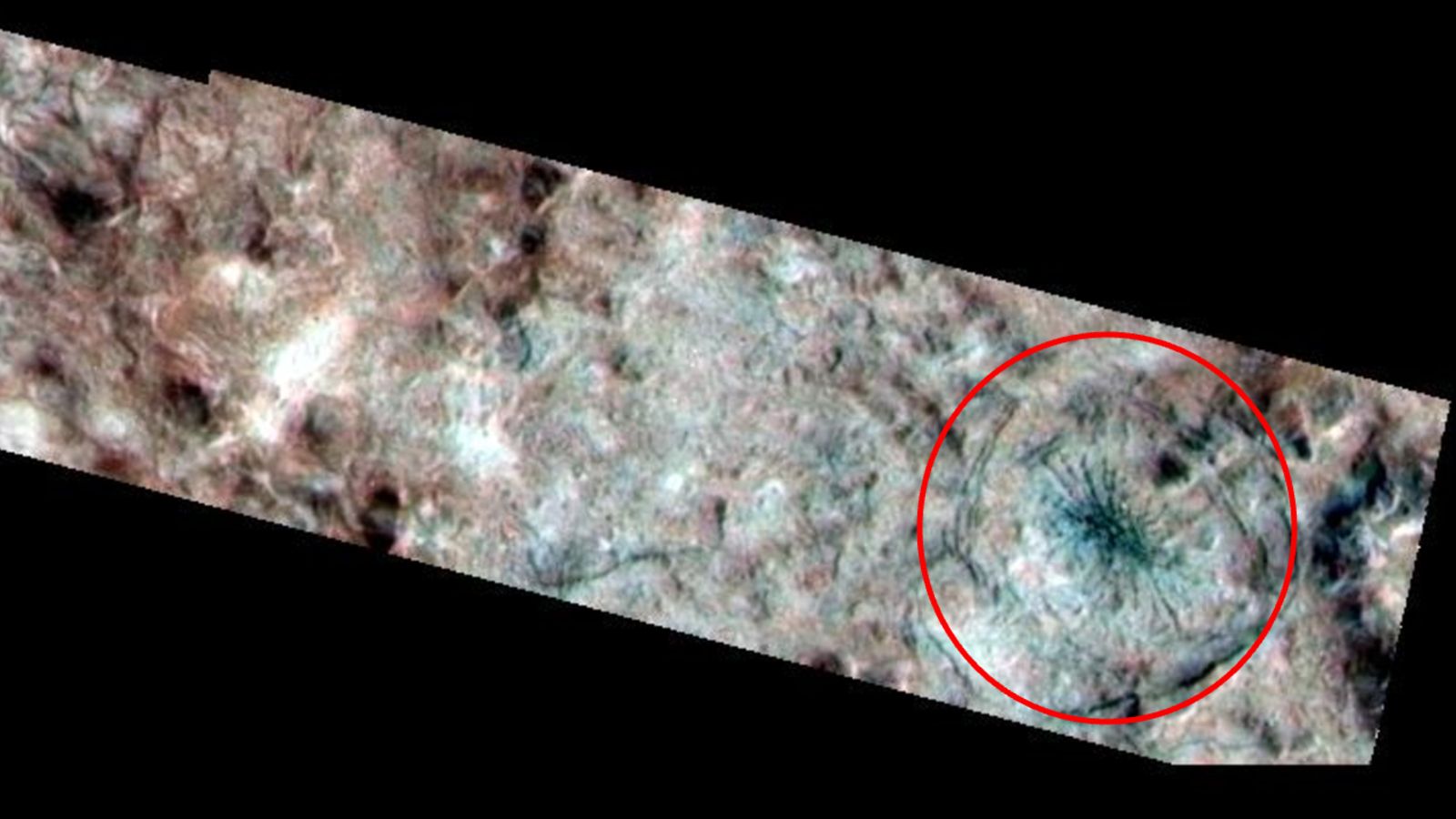
Unlocking the Secrets Beneath the Ice: How “Spiders” on Europa Could Reveal Signs of Life
For decades, scientists have been captivated by the possibility of life beyond Earth, and increasingly, the focus is turning to the icy moons orbiting Jupiter and Saturn. Recent discoveries suggest these hidden worlds harbor vast subsurface oceans, making them prime candidates in the search for extraterrestrial life. Now, a interesting new line of research is focusing on peculiar formations on Europa – Jupiter’s fourth-largest moon – nicknamed “spiders,” and what they could tell us about the ocean below.
What are These Mysterious “Spiders”?
These aren’t arachnids crawling across Europa’s surface. Instead, they are a network of cracks radiating from a central point, resembling a spiderweb. Scientists believe these features are formed when salty water rises from the ocean beneath Europa’s thick ice shell and pushes against the surface.
Here’s a breakdown of how they likely form:
* Brine Accumulation: Liquid saltwater, or brine, accumulates in pockets between the ice and the surface.
* Pressure build-Up: This brine exerts pressure on the surrounding ice.
* Fracture Formation: Eventually, the pressure causes the ice to crack, creating the spider-like pattern.
Understanding these formations is crucial because they offer a window into the composition and dynamics of Europa’s hidden ocean.
Why are Scientists So Excited About Europa?
Europa is particularly intriguing because of the strong evidence for a global ocean containing more water than all of Earth’s oceans combined. Several factors suggest this ocean could potentially support life:
* Liquid Water: The presence of a vast ocean is the first key ingredient.
* Energy Source: Tidal forces generated by Jupiter’s gravity create internal heat, preventing the ocean from freezing solid.
* Chemical Building Blocks: Evidence suggests the ocean contains salts and other compounds necessary for life.
These “spiders” could be indicators of localized brine pools, areas where the ocean interacts directly with the ice shell.These pools could be ideal locations for life to emerge, offering a concentrated source of energy and nutrients.
The Next Step: The Europa Clipper Mission
To further investigate these tantalizing possibilities, NASA launched the Europa Clipper mission in October 2024. This enterprising spacecraft will arrive at jupiter in 2030 and will conduct a series of close flybys of Europa.
The mission’s objectives include:
- Mapping Europa’s Surface: Creating high-resolution maps to identify and characterize features like the “spiders.”
- Analyzing the Ice Shell: Determining the thickness and composition of the ice.
- Probing the Ocean: Using radar to search for evidence of liquid water and assess its salinity.
- Searching for Biosignatures: Looking for chemical indicators that could suggest the presence of life.
You can expect the data gathered by Europa Clipper to revolutionize our understanding of this icy moon and its potential for habitability.
What Does This Mean for the search for Life?
The study of these surface features isn’t just about understanding europa. It has implications for the search for life elsewhere in our solar system. Similar features have been observed on other icy worlds, including:
* Saturn’s moon Enceladus
* Jupiter’s moon Ganymede
* The dwarf planet Ceres
By studying how these “spiders” form, scientists can develop a better understanding of the processes occurring beneath the surfaces of these worlds. This knowledge will be invaluable as we continue to explore the outer solar system and search for evidence of life beyond Earth.
Ultimately, the quest to understand Europa and its hidden ocean is a testament to our innate curiosity and our enduring desire to answer one of the most profound questions in the universe: are we alone? The answers, it seems, may lie hidden beneath the ice.
Keep reading