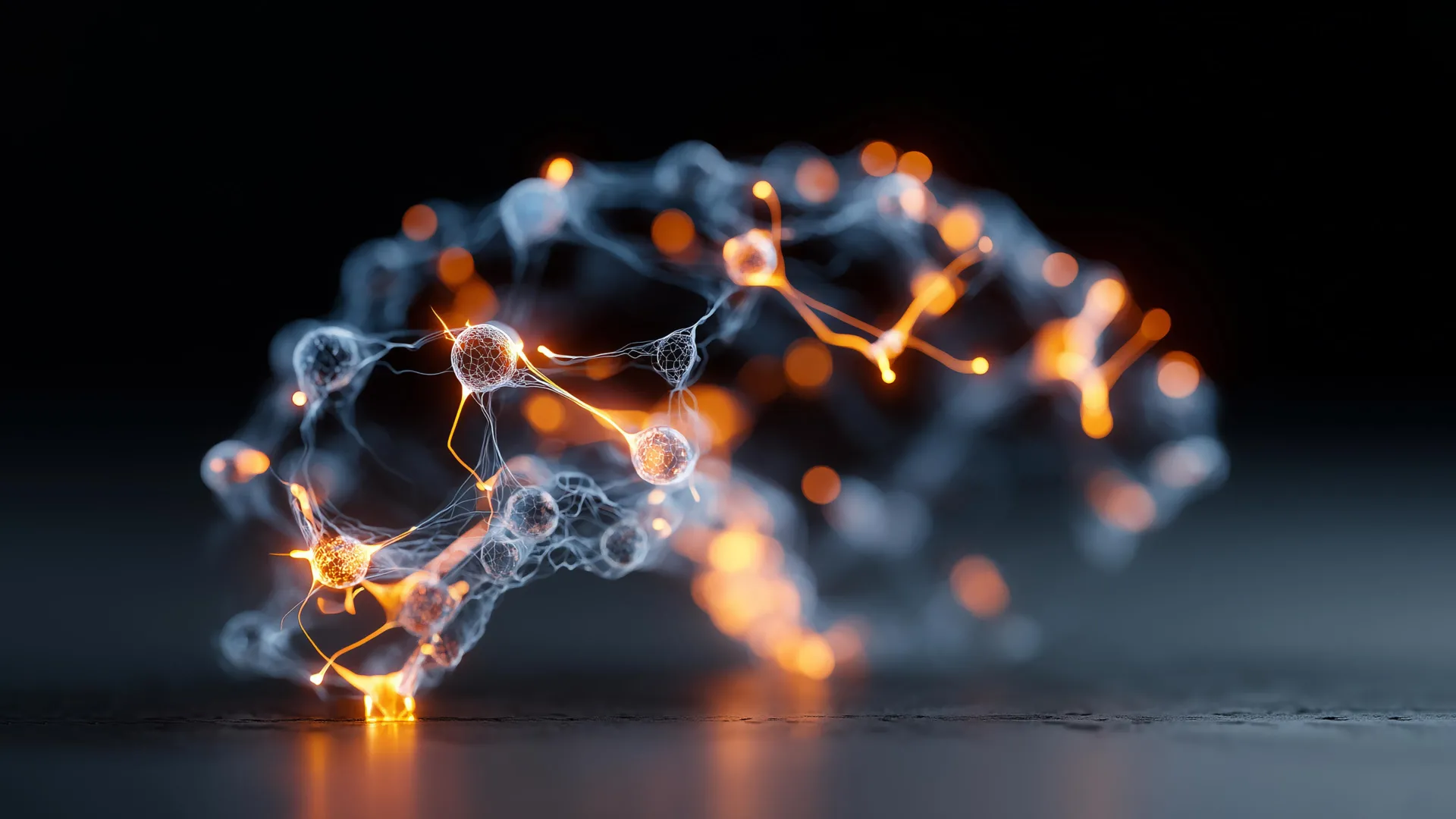
Beyond Silicon: Molecular Electronics and the Dawn of Material-Based Intelligence
For decades,the quest to move beyond silicon as the bedrock of modern electronics has captivated scientists. The promise of molecular electronics - building devices from individual molecules – offered tantalizing possibilities. However, translating this concept into reality proved remarkably challenging.Unlike isolated molecules studied in labs, those within a functioning device exist in a dynamic, interconnected surroundings. Electron movement, ion shifts, interface changes, and even subtle structural variations trigger complex, often unpredictable, responses. While the potential was clear, reliably controlling and predicting molecular behavior remained elusive – a critical barrier to practical application.
Simultaneously, the field of neuromorphic computing – designing hardware inspired by the human brain – pursued a parallel ambition: a material capable of simultaneously storing information, performing computations, and adapting in real-time. Current neuromorphic systems, frequently enough leveraging oxide materials and filamentary switching, largely imitate learning through carefully engineered mechanisms, rather than embodying it intrinsically within the material itself.
Now, a groundbreaking study from the Indian Institute of Science (IISc) suggests these two converging paths – molecular electronics and neuromorphic computing – are poised to finaly intersect, possibly revolutionizing the future of artificial intelligence.
A Unified Approach: Chemistry, Physics, and Engineering Converge
The IISc research, a collaborative effort spanning chemistry, physics, and electrical engineering, has yielded a new class of molecular devices exhibiting unprecedented adaptability. Led by Sreetosh Goswami, Assistant Professor at the Center for Nano Science and Engineering (cense), the team engineered nanoscale devices capable of functioning as memory elements, logic gates, selectors, analog processors, or electronic synapses – all within the same physical structure.
“It is rare to see adaptability at this level in electronic materials,” explains Goswami. “Here, chemical design meets computation, not as an analogy, but as a fundamental working principle.” This isn’t simply mimicking brain function; it’s building a material where computation and information storage are inherently linked.
The Power of Molecular Design: Tuning Functionality Through Chemistry
This remarkable flexibility stems from the meticulous chemical design and precise control of the device environment. The researchers synthesized 17 distinct ruthenium complexes, systematically investigating how subtle alterations in molecular shape and the surrounding ionic environment influence electron behavior. By carefully adjusting the ligands and ions surrounding the ruthenium molecules, they demonstrated that a single device could exhibit a diverse range of dynamic responses, seamlessly transitioning between digital and analog operation across a broad spectrum of conductance values.
“What surprised me was how much versatility was hidden within the same system,” says Pallavi gaur, first author and PhD student at CeNSE, who spearheaded device fabrication. “With the right molecular chemistry and environment, a single device can store information, compute with it, or even learn and unlearn. That’s not something you expect from traditional solid-state electronics.” Pradip Ghosh, Ramanujan Fellow, and Santi Prasad Rath, a former PhD student at CeNSE, were instrumental in the complex molecular synthesis process.
Beyond observation: A Predictive Theoretical Framework
Crucially,the team didn’t just observe this behavior; they explained it.A notable hurdle in molecular electronics has been the lack of a robust theoretical framework to predict device performance. The IISc team addressed this by developing a elegant transport model grounded in many-body physics and quantum chemistry. This model allows for the direct prediction of device behavior based on molecular structure.
Through this framework, researchers were able to trace the intricate pathways of electron movement through the molecular film, understand how individual molecules undergo oxidation and reduction, and map the dynamic shifts of counterions within the molecular matrix. These interconnected processes collectively govern switching behavior, relaxation dynamics, and the overall stability of each molecular state. This predictive capability is a game-changer, moving the field from empirical observation to rational design.
The future of AI: Learning Encoded in Materials
The core breakthrough lies in the ability to integrate memory and computation within a single material. This unlocks the potential for truly neuromorphic hardware where learning isn’t simply programmed but is encoded directly into the material’s inherent properties. The team is now focused on integrating these molecular systems onto existing silicon chips, paving the way for a new generation of AI hardware that is both exceptionally energy-efficient and intrinsically intelligent.
“This work demonstrates that chemistry can be an architect of computation, not just it’s supplier,” emphasizes Sreebrata Goswami, Visiting Scientist at cense and co-author of the study, who led the chemical design efforts.
This research represents a significant leap forward, moving beyond the limitations of traditional silicon-based electronics. It suggests a future where materials themselves possess the capacity to learn and adapt, ushering in an era of more powerful, efficient, and truly intelligent computing. The convergence of molecular electronics and neuromorphic computing, driven by innovative chemical design and a robust theoretical understanding, promises to redefine the landscape of artificial intelligence for decades to come.
Related reading