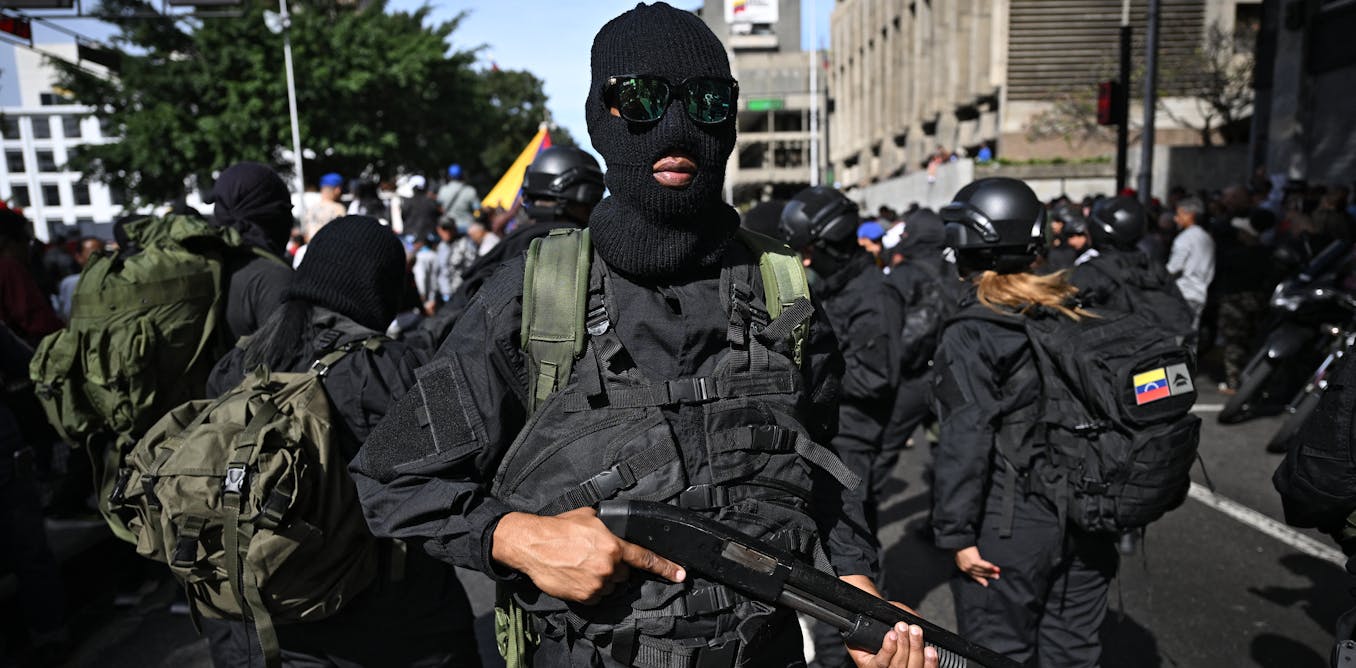
Venezuela‘s Crossroads: Navigating Hybrid Conflict and a Resurgent Monroe Doctrine
venezuela remains locked in a precarious situation, facing a future likely defined not by decisive victory for any single actor, but by prolonged instability. The potential removal of Nicolás Maduro, while weakening Chavismo, won’t dismantle its deeply rooted networks within the military, bureaucracy, and communities. Concurrently, the opposition, though energized, remains fragmented. The united States, under a renewed focus on hemispheric influence, faces its own constraints – domestic war fatigue, upcoming elections, and legal considerations.
This complex interplay points toward a likely scenario: years of managed instability. Let’s break down what that could look like:
* Shared, Weakened Power: De facto control could be distributed among a diminished Chavista elite, opposition figures integrated into a transitional government, and local security forces establishing control over specific regions.
* Calibrated U.S. Intervention: Expect continued, but limited, U.S. strikes and covert operations. Thes would likely target those obstructing preferred outcomes while avoiding large-scale occupation.
* Prolonged Uncertainty: For Venezuelans, this translates to continued insecurity and a precarious existence, with little immediate relief in sight.
The Rise of a “Monroe Doctrine 2.0”
The events unfolding in Venezuela aren’t isolated. They represent a broader shift in U.S. foreign policy, often described as a modern iteration of the Monroe doctrine. The original doctrine, established in the 19th century, warned European powers against interference in the Americas.
This “Monroe Doctrine 2.0” is a more assertive declaration: the U.S. will not tolerate the influence of extra-hemispheric rivals – or thier local allies – in its perceived sphere of influence. This isn’t just about venezuela; it’s a signal sent across the region and beyond.
Here’s how this new approach is playing out:
* Cuba & Nicaragua: Already heavily sanctioned and reliant on Russia and China,these nations are interpreting the situation in Venezuela as a direct warning. Their governments recognise that even long-standing regimes aren’t immune to U.S. pressure if their political alignment is insufficient.
* Colombia: As a nominal U.S. ally with a left-leaning government critical of the U.S. venezuela policy, Colombia finds itself in a difficult position, squeezed between competing pressures.
* Panama: The strategically vital Panama Canal, crucial for global trade and U.S.naval operations, may face renewed pressure to distance itself from Chinese investment and align more closely with Washington.
* Arctic Implications: Even beyond Latin America, the echoes are being heard. Canada and Denmark,through Greenland,are likely assessing the implications for their own strategic interests in the Arctic region.
What Does This Mean for You?
If you’re following the situation in Venezuela, understanding this broader context is crucial. it’s not simply a domestic political struggle; it’s a key battleground in a larger geopolitical competition.
Here’s what you should consider:
* Limited Options: A swift, clean resolution is unlikely. Prepare for a protracted period of instability and uncertainty.
* Regional Ripple Effects: The U.S. approach to Venezuela will likely shape its policies toward other nations in the region.
* Geopolitical Stakes: The situation highlights the growing competition between the U.S.,Russia,and China for influence in Latin America.
The U.S. is signaling a willingness to more actively assert its dominance in the western Hemisphere. Whether this approach will lead to greater stability or further exacerbate tensions remains to be seen. For now, Venezuelans face a challenging future, and the region braces for a new era of geopolitical maneuvering.
Sources:
* Venezuela’s opposition trapped in an all-or-nothing situation
* [Donald Trump is making a risky gamble to dominate the Americas](https://www.theglobeandmail.com/opinion/article-donald-trump-is-making-a-risky-gamble-