Cold-Roll forming: A Cornerstone of India’s Sustainable Manufacturing future & Potential Green Credit Generator
India is poised to become a global manufacturing hub, but this growth must be intrinsically linked to sustainability. A key, often overlooked, technology offering a pathway to both economic advancement and environmental obligation is sheet metal cold-roll forming. This process delivers superior dimensional accuracy, higher structural strength, and significantly lower lifecycle emissions compared to traditional manufacturing methods, positioning it as a vital component of India’s decarbonization strategy and a potential generator of valuable green credits.
The Efficiency Advantage of Cold-Roll Forming
Unlike subtractive manufacturing processes like machining or casting, cold-roll forming is a net-zero waste technology. As Santosh Venkatasubbaiah, Director - Sales & Marketing at Mother India Forming, explains, “Sheet metal cold-roll forming eliminates scrap at the source and reduces process energy. Any process that prevents waste before it is created strengthens india’s sustainability goals and deserves formal recognition within the national carbon-efficiency framework.” This inherent efficiency isn’t just environmentally sound; it’s economically advantageous, reducing material costs and streamlining production.
The benefits extend beyond waste reduction. Cold-roll forming consistently produces components with tighter tolerances and enhanced mechanical properties. this translates to lighter,stronger,and more durable products,crucial for industries demanding high performance and longevity. Furthermore, the lower energy consumption inherent in the process directly translates to a reduced carbon footprint for finished goods - a critical factor as businesses and consumers alike prioritize environmentally responsible products.
Aligning with India’s Green Credit Program
The potential for cold-roll forming to contribute to India’s Green Credit Programme is significant. Venkatasubbaiah highlights this, stating, “When industries adopt cold-roll forming, their final products carry measurably lower carbon footprints.This also aligns perfectly with the criteria for green-credit eligibility based on efficiency and lifecycle impact.”
While no official declaration currently exists explicitly linking cold-roll forming to carbon credit generation,established frameworks from leading organizations like Deloitte,PwC,EY,Accenture,and The Energy and Resources Institute (TERI) provide a clear pathway. These frameworks recognize and reward demonstrable improvements in areas directly impacted by cold-roll forming: waste reduction, energy efficiency, and the adoption of renewable energy sources. A robust Life Cycle Assessment (LCA) coupled with a comprehensive Measurement,Reporting,and Verification (MRV) process will be key to quantifying these benefits and converting them into verifiable carbon credits.
Mother India Forming: A Model for Integrated, Sustainable Manufacturing
Mother India Forming exemplifies a commitment to sustainable manufacturing. The company operates a fully integrated, 360-degree manufacturing ecosystem, consolidating sheet metal cold-roll forming, fabrication, finishing, and powder coating under one roof. This strategic consolidation minimizes multi-vendor logistics, significantly reducing Scope-3 emissions – those associated with the supply chain – for primary equipment manufacturers.
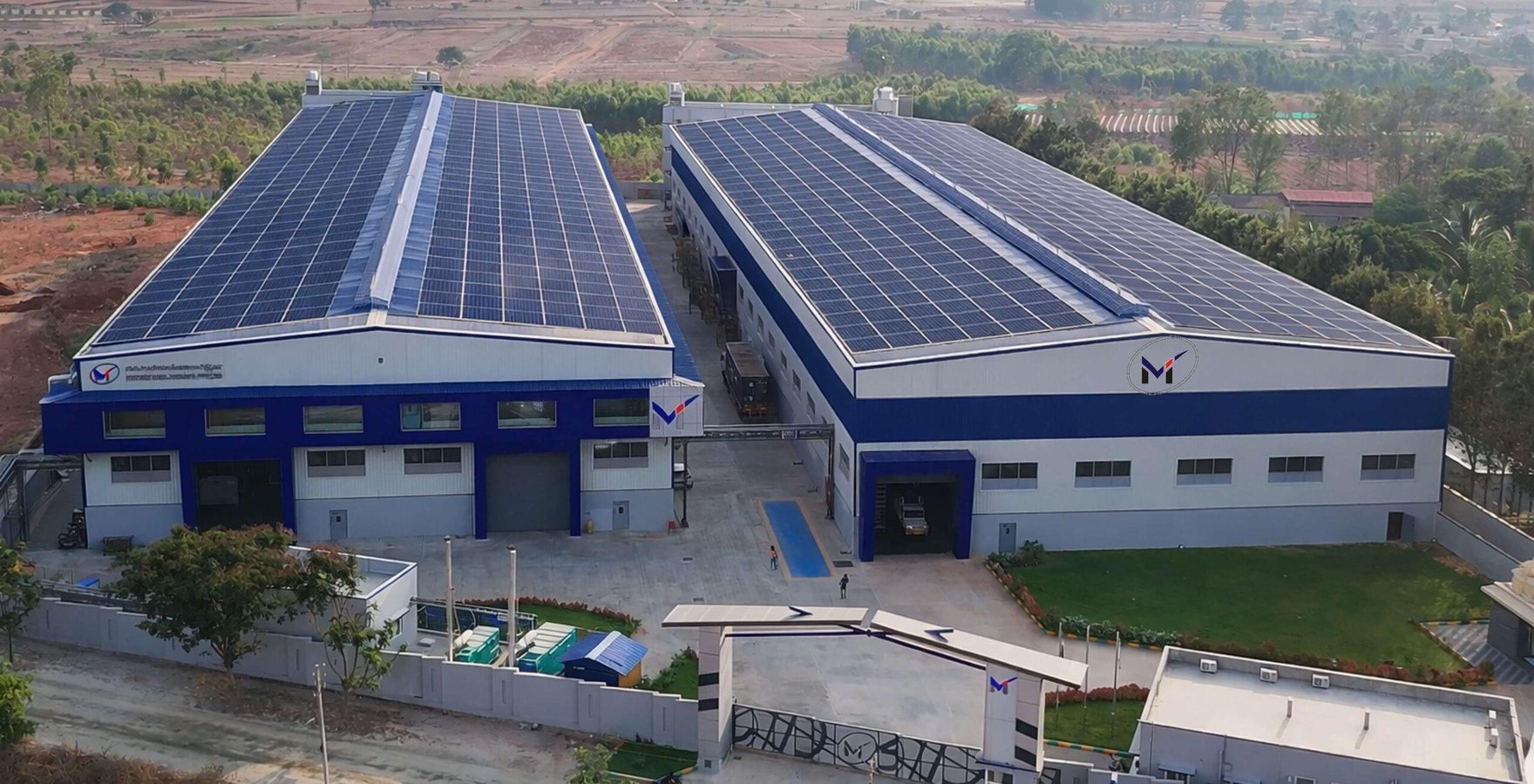
Further demonstrating their dedication to sustainability, Mother India Forming is aggressively expanding its renewable energy capacity, increasing solar power generation from 150 KW to 5 MW. This commitment to low-carbon operations reinforces their position as a leader in environmentally responsible manufacturing.
Meeting Growing Global Demand
The global demand for precision-formed components is projected to grow at a robust 7-9% compound annual growth rate through 2030.This growth is fueled by key sectors undergoing rapid transformation:
* Automotive & Electric vehicles: Demand for lightweight, high-strength components to improve fuel efficiency and range.
* Renewable Energy: Structural components for solar farms, wind turbines, and energy storage systems.
* Infrastructure: Durable and cost-effective solutions for bridges, buildings, and transportation networks.
* Warehousing & construction: Efficient and scalable systems for modern logistics and building construction.
* Electrical Equipment: Precision components for power distribution and control systems.
These industries are increasingly prioritizing components that offer a compelling combination of performance and minimal environmental impact – a combination that cold-roll forming delivers exceptionally well.
A National Prospect: ‘Made in India’ with a Carbon Advantage
Santosh Venkatasubbaiah emphasizes the broader strategic implications: “India has a global opportunity. Recognizing sheet metal cold-roll forming under the Green Credit Programme will boost the Prime Minister’s Made in India mission by enabling world-class,resource-efficient manufacturing.Policy recognition will give Indian industry a measurable carbon advantage and position the contry as a sustainable manufacturing hub. This will also encourage global OEMs to look towards India for manufacturing.”
The steel sector, responsible for 10-12% of
Keep reading