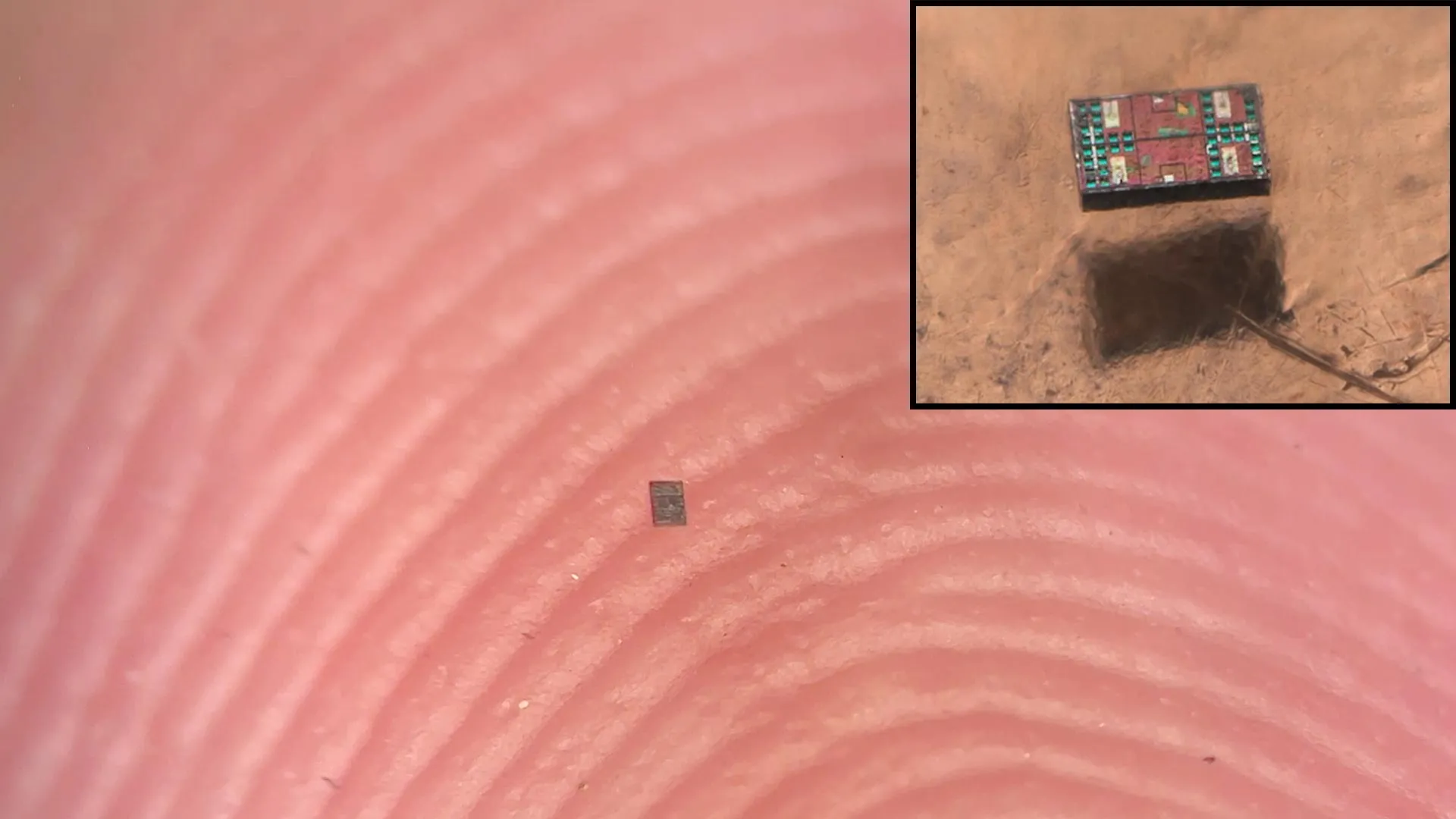
Tiny Robots, Giant Leap: Pioneering Microscopic Machines for Biomedical Frontiers
For decades, the dream of microscopic robots navigating the human body to deliver targeted therapies, monitor cellular health, and even perform microsurgery has captivated scientists. Now,a team of researchers from the university of Pennsylvania and the University of Michigan has brought that vision significantly closer to reality wiht the development of the first sub-millimeter robot capable of independent decision-making. This breakthrough, detailed in recent publications, isn’t just a technological feat; it’s a foundational step towards a new era of personalized medicine and advanced biological research.
Overcoming the Challenges of Miniaturization
Creating a functional robot at this scale – smaller than a grain of sand - presented a monumental engineering challenge. the core innovation lies in the synergistic collaboration between Penn Engineering’s expertise in micro-propulsion systems and the University of Michigan’s advancements in ultra-low-power electronics. “We recognized the inherent compatibility of these technologies,” explains Jan Hendrik Blaauw, a key researcher on the project. “But translating that potential into a working robot demanded five years of dedicated development.”
The primary hurdles were power and space.The robots are powered by minuscule solar panels,generating a mere 75 nanowatts - a staggering 100,000 times less energy than a smartwatch consumes. To address this, the team engineered specialized circuits operating at exceptionally low voltages, reducing power consumption by over 1000 times. This level of efficiency is critical for sustained operation within the constrained energy budget.
Space constraints were equally demanding.With solar panels dominating the robot’s surface area, minimal room remained for computing hardware. The solution? A radical redesign of the robot’s software. “We had to fundamentally rethink how the robot’s program instructions were structured,” Blaauw elaborates. “by condensing complex propulsion control sequences into single, specialized instructions, we drastically reduced the program’s length, allowing it to fit within the robot’s limited memory.”
Sensing, Communicating, and independent Action
This meticulous engineering resulted in a robot equipped with a complete computer system – processor, memory, and sensors - within a sub-millimeter footprint. This is a first, enabling the robots to perceive their surroundings and react autonomously.
equipped with highly sensitive electronic temperature sensors, these robots can detect temperature fluctuations as small as one-third of a degree Celsius. This capability holds immense promise for monitoring cellular activity, identifying areas of inflammation, or tracking the progression of disease.
But sensing is only half the equation. Communicating that data presented another unique challenge. The researchers devised an ingenious solution: the robots “report” their temperature measurements thru a distinctive “dance” – subtle wiggles encoded with facts. A microscope equipped with a camera captures this dance, allowing researchers to decode the data. “It’s remarkably similar to the communication methods employed by honey bees,” notes Blaauw.
Furthermore, the robots can be individually programmed using the same light that powers them. Each robot possesses a unique address, enabling researchers to upload specific instructions, paving the way for coordinated, multi-robot tasks.
A Versatile Platform for Future Innovation
While these initial robots represent a significant achievement, they are viewed as a foundational platform for future development. Researchers envision subsequent iterations with enhanced programs, faster movement, additional sensors, and the ability to operate in more challenging environments.
“This is truly just the beginning,” emphasizes Mark Miskin,another leading researcher on the project. “We’ve demonstrated the feasibility of integrating a brain, sensor, and motor into a device almost too small to see, and ensuring its functionality for months. This foundation unlocks a wealth of possibilities for adding intelligence and functionality, opening the door to a new frontier in micro-robotics.”
Implications for Medicine and Beyond
The potential applications of this technology are far-reaching. Imagine swarms of these micro-robots navigating the bloodstream to deliver drugs directly to cancer cells, monitoring vital signs in real-time, or clearing blocked arteries. Beyond medicine, these robots could be used for environmental monitoring, precision manufacturing, or even advanced materials science.
This research, supported by funding from the National Science Foundation, the Air Force Office of Scientific Research, the Army Research Office, and several private foundations, represents a significant investment in the future of microscopic machines. The collaborative effort, involving researchers from multiple disciplines and institutions, underscores the importance of interdisciplinary approaches to tackling complex scientific challenges.
Looking Ahead
The development of these sub-millimeter robots is not merely a technological advancement; it’s a paradigm shift. It’s a testament to human ingenuity and a bold step towards a future where microscopic machines play a vital role in improving human health and expanding our understanding of the world around us. The team at
Worth a look