
Astronomers tracking interstellar objects have uncovered new chemical insights into the visitor designated as 3I/ATLAS over an intensive 23-night observation window. According to data published by international astronomical research teams, the trajectory and compositional analysis of this rare interstellar comet offer unprecedented visibility into planetary formation processes occurring outside our solar system.
The campaign captured detailed spectroscopic signatures as the icy body passed through the inner solar system. Researchers utilized ground-based observatories and space telescopes to map out volatile compounds, dust production rates, and thermal emissions. These findings build on a growing catalog of interstellar interlopers, following earlier detections like ‘Oumuamua and 2I/Borisov, providing scientists with pristine material ejected from distant stellar nurseries.
Analyzing the chemical fingerprint of 3I/ATLAS required rapid coordination among global networks of astronomers. Because interstellar objects travel on hyperbolic trajectories and spend only a brief period near the Sun, observation windows close rapidly. The 23-night sequence of data acquisition recorded subtle shifts in gas sublimation patterns, revealing how alien volatile elements react to solar radiation compared to native comets originating in the Oort Cloud.
Spectroscopic Analysis and Interstellar Chemistry
Data gathered during the observation campaign highlighted distinct chemical variations within the coma and tail of 3I/ATLAS. According to spectral measurements analyzed by planetary scientists, the relative abundances of carbon-chain molecules and silicates differ significantly from typical comets born in our local neighborhood. These disparities provide tangible clues about the protoplanetary disk where the object formed billions of years ago.
Advanced spectroscopy allows researchers to break down the light reflected and emitted by cometary gas jets. By examining specific emission lines, teams mapped the release rates of water vapor, carbon monoxide, and carbon dioxide. The chemical ratios observed in 3I/ATLAS point toward a formation environment rich in carbon-bearing refractory materials, challenging existing models of how planetary systems distribute volatile compounds across interstellar distances.
Furthermore, the physical structure of the nucleus showed remarkable resilience despite intense thermal stress during perihelion passage. Observers tracked dust grain size distributions, noting that the ejected material contains larger refractory particles than initially expected for an interstellar visitor of this size. This structural data helps engineers and astrophysicists refine models of interstellar dust dynamics and survival rates in high-radiation environments.
Implications for Planetary System Formation
The discovery and characterization of 3I/ATLAS reinforce theories that material is regularly exchanged between distant star systems. As these remnants traverse interstellar space, they carry chemical records spanning galactic epochs. Planetary scientists emphasize that studying these wanderers bridges the gap between theoretical models of star formation and empirical chemistry observed in distant exoplanetary disks.
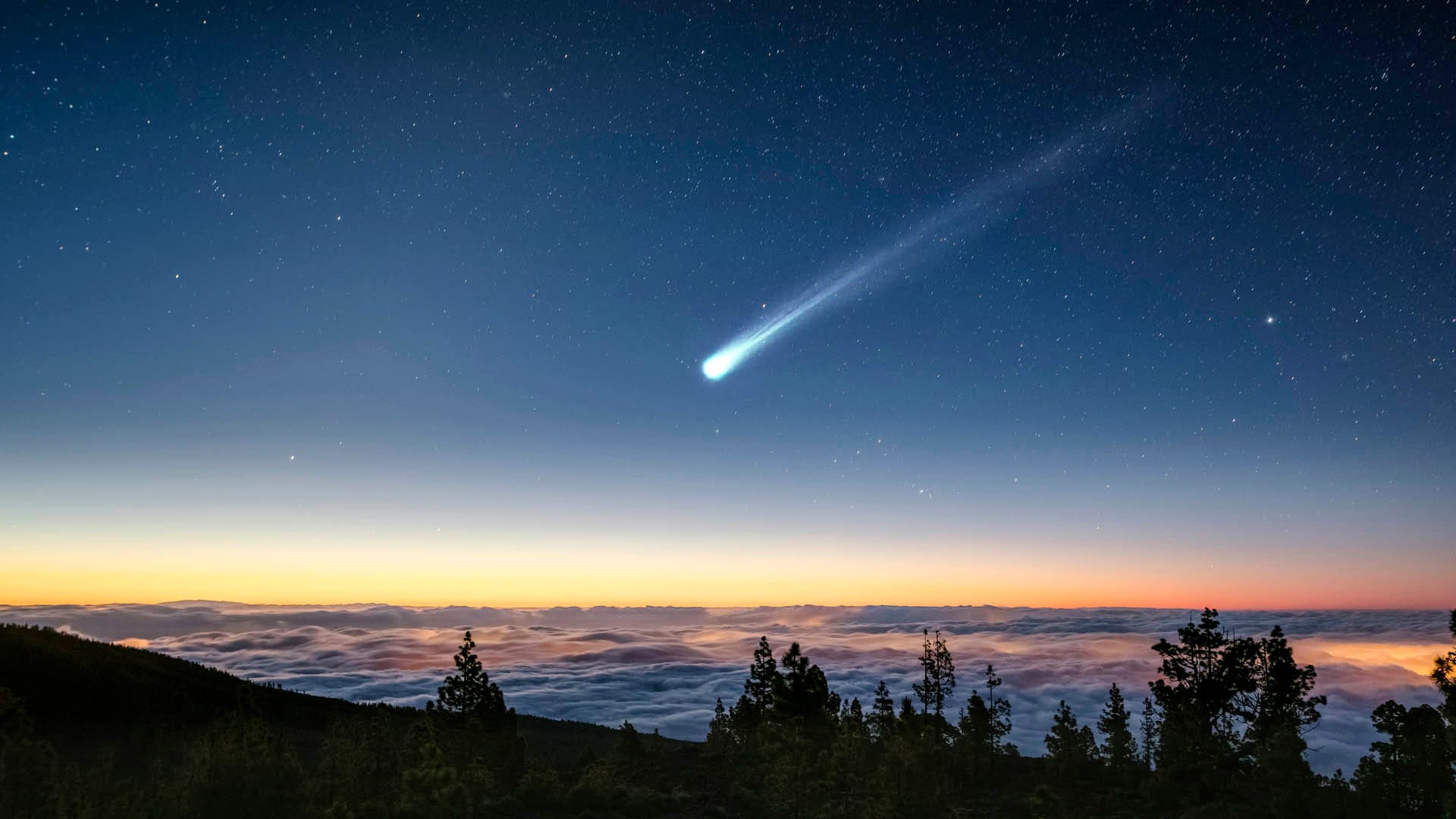
Comparisons with previous interstellar objects reveal diverse compositional profiles rather than a uniform standard. While ‘Oumuamua exhibited rocky characteristics with minimal outgassing and Borisov displayed a chemistry relatively similar to local solar system comets, 3I/ATLAS occupies a distinct chemical category. This variability suggests that building blocks vary widely across the galaxy, influenced by the metallicity and stellar type of the host system.
Researchers are currently archiving the full dataset from the 23-night observation run to open public access for global modeling teams. Future astrometric campaigns and next-generation observatories, such as the Vera C. Rubin Observatory, are expected to detect similar interstellar visitors with greater frequency, transforming our understanding of the galactic neighborhood.
Next Steps in Interstellar Tracking
The international astronomical community continues to refine orbital calculations to project the outbound trajectory of 3I/ATLAS as it recedes into the outer solar system. Observatories equipped with deep-space imaging capabilities will monitor the object for as long as faint signals remain detectable. Further announcements regarding refined chemical models and peer-reviewed analyses are anticipated as research groups conclude their initial data releases.
Worth a look