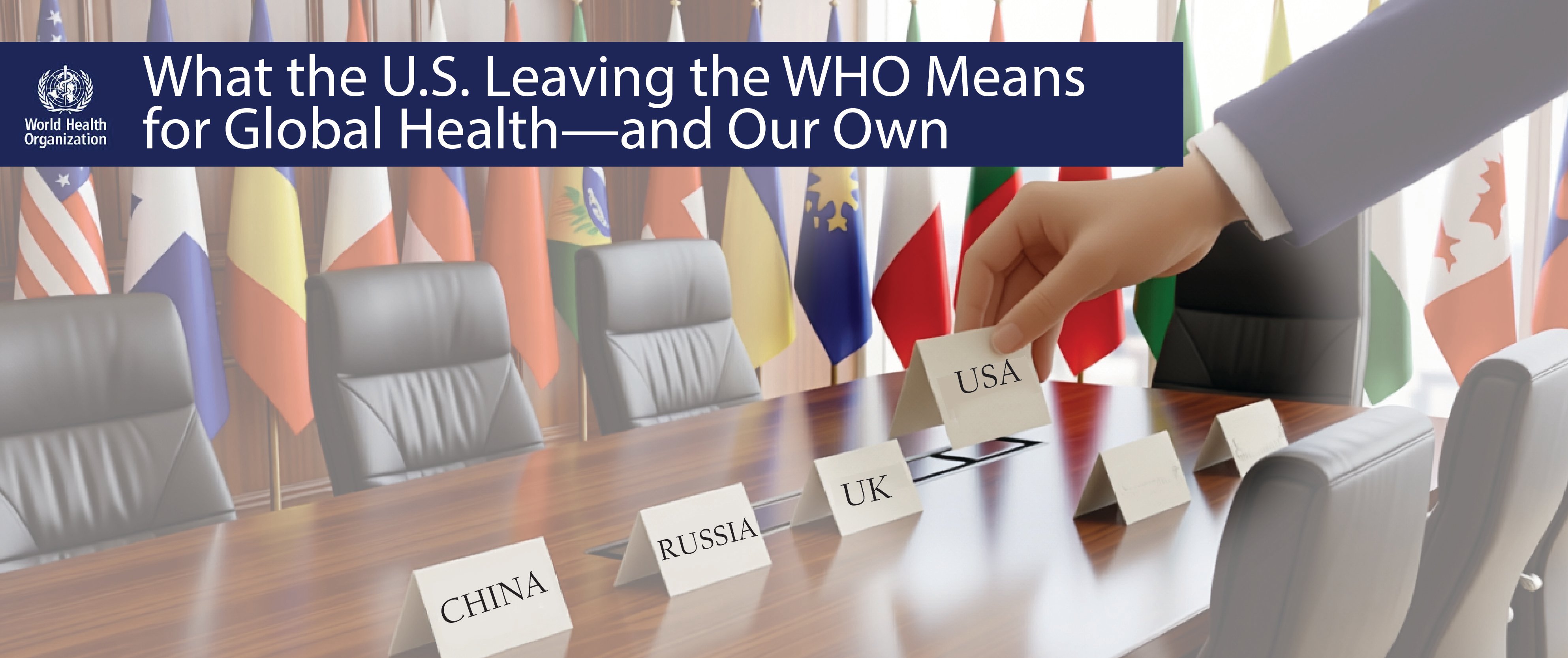
The Lasting Consequences of the U.S. Withdrawal from the World Health Organization
In 2020, the united States formally withdrew from the World Health Organization (WHO), a decision that sparked global concern and debate. While the U.S.has as rejoined the WHO under the Biden governance in 2021, the initial departure and the potential for future disengagement continue to raise questions about the long-term implications for global health security and U.S. influence. This article examines the multifaceted consequences of the U.S. withdrawal, encompassing impacts on scientific collaboration, institutional leadership, financial stability, and global stability.
Impact on Scientific Collaboration and U.S. Credibility
The U.S. withdrawal from the WHO created immediate challenges for American scientists engaged in international health work. The decision undermined established collaborations and raised concerns about the future of joint research initiatives. In many regions, American researchers were already viewed with skepticism, sometimes perceived as representing U.S. political or economic interests. the withdrawal reinforced these perceptions, signaling a disengagement from shared global health responsibilities. This made it more difficult for U.S. scientists to build trust and conduct vital healthcare work, notably in countries where partnerships are crucial for disease control and humanitarian response.
The perception of the U.S. as an uncooperative partner also damaged its credibility in global health circles. Trust is paramount in international health collaborations, and the withdrawal eroded confidence in the U.S.’s commitment to multilateral efforts. This could hinder future responses to global health emergencies, as other nations might potentially be less willing to share information or collaborate with the U.S.
Shifting Institutional Leadership and Influence
The U.S. departure from the WHO created a leadership vacuum within the organization.While the WHO continued to function, the absence of the U.S.,historically the largest financial contributor and a key influencer,allowed other nations to step in and fill the void. This shift in power dynamics meant that different priorities, values, and geopolitical interests began to shape WHO guidelines, funding decisions, and global health strategies. Council on Foreign Relations provides detailed information on WHO funding and the impact of the US withdrawal.
Without U.S. participation, American perspectives on critical issues like clarity, scientific standards, and public health governance carried less weight. Crucially, the U.S. lost a seat at the table to ensure its interests were understood and considered in global health policy. This lack of direct influence could lead to outcomes that are not aligned with U.S. priorities or values.
Financial Repercussions and Global Health Systems
As the WHO’s largest past funder, the U.S.withdrawal had a significant financial impact on the organization. The immediate reduction in funding directly affected the WHO’s ability to deliver essential services to low- and middle-income countries. These services include disease surveillance, vaccination programs, maternal and child health initiatives, and emergency outbreak responses. The WHO provides detailed information on its funding sources and allocation.
Weakening these systems has far-reaching consequences. Poor health outcomes undermine economic stability, disrupt supply chains, and increase the risk of humanitarian crises. The COVID-19 pandemic starkly illustrated the interconnectedness of global health and economic security. A weakened WHO is less equipped to prevent and respond to future pandemics, perhaps leading to more severe economic and social disruptions.
Cascading Effects on Global Stability
The consequences of a weakened global health system extend beyond immediate health concerns. Economic instability, fueled by poor health outcomes, can contribute to mass migration, political unrest, and conflict.These cascading effects are precisely what the United Nations and the World Health Organization were designed to prevent in the aftermath of World War II. The WHO plays a critical role in maintaining global stability by addressing the root causes of conflict and promoting international cooperation.
Rejoining the WHO and Future Considerations
The United States rejoined the WHO in January 2021,signaling a renewed commitment to multilateralism and global health security. The White House released a statement outlining the reasons for rejoining.
However,the initial withdrawal served as a stark reminder of the potential consequences of disengagement. Moving forward, sustained U.S. leadership and financial support for the WHO are essential to strengthen global health systems, prevent future pandemics, and promote international stability. It is crucial to learn from the past and prioritize collaboration over isolation in addressing the complex challenges facing global health.
Key Takeaways:
- the U.S. withdrawal from the WHO damaged scientific collaboration and U.S. credibility.
- The departure created a leadership vacuum within the WHO, allowing other nations to exert greater influence.
- Reduced funding for the WHO negatively impacted essential health services in vulnerable countries.
- Weakened global health systems can contribute to economic instability, political unrest, and conflict.
- sustained U.S. leadership and financial support for the WHO are crucial for global health security.
Related reading