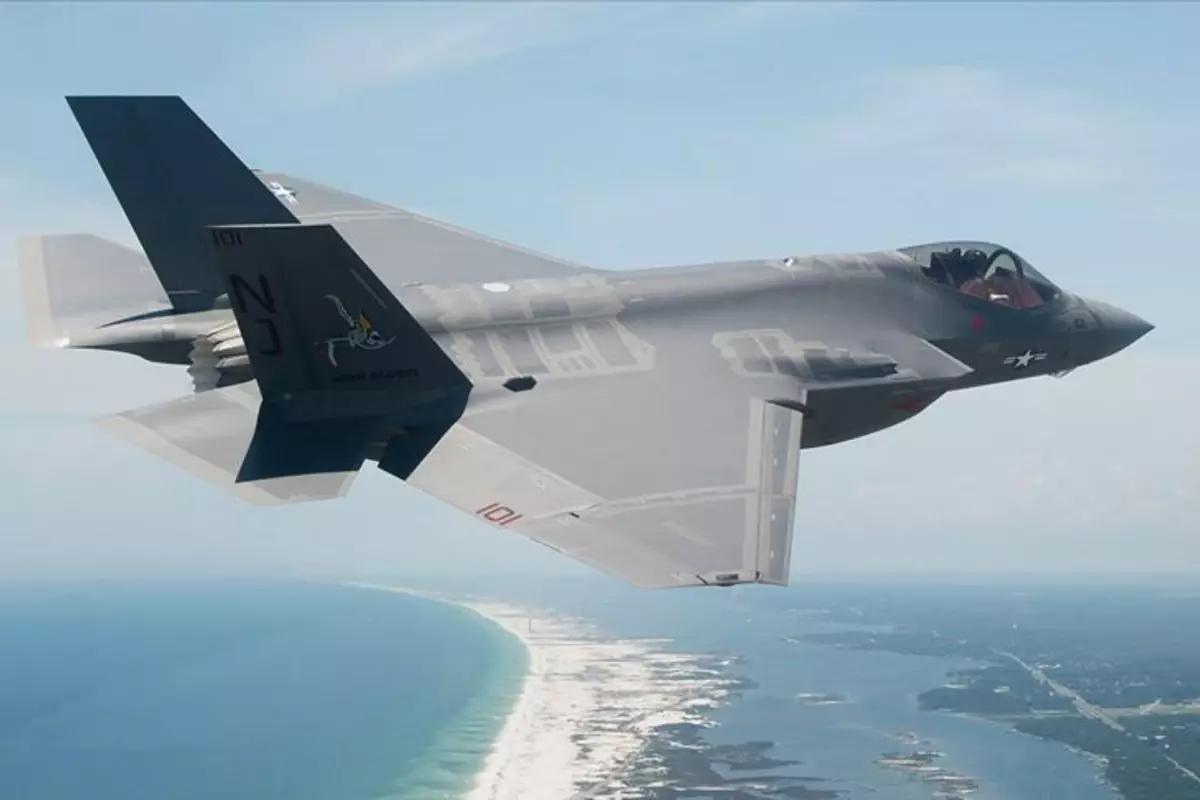
Oslo, Norway – A planned large-scale NATO exercise scheduled for March in northern Norway will proceed without the participation of U.S. Fighter jets, Norwegian officials have confirmed. The decision, announced by the Norwegian Armed Forces, impacts the air component of the exercise and raises questions about the evolving dynamics within the alliance, particularly as geopolitical tensions remain high.
The exercise, known as “Cold Response,” is slated to be one of the largest military drills ever held in Norway, involving 14 NATO nations. While the majority of the exercise will continue as planned, the absence of U.S. F-35 aircraft represents a notable shift. According to a statement from Major Espen Solemdal of the Norwegian Armed Forces, approximately 100 to 150 U.S. Personnel will no longer be deploying to Norway as a result of this change. “They will be going elsewhere in the world,” Solemdal stated, as reported by Norwegian media. The withdrawal of the F-35s is expected to affect the aerial aspects of the drill, with Solemdal suggesting the U.S. Is currently prioritizing its own operational needs.
Shifting Priorities and Geopolitical Context
The timing of the U.S. Decision has prompted speculation, with some observers suggesting a link to heightened tensions in the Middle East. Norwegian media outlets have pointed to a similar situation in June 2025, where U.S. Aircraft were also withdrawn from exercises, coinciding with a period of increased international instability and subsequent U.S. Withdrawal from several international agreements. However, officials have not explicitly confirmed a direct connection between the current withdrawal and the situation in the Middle East. The U.S. Department of Defense has not yet issued a public statement regarding the decision and requests for comment have gone unanswered.
The “Cold Response” exercise is designed to enhance NATO’s ability to operate in challenging Arctic conditions and demonstrate the alliance’s collective defense capabilities. The Arctic region has become increasingly strategically important in recent years, due to climate change, increased accessibility, and growing geopolitical competition. NATO’s “Arctic seven” – Canada, Denmark, Finland, Iceland, Norway, Sweden, and the United States – have been working to strengthen cooperation and security in the region, as highlighted by The American Legion. This increased focus on the Arctic underscores the region’s growing significance for the alliance.
NATO Unity and Transatlantic Relations
The withdrawal of U.S. Aircraft comes at a time when the strength of the transatlantic alliance is under scrutiny. Recent statements from Estonian Prime Minister Kaja Kallas have sought to dispel any notion of a rift between NATO and the European Union, rejecting calls for a separate European army. Kallas emphasized the importance of maintaining a strong and unified NATO, arguing that a separate European military structure would not be beneficial.
However, the U.S. Decision to pull aircraft from the Norwegian exercise inevitably raises questions about the level of commitment and coordination within the alliance. While NATO officials have stressed that the exercise will still be valuable, the absence of a key component of U.S. Air power is likely to be felt. The situation also highlights the challenges of balancing competing priorities and responding to multiple global crises simultaneously. The U.S. Military is currently engaged in a range of operations and deployments around the world, and resource allocation decisions are often complex and politically sensitive.
Recent NATO Support for Ukraine
The situation unfolds against a backdrop of continued NATO support for Ukraine. Just this week, Denmark, Norway, and Sweden announced a joint $500 million support package for Ukraine, demonstrating the alliance’s ongoing commitment to bolstering Kyiv’s defense capabilities. This financial aid will provide crucial assistance to Ukraine as it continues to defend itself against Russian aggression.
Impact on “Cold Response” Exercise
The “Cold Response” exercise is a biennial event that aims to test NATO’s ability to conduct large-scale operations in the Arctic environment. The exercise typically involves thousands of troops from across the alliance, as well as a wide range of military equipment, including aircraft, ships, and ground vehicles. The focus is on practicing joint operations, enhancing interoperability, and demonstrating NATO’s readiness to respond to a crisis.
While the withdrawal of U.S. F-35s will undoubtedly impact the air component of the exercise, Norwegian officials have emphasized that the overall objectives will still be met. Other NATO member states are expected to contribute additional air assets to compensate for the U.S. Absence. The exercise will also focus on other aspects of military operations, such as logistics, command and control, and maritime security. The Norwegian Armed Forces have stated that the exercise remains a valuable opportunity to enhance NATO’s collective defense capabilities and demonstrate the alliance’s commitment to the Arctic region.
Key Takeaways
- The U.S. Has withdrawn its F-35 fighter jets from a major NATO exercise in Norway, scheduled for March 2026.
- Approximately 100-150 U.S. Personnel will no longer deploy to Norway as a result of this decision.
- The withdrawal raises questions about U.S. Priorities and coordination within the NATO alliance.
- The “Cold Response” exercise will proceed with contributions from other NATO member states.
- The decision comes amid heightened geopolitical tensions and ongoing NATO support for Ukraine.
Looking ahead, the situation will likely be closely monitored by NATO allies. The alliance will be keen to understand the reasons behind the U.S. Decision and to ensure that it does not signal a broader shift in U.S. Commitment to European security. The “Cold Response” exercise will serve as an important test of NATO’s ability to adapt to changing circumstances and maintain its collective defense capabilities. Further updates on the exercise and the U.S. Decision are expected in the coming weeks.
Do you think the U.S. Decision reflects a broader shift in priorities within NATO? Share your thoughts in the comments below.
Keep reading