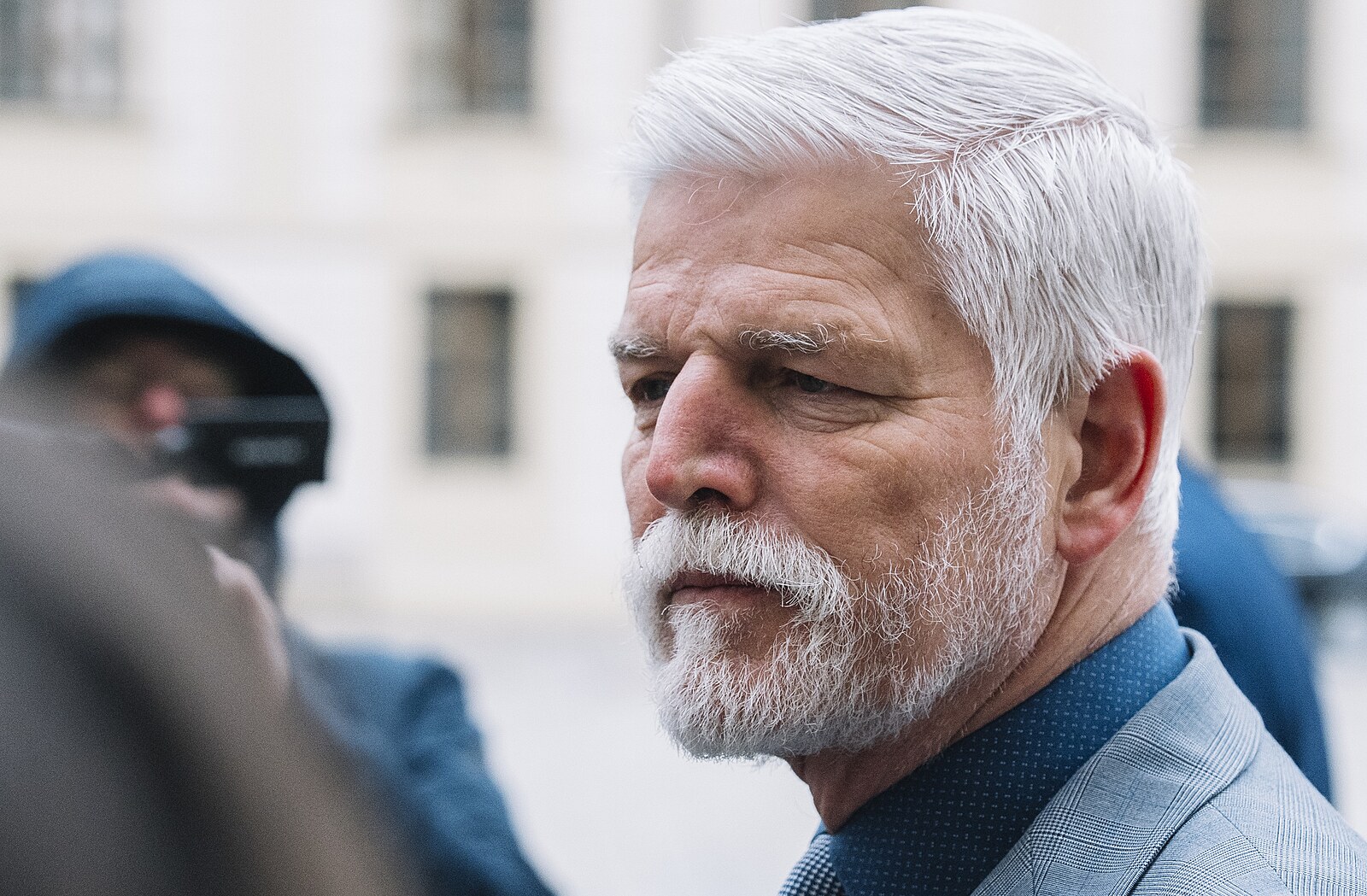
Prague – As the Czech Republic approaches the final two years of Petr Pavel’s presidential term, speculation is mounting regarding a potential successor. Although it may seem premature to discuss a future election, a growing sentiment within Czech political circles, and increasingly reflected in public discourse, suggests Pavel currently faces a surprisingly limited field of viable challengers. This has led to some, like commentators at Lidovky.cz, to question whether the upcoming presidential election should even proceed, given the apparent lack of a competitive race.
The current political landscape reveals a complex interplay of factors contributing to Pavel’s strong position. Despite earlier tensions with the Motorist party following his decision not to appoint Filip Turek as Minister of the Environment – a move he justified citing Turek’s “repeated disrespect for the Czech legal system” due to past traffic violations and controversial social media posts – Pavel continues to enjoy significant support across the political spectrum. Recent polling data, as reported by Novinky, indicates that even a substantial portion of Motorist voters, approximately 38 percent, would support Pavel in a re-election bid. This represents a notable figure, especially considering the initial friction between the President and the party.
This broad-based support is further underscored by a recent survey highlighted by iDNES.cz, which identifies Pavel as the clear frontrunner with no strong competitor emerging at this stage. The lack of a compelling alternative is not simply a matter of public opinion. it too reflects a perceived absence of individuals within the current political establishment willing or able to mount a serious challenge. The situation is further complicated by the ongoing internal dynamics within the governing coalition, particularly the continued dispute over the appointment of Filip Turek.
The Motorist Party’s Continued Stance
The impasse surrounding Filip Turek’s potential ministerial position remains a significant point of contention. As reported by Seznam Zpravy on February 5, 2026, Prime Minister Andrej Babiš acknowledged a “pat” situation, conceding that Pavel “will never appoint” Turek. Despite this, the Motorist party, led by Petr Macinka, remains steadfast in its insistence that Turek is their sole candidate for the position. Macinka has reportedly engaged in direct communication with presidential advisors, even resorting to what Pavel characterized as “blackmail” in an attempt to secure Turek’s appointment. According to Seznam Zpravy, Macinka warned that failing to appoint Turek would irrevocably damage the relationship between the President and the Motorist party.
This unwavering support for Turek, despite the President’s firm opposition, highlights the complex political calculations at play. While the Motorist party’s position may appear intransigent, it also reflects a desire to maintain leverage within the governing coalition. The party’s insistence on Turek’s appointment, even in the face of overwhelming opposition, underscores the importance of maintaining party unity and demonstrating strength in negotiations with other coalition partners.
Shifting Political Alignments and Public Sentiment
The surprising level of support for Pavel among Motorist voters, as detailed in the Novinky report, is a particularly noteworthy development. This suggests a degree of pragmatism among the party’s electorate, who may prioritize stability and effective governance over strict adherence to party lines. The fact that 27 percent of Motorist voters would “definitely” support Pavel’s re-election, with an additional 11 percent leaning in that direction, indicates a significant level of crossover appeal. This contrasts sharply with the support levels for Pavel among voters of other opposition parties, such as ANO (22 percent) and SPD (10 percent).
This shift in sentiment can be partially attributed to Pavel’s performance during the 2023 presidential election, where he garnered significant support from Motorist voters. As noted by iROZHLAS, this earlier support laid the groundwork for the current level of backing, despite the subsequent disagreements over Turek’s appointment. The President’s perceived commitment to upholding the rule of law and his willingness to challenge established political norms may also resonate with a segment of the Motorist electorate.
The Question of Alternatives
The lack of a credible challenger to Pavel is a recurring theme in recent Czech political analysis. Médium.cz, in a recent commentary, posed the question of “who will be the next president?” and implicitly acknowledged the current dearth of viable candidates. While several potential contenders have been mentioned in the media, none have yet emerged as a serious threat to Pavel’s position. This is partly due to the President’s relatively high approval ratings and his perceived competence in handling both domestic and international affairs.
the current political climate is characterized by a degree of uncertainty and fragmentation. The governing coalition is fragile, and the opposition parties are divided and lacking a clear unifying agenda. This makes it difficult for any single individual to emerge as a credible alternative to Pavel, who benefits from the perception of stability and experience. The ongoing dispute with the Motorist party, while creating some political turbulence, has also served to reinforce Pavel’s image as a strong and independent leader willing to stand up to pressure from within the government.
Looking Ahead: The Road to 2028
With the next presidential election still two years away, the political landscape could undoubtedly shift. But, as of February 2026, Petr Pavel appears to be in a remarkably strong position. The absence of a compelling challenger, coupled with his relatively high approval ratings and broad-based support, suggests that he is the clear frontrunner for re-election. The question of whether the election should even proceed, as suggested by Lidovky.cz, is a provocative one, but it reflects a growing sense that the outcome may be predetermined.
The coming months will be crucial in determining whether any viable alternatives to Pavel emerge. The performance of the governing coalition, the evolution of the dispute with the Motorist party, and the emergence of new political issues will all play a role in shaping the electoral landscape. However, for now, Petr Pavel remains the dominant force in Czech presidential politics, and the prospect of a competitive election appears increasingly remote.
The next key development to watch will be the ongoing negotiations within the governing coalition regarding the appointment of a Minister of the Environment. The resolution of this dispute, or the lack thereof, will likely have a significant impact on the political dynamics leading up to the 2028 presidential election. Readers interested in following these developments are encouraged to consult official government sources and reputable news outlets for the latest updates.
What are your thoughts on the current Czech political landscape? Share your opinions and insights in the comments below.