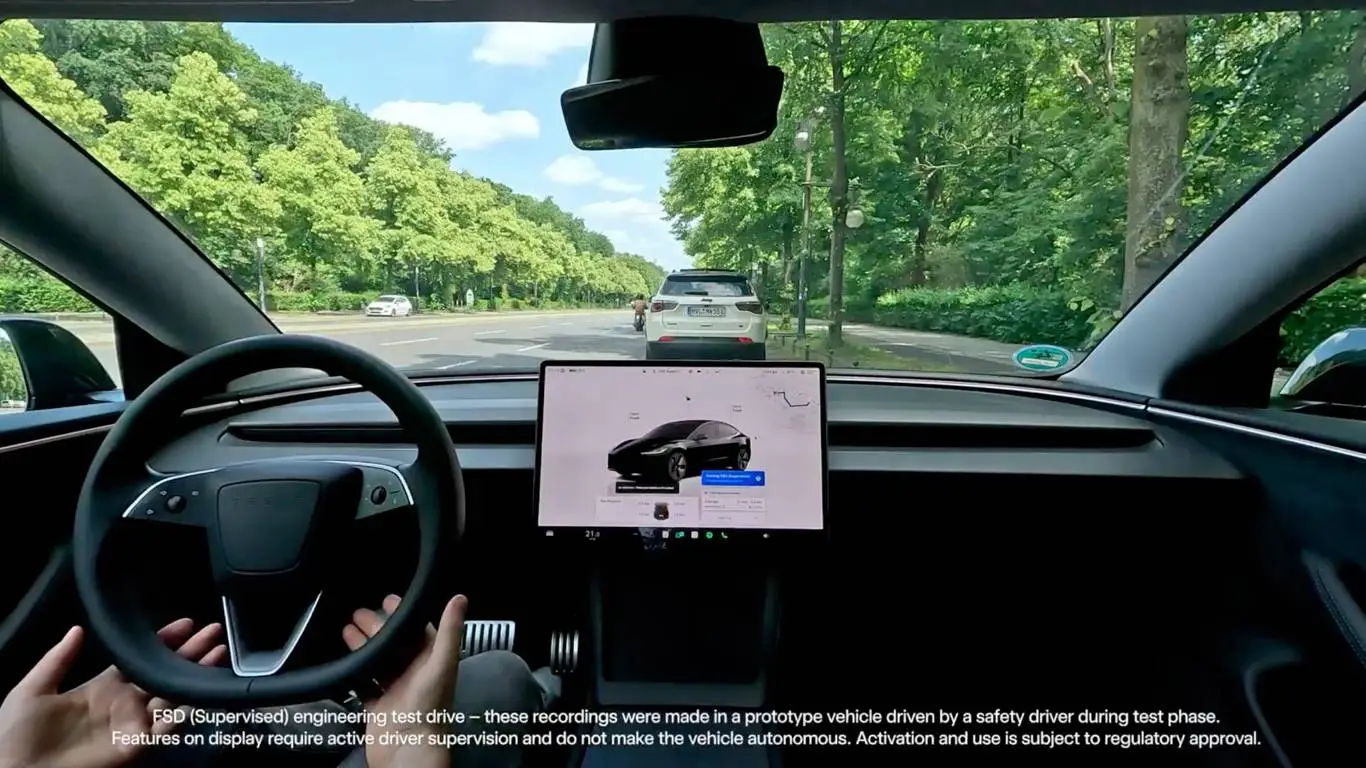
Berlin, Germany – February 21, 2026 – A recent incident involving a Tesla Cybertruck highlights the potential life-saving capabilities of the vehicle’s Full Self-Driving (FSD) supervised system. A Tesla owner experienced a medical emergency while driving on a highway, and the FSD system was able to safely bring the vehicle to a stop, preventing a potential accident. This event underscores the growing role of advanced driver-assistance systems in enhancing road safety and providing a crucial safety net for drivers facing unexpected health crises.
The incident, initially reported by various international news outlets, involved Rishi Bora, a Cybertruck owner who reportedly lost consciousness while driving due to an allergic reaction following a prolonged fast and medication. According to reports, Bora had been fasting for 17 hours before taking medication, which triggered a severe allergic response leading to his loss of awareness behind the wheel. The activation of Tesla’s FSD supervised system proved critical in averting a potentially catastrophic situation.
How Tesla’s FSD System Responded
When Bora became unresponsive, the Cybertruck’s driver monitoring system detected the loss of consciousness. The FSD system immediately initiated a controlled deceleration, activated the hazard lights, and guided the vehicle safely to the side of the road. Crucially, no collision occurred during this automated maneuver. This demonstrates the system’s ability to not only recognize a driver incapacitation but also to react swiftly and effectively to mitigate the risks associated with it. The incident highlights the increasing sophistication of these systems and their potential to intervene in emergency situations.
Bora’s wife was alerted to the situation when she noticed his prolonged silence during a phone call. Utilizing the Life360 location-sharing service, she was able to notify emergency responders, who arrived on the scene within approximately five minutes. Following medical assistance, the Cybertruck’s FSD system continued to operate, autonomously transporting Bora to the nearest hospital emergency room. Bora subsequently reported that he had been discharged from the hospital and expressed his gratitude to Tesla and CEO Elon Musk for the technology that likely saved his life. Musk publicly acknowledged the incident with a message of support.
Tesla’s FSD and Safety Statistics
This incident adds to the growing body of evidence suggesting the safety benefits of Tesla’s FSD system. According to data released by Tesla, vehicles equipped with FSD supervised have experienced significantly fewer serious accidents compared to the national average. Tesla reports that FSD-equipped vehicles have experienced one serious accident for every 8.5 million kilometers driven, compared to the U.S. Average of one serious accident per 1.06 million kilometers driven. While these figures are subject to ongoing scrutiny and debate, they offer a glimpse into the potential of autonomous driving technologies to improve road safety.
Understanding FSD Supervised
It’s important to clarify that Tesla’s “Full Self-Driving” capability is not fully autonomous. The system currently requires active driver supervision and intervention. FSD Supervised, as the name suggests, is designed to assist the driver, but the driver remains ultimately responsible for the vehicle’s operation. The system utilizes a suite of sensors, including cameras and radar, to perceive the surrounding environment and make driving decisions. Though, it is still under development and can encounter limitations in certain conditions. The incident with Rishi Bora demonstrates the system’s ability to function as a safety net when the driver is unable to maintain control, but it does not negate the need for attentive driving.
Cybertruck’s Arrival in Key Markets
The Cybertruck’s recent launch in markets like South Korea, as reported on November 28, 2025, by Electronic Times, signifies Tesla’s continued global expansion. The company held a delivery event for the first Cybertruck customers in Korea, highlighting the vehicle’s unique features, including its ultra-hard stainless steel body, armored glass, and off-road suspension. The initial pricing for the Cybertruck in South Korea starts at 145 million won (approximately $110,000 USD as of February 21, 2026) for the all-wheel drive (AWD) model and 160 million won (approximately $121,000 USD) for the Cyberbeast variant. Notably, the FSD feature was included in the initial rollout to Korean customers, a detail confirmed by Tesla Korea representative, Seo Young-deok.
Despite the excitement surrounding the Cybertruck’s arrival, it’s important to note that the vehicle does not qualify for electric vehicle purchase subsidies in South Korea due to its classification as a medium-sized truck. This regulatory hurdle could impact its affordability for some consumers. Tesla is also actively expanding its charging infrastructure in South Korea, with plans to install V4 Superchargers at highway rest stops to improve long-distance travel convenience. The company intends to double its number of showrooms and service centers in the country, including opening a new store in Incheon Songdo by the end of the year.
The Future of Autonomous Safety Systems
The incident with the Tesla Cybertruck serves as a compelling case study for the potential benefits of advanced driver-assistance systems. As these technologies continue to evolve, they are likely to play an increasingly important role in preventing accidents and saving lives. However, it is crucial to remember that these systems are not foolproof and require responsible leverage and ongoing development. Further research and testing are needed to address the limitations of current systems and ensure their reliability in a wider range of driving conditions.
The integration of driver monitoring systems, like the one that detected Bora’s loss of consciousness, is a key component of enhancing the safety of autonomous vehicles. These systems can detect signs of driver fatigue, distraction, or medical emergencies and intervene to prevent accidents. As technology advances, we can expect to see even more sophisticated driver monitoring systems that can provide a more comprehensive assessment of driver health and alertness.
Looking ahead, the development of fully autonomous vehicles promises to further revolutionize road safety. However, achieving full autonomy will require overcoming significant technical and regulatory challenges. It will also necessitate a careful consideration of ethical and societal implications. The incident with the Tesla Cybertruck provides a valuable glimpse into the potential future of transportation, where technology can work to protect drivers and passengers in unexpected and potentially life-threatening situations.
As Tesla continues to refine its FSD system and expand its global reach, it is likely that we will see more instances of this technology intervening to prevent accidents and save lives. The company’s commitment to innovation and safety, coupled with the growing adoption of advanced driver-assistance systems, offers a promising outlook for the future of road safety.
What are your thoughts on the role of autonomous driving technology in enhancing road safety? Share your comments below and join the conversation.
Worth a look