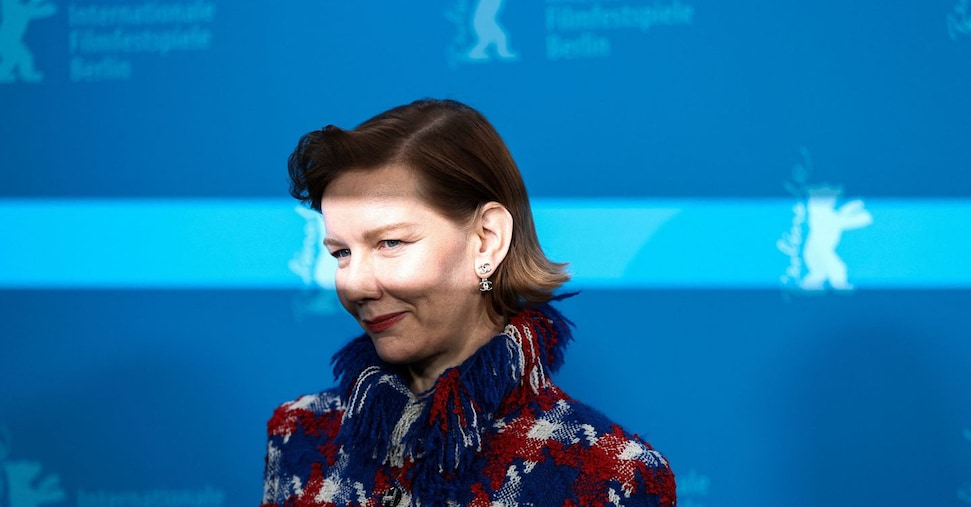
Sandra Hüller’s Transformative Performance in ‘Rose’: A Study in Gender, Power and Liberation
Sandra Hüller is experiencing a remarkable moment in her career, garnering widespread acclaim for her nuanced and daring performances in a string of critically lauded films. Following her roles in Justine Triet’s Anatomy of a Fall, Jonathan Glazer’s The Zone of Interest, and Maren Ade’s earlier work, Toni Erdmann, Hüller has once again captivated audiences and critics alike. Her latest film, Markus Schleinzer’s Rose, premiered at the 76th Berlin International Film Festival, where she received significant praise for a performance that demands both physical and emotional commitment. The film, shot in stark black and white and utilizing expansive outdoor settings, presents a compelling narrative of identity, societal constraints, and the search for freedom.
Rose is set in the early 17th century Germany, a period marked by the aftermath of the Thirty Years’ War. The story centers around a solitary figure, a soldier, portrayed by Hüller, who arrives in a remote village claiming ownership of a long-abandoned plot of land. Presented with legal documentation supporting her claim, the community reluctantly concedes. What unfolds is a complex exploration of gender roles, societal expectations, and the power dynamics inherent in a patriarchal society. The soldier, initially perceived as gruff and imposing, gradually earns the respect of the villagers through hard work and a quiet dignity, culminating in an act of bravery when she rescues a young boy from a wolf attack. However, the pursuit of land and status ultimately leads to a revelation – the soldier is, in fact, a woman living as a man, concealing a deeply personal history.
Hüller’s performance in Rose is not merely a portrayal of a character in disguise; it’s a profound investigation into the construction of masculinity and the liberation found in shedding societal expectations. The film delves into the complexities of inhabiting a role dictated by circumstance and the relief experienced when finally able to embrace one’s true self. The actor’s preparation for the role involved a meticulous study of physicality and behavior, exploring how power manifests in physical gestures and how societal norms shape our understanding of gender. This exploration, as Hüller herself has described, was a process of both challenge and liberation.
Deconstructing Masculinity: Hüller’s Physical and Emotional Transformation
The core of Hüller’s performance lies in her ability to convincingly portray a man while simultaneously hinting at the woman beneath the surface. As she explained in interviews, the transition wasn’t simply about adopting masculine mannerisms, but about understanding the weight of societal expectations placed upon men. “We women in public are always very nervous and insecure, we never steal space in the room, while men are very calm and impose calm on you, they have a certain power over you, it seems they are never afraid,” Hüller stated, reflecting on her process of embodying the soldier. This understanding informed her physicality, leading her to consciously broaden her stance, adopt a heavier gait, and speak with deliberate slowness. She worked with a physiotherapist to understand the anatomical differences between male and female bodies, recognizing how women tend to contain their movements more, while men often occupy space more freely. The costume itself, she noted, contributed to the rigidity of the character, helping to maintain a fixed posture and a sense of control.
The relief Hüller experienced when portraying Rose’s transition back to her female identity was a key element of the performance. “It was a great relief,” she said. “Rose had to bear a brusque and masculine behavior that at that time was connected to violence and still is today. It was really fascinating to dig into this mask, because when Rose stopped wearing the masculine clothes, she found a new space in which she could finally feel free, as she hadn’t been for at least 15-20 years, or perhaps ever.” This liberation is not presented as a simple return to a natural state, but as a hard-won reclamation of self, achieved through navigating a world that actively seeks to define and confine individuals based on gender.
The Historical Context: Gender and Society in 17th Century Germany
The setting of Rose – early 17th century Germany – is crucial to understanding the film’s themes. The Thirty Years’ War (1618-1648) had a devastating impact on the region, leading to widespread social upheaval and economic hardship. This period also saw a reinforcement of traditional gender roles, with women largely confined to the domestic sphere and men expected to fulfill roles as soldiers, landowners, and heads of households. The film subtly highlights the precariousness of life during this era, where survival often depended on adhering to strict social norms. Rose’s decision to live as a man can be interpreted as a desperate attempt to navigate a world that offered limited opportunities for women, particularly in terms of land ownership and economic independence.
The historical context also sheds light on the societal pressures surrounding marriage and inheritance. The film’s plot twist – Rose’s eventual desire to marry the daughter of a neighbor to acquire more land – underscores the economic motivations that often drove marital decisions during this period. This act, while seemingly pragmatic, ultimately exposes her true identity and forces a confrontation with the societal constraints she has been attempting to circumvent. The film doesn’t offer simple answers or romanticize Rose’s situation; instead, it presents a nuanced portrayal of a woman caught between her desire for freedom and the limitations imposed by her time.
Schleinzer’s Directorial Style and Hüller’s Collaborative Approach
Markus Schleinzer’s directorial approach in Rose is characterized by a deliberate restraint and a focus on visual storytelling. The film’s black and white cinematography, combined with long takes and minimal dialogue, creates a sense of stark realism and allows the audience to fully immerse themselves in the world of the film. The use of external locations and expansive landscapes further emphasizes the isolation and vulnerability of the characters. Schleinzer’s direction allows Hüller’s performance to take center stage, providing her with the space to explore the complexities of her character without unnecessary embellishment.
Hüller’s collaborative relationship with Schleinzer was essential to the film’s success. She spoke of the director’s willingness to allow her to experiment with the physicality and emotional nuances of the role, trusting her instincts and encouraging her to push boundaries. This collaborative spirit is evident in the film’s subtle yet powerful portrayal of gender and identity. The film avoids sensationalism or explicit depictions of violence, instead relying on suggestion and implication to convey the emotional weight of Rose’s journey.
The Enduring Relevance of ‘Rose’
While set in the 17th century, Rose resonates with contemporary audiences due to its exploration of universal themes such as identity, freedom, and the societal pressures that shape our lives. The film’s depiction of a woman challenging gender norms and asserting her agency remains powerfully relevant in a world still grappling with issues of gender equality and social justice. Hüller’s performance serves as a reminder of the courage and resilience required to live authentically in a world that often demands conformity. The film’s exploration of power dynamics and the consequences of unchecked ambition also offers a timely commentary on contemporary societal issues.
As Rose continues to garner critical acclaim and spark conversation, it solidifies Sandra Hüller’s position as one of the most compelling and versatile actors working today. Her willingness to take on challenging and unconventional roles, coupled with her remarkable talent and dedication, makes her a force to be reckoned with in the world of cinema. The film’s success at the Berlin International Film Festival signals a promising future for both Hüller and Schleinzer, and further cements their reputations as innovative and thought-provoking filmmakers.
The film is expected to have a wider release later in 2026, and audiences will have the opportunity to experience Hüller’s transformative performance firsthand. Further updates on release dates and screenings can be found on the film’s official website and through major film distributors. The conversation surrounding Rose is just beginning, and its enduring impact on the landscape of contemporary cinema is sure to be significant.
What are your thoughts on Sandra Hüller’s performance in Rose? Share your opinions in the comments below!
Keep reading