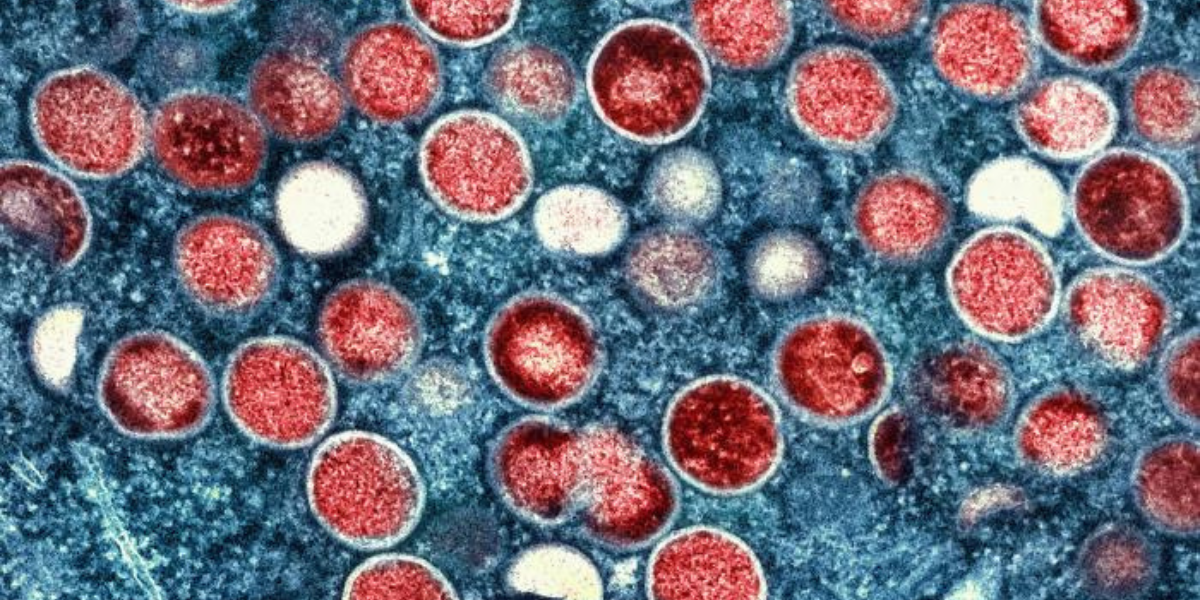
Modern Mpox Variant Identified in England Raises Public Health Concerns
Health officials in England have identified a novel recombinant strain of mpox, a virus formerly known as monkeypox, in an individual with recent travel history to Asia. This new variant combines genetic material from the two previously circulating clades, Ib and IIb, prompting concern among public health experts about its potential impact on transmission and severity. Although details regarding the affected individual remain limited, the discovery underscores the virus’s continued evolution and the need for ongoing surveillance and preventative measures. The emergence of this recombinant virus highlights the challenges in controlling a pathogen that is adapting and spreading across the globe.
Mpox, a viral infection related to the smallpox virus, initially presents with symptoms including fever, headache, muscle aches and backache. These early indicators are often followed by the development of swollen lymph nodes and, crucially, a characteristic rash that can appear on the face and subsequently spread to other parts of the body. Transmission occurs through close contact with lesions, fluids from those lesions (present on items like clothing or bedding), or through respiratory secretions during prolonged, face-to-face interaction. Understanding these transmission routes is vital for implementing effective public health strategies.
Understanding the Two Main Clades
Prior to this new discovery, researchers had identified two primary clades of the mpox virus circulating globally: Clade IIb and Clade Ib. These clades differ in their transmissibility, severity, and geographic distribution. The 2022 global outbreak was largely driven by Clade IIb, while Clade Ib has historically been associated with more severe illness and a higher fatality rate, particularly in Central Africa.
Clade IIb: The 2022 Global Outbreak
Clade IIb was responsible for the widespread mpox outbreak in 2022, infecting over 114,000 individuals and causing approximately 220 deaths worldwide. The United States experienced a peak in cases during the summer of 2022, with around 11,000 cases reported each month. This clade demonstrated a propensity for person-to-person transmission, particularly within networks of men who have sex with men. Still, Clade IIb generally causes milder symptoms and has a relatively low mortality rate of around 1%.
Clade Ib: A More Severe Threat
In contrast to Clade IIb, Clade Ib is associated with a significantly higher fatality rate, estimated to be around 10%. This clade has been endemic in the Democratic Republic of Congo (DRC) for many years, traditionally spreading from animals to humans through activities like butchering and consuming bushmeat. However, a new outbreak that began in the DRC in 2023 demonstrated a shift towards person-to-person transmission, with cases reported among family members and in healthcare settings where adequate protective equipment was lacking. Alarmingly, a substantial number of cases, including those in children under 15, have been reported. Recent data indicates that Clade Ib is also spreading through sexual contact, including heterosexual transmission, among sex workers and transient populations like truck drivers. Between January and November 2025, over 48,000 cases of Clade Ib mpox were reported in Central and Eastern Africa, with approximately 43 cases identified in other countries, nearly half involving recent travel to Africa, but 24 cases with no known travel history. The World Health Organization (WHO) has reported local person-to-person spread of Clade Ib in Italy, Malaysia, the Netherlands, Portugal, Spain, and the United States.
The Recombinant Virus: A New Challenge
Genomic sequencing has confirmed that the case identified in England involves a recombinant virus, meaning it contains genetic elements from both Clade IIb and Clade Ib. This recombination is not entirely unexpected, as both clades are currently circulating, providing opportunities for genetic exchange. Experts, like Dr. Boghuma Titanji, assistant professor of medicine at Emory University, have expressed concern, stating to the BBC that “The more mpox circulation we permit, the more opportunities the virus has to recombine and adapt, further entrenching mpox virus as a human pathogen that is not going away.” This highlights the potential for the virus to evolve in ways that could make it more difficult to control.
The implications of this recombination are still being investigated. We see currently unknown whether the recombinant virus exhibits increased transmissibility, altered disease severity, or resistance to existing treatments or vaccines. Further research is crucial to understanding these characteristics and informing public health responses.
Vaccination and Prevention
Fortunately, a vaccine, JYNNEOS, is available to protect against both mpox and smallpox. The vaccine is administered in two doses, four weeks apart, and has been shown to reduce the risk of infection and lessen the severity of symptoms if infection does occur. The Centers for Disease Control and Prevention (CDC) currently recommends the JYNNEOS vaccine for specific populations at higher risk, including gay, bisexual, and other men who have sex with men who have had one or more sexually transmitted infections in the last six months, have multiple sexual partners, engage in anonymous sexual contact, frequent commercial sex venues, or participate in large public events where mpox transmission is occurring.
The CDC’s targeted vaccination campaign played a significant role in curbing the spread of mpox in the United States during the 2022 outbreak. Individuals who meet the CDC’s criteria and have not yet been vaccinated are strongly encouraged to do so. While the new recombinant strain has not yet been detected in the United States, both Clade IIb and Clade Ib continue to circulate at low levels, emphasizing the importance of continued vigilance and preventative measures.
Key Takeaways
- A new recombinant mpox virus, combining elements of Clade IIb and Clade Ib, has been identified in England.
- This recombination raises concerns about potential changes in transmissibility, severity, and vaccine effectiveness.
- The JYNNEOS vaccine remains a crucial tool for preventing mpox, particularly for high-risk populations.
- Continued surveillance and public health measures are essential to control the evolving mpox virus.
Public health officials are continuing to monitor the situation closely, conducting genomic surveillance to track the spread of the recombinant virus and assess its characteristics. The WHO is also actively involved in coordinating the global response to mpox, providing guidance and support to affected countries. The next official update from the UK Health Security Agency regarding this new variant is expected in early March 2026. Staying informed about the latest developments and following public health recommendations are vital steps in protecting yourself and your community from mpox.
Do you have questions about the new mpox variant or the available vaccine? Share your thoughts and concerns in the comments below. Please also share this article with your network to support raise awareness about this evolving public health threat.
Related reading