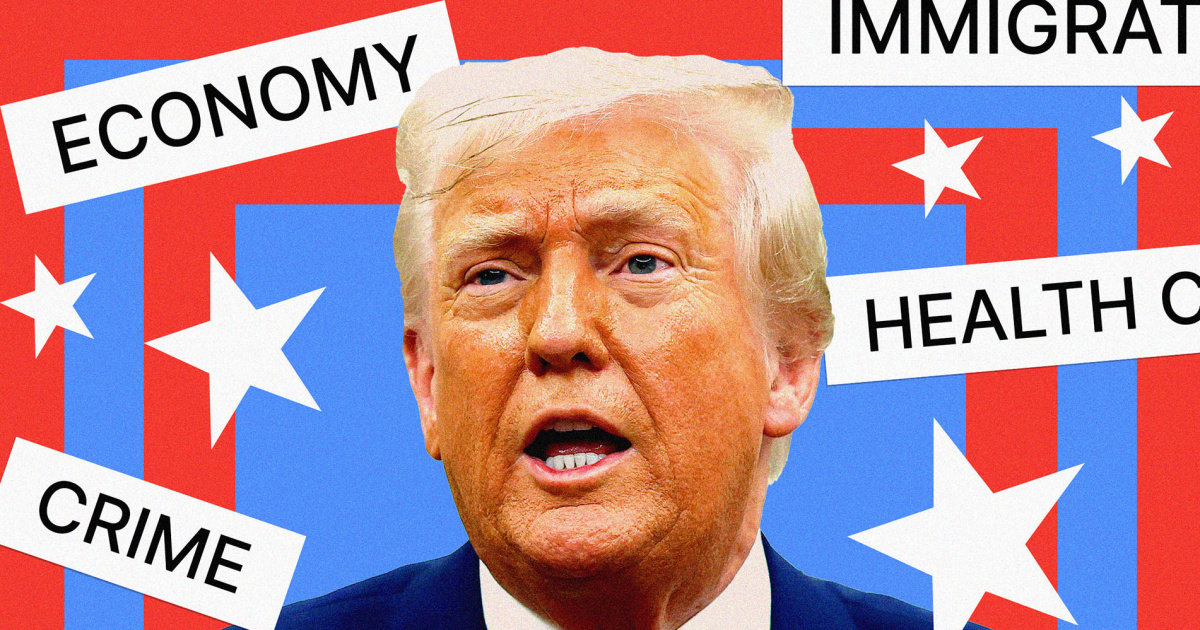
Washington D.C. – As President Donald Trump prepares to deliver his State of the Union address tonight, observers are keenly focused on the themes he will prioritize. While the full scope of his remarks remains under wraps, historical precedent and recent political developments offer clues. Unlike his predecessor, who in recent years emphasized issues such as strengthening democracy, economic recovery, and responding to the war in Ukraine, President Trump is expected to center his address on different priorities, potentially revisiting familiar ground from his first term.
The State of the Union is a critical opportunity for any president to shape the national conversation and outline their legislative agenda. For Trump, this address comes at a pivotal moment, with his administration navigating a complex domestic and international landscape. Understanding the shift in focus from previous administrations, particularly the Biden years, provides valuable context for interpreting tonight’s speech. The address is anticipated to be lengthy, continuing a pattern established during Trump’s previous time in office; he has delivered three of the ten longest State of the Union speeches since 1966.
A Return to Core Themes: National Security and the Economy
Based on his past rhetoric and policy initiatives, national security is likely to be a central pillar of President Trump’s address. In 2020, his State of the Union speech dedicated a significant portion of time to this topic, and it’s reasonable to expect a similar emphasis this year. This could encompass discussions on border security, counterterrorism efforts, and the modernization of the military. The evolving geopolitical situation, including ongoing conflicts and rising global tensions, will undoubtedly feature prominently in his remarks.
Alongside national security, the economy is expected to receive considerable attention. While President Biden focused on economic recovery and job creation in his recent addresses, Trump is likely to frame the economic discussion through the lens of deregulation, tax cuts, and trade policies. He may highlight any positive economic indicators and attribute them to his administration’s policies, while also criticizing the economic approaches of previous administrations. The state of inflation, interest rates, and the national debt are all likely to be addressed, potentially with differing interpretations than those offered by economic analysts.
Shifting Priorities: A Contrast with the Biden Years
The contrast between President Trump’s anticipated focus and that of his predecessor is stark. Former President Biden consistently prioritized strengthening democratic institutions, both at home and abroad. His State of the Union addresses in 2024 specifically centered on the importance of safeguarding democratic values and countering authoritarianism. This emphasis reflects a broader shift in the Democratic Party’s messaging in response to perceived threats to democratic norms.
Biden dedicated significant attention to the economic challenges facing American families, particularly in the wake of the COVID-19 pandemic. His speeches in 2023 highlighted efforts to lower healthcare costs, create jobs, and invest in infrastructure. The war in Ukraine also occupied a prominent place in Biden’s recent State of the Union addresses, with a focus on supporting Ukraine’s defense and holding Russia accountable. It remains to be seen how prominently these issues will feature in President Trump’s remarks, given his previously expressed skepticism towards large-scale foreign aid and his calls for a more isolationist foreign policy.
The War in Ukraine: A Potential Point of Divergence
The ongoing conflict in Ukraine presents a significant foreign policy challenge, and President Trump’s approach to this issue is likely to be a key point of interest. While President Biden consistently affirmed unwavering support for Ukraine, Trump has previously expressed a desire to seek a negotiated settlement, even if it means making concessions to Russia. His stance on this issue has drawn criticism from both Democrats and some Republicans, who argue that it could embolden Russian aggression.
Any discussion of the war in Ukraine will likely be framed by Trump’s broader critique of U.S. Foreign policy, which emphasizes prioritizing American interests and reducing the country’s involvement in foreign conflicts. He may argue that the U.S. Has been overly focused on Ukraine at the expense of addressing domestic challenges. The level of detail and commitment to Ukraine’s defense articulated in tonight’s address will be closely scrutinized by allies and adversaries alike.
Domestic Policy: Immigration and the Southern Border
Domestically, immigration and border security are expected to be major themes. Throughout his political career, President Trump has consistently advocated for stricter immigration policies and increased border enforcement. He is likely to reiterate his commitment to building a wall along the U.S.-Mexico border and to cracking down on illegal immigration.
This focus aligns with his base of support and reflects broader concerns about national security and the economic impact of immigration. He may also address issues related to crime and public safety, potentially linking them to immigration policies. The specifics of his proposed policies and the funding mechanisms for implementing them will be closely examined by lawmakers and advocacy groups.
The Length of the Address and Historical Context
As noted, President Trump has a history of delivering lengthy State of the Union addresses. His speeches have consistently ranked among the longest in recent history, exceeding the average length of these annual addresses. This tendency suggests that he may once again utilize the platform to provide a comprehensive overview of his administration’s accomplishments and priorities.
The length of the address can be seen as a reflection of his communication style, which often involves detailed explanations and direct engagement with his audience. However, it also raises questions about the potential for digressions and the ability to maintain audience attention throughout the speech.
Looking Ahead: The Congressional Response
Following the State of the Union address, the nation’s attention will turn to the congressional response. The designated responder, typically a member of the opposing party, will deliver a rebuttal outlining their party’s alternative vision for the country. This response provides an opportunity for the opposition party to challenge the president’s claims and present their own policy proposals.
The tone and content of the congressional response will be closely watched as an indicator of the political dynamics in Washington. It will also serve as a preview of the debates and legislative battles that are likely to unfold in the coming months. The effectiveness of the response will depend on the speaker’s ability to articulate a clear and compelling alternative to the president’s agenda.
The coming days will be crucial as analysts and the public dissect President Trump’s address. The focus will be on identifying the core messages, assessing the feasibility of his proposals, and gauging the potential impact on both domestic and foreign policy. The State of the Union remains a cornerstone of American political tradition, offering a vital snapshot of the nation’s priorities and the direction of its leadership.
The next key date to watch will be the budget negotiations between the White House and Congress, expected to begin in March. These negotiations will provide a crucial test of President Trump’s ability to translate his vision into concrete policy outcomes. Stay tuned to World Today Journal for continuing coverage of these developments.
Related reading