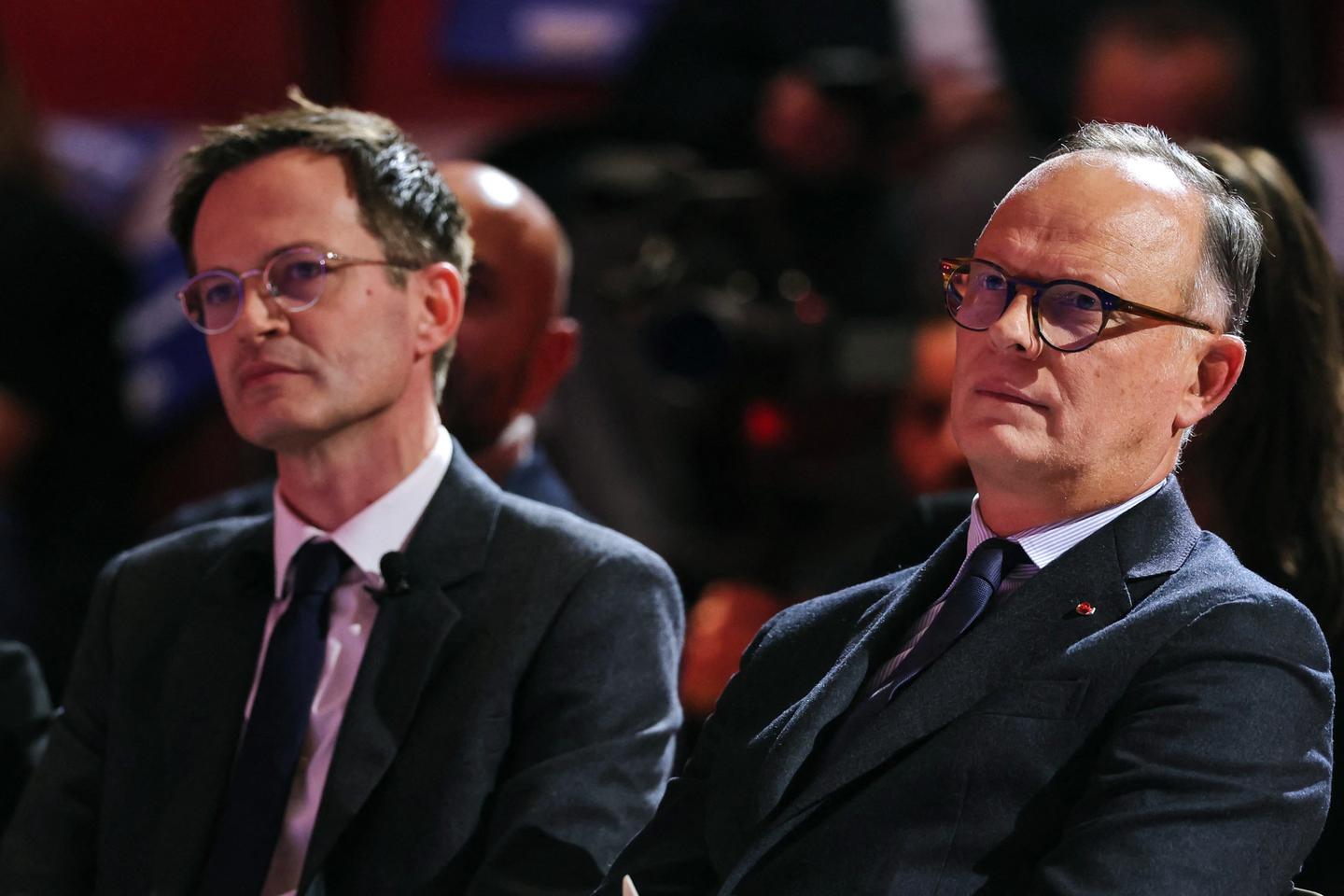
Political Maneuvering in Paris: Bournazel’s Stance Complicates Runoff Prospects for Philippe
The Parisian political landscape is growing increasingly complex as the municipal elections approach. Pierre-Yves Bournazel, the Horizons party candidate, has publicly stated his refusal to align with Rachida Dati of Les Républicains (LR) in a potential second-round runoff, a move that has stirred considerable debate within his own party and potentially jeopardizes the broader ambitions of Horizons leader, Édouard Philippe. This decision, made despite calls for strategic alliances, underscores a deepening rift within the center-right political spectrum and raises questions about the future direction of Philippe’s party. The situation highlights the delicate balance of power as candidates vie for position ahead of the March elections and the potential for unexpected outcomes.
Bournazel’s firm stance, articulated in a recent interview with France Inter radio, is rooted in a desire to present a distinct political vision and avoid what he perceives as a compromise of his campaign principles. He insists he is “running to win,” signaling an intention to remain in the race even if he doesn’t reach the 10% threshold needed to automatically qualify for a second round. This strategy, although, has drawn criticism from within Horizons, with some party members expressing concern that it could splinter the vote and ultimately benefit their rivals. The implications of this internal discord extend beyond the immediate election, potentially impacting the party’s long-term strategy and its relationship with other political forces in Paris.
The upcoming municipal elections in Paris are particularly significant, as they represent a key test for President Emmanuel Macron’s Renaissance party and its allies, including Horizons. A strong showing by Horizons would bolster Macron’s position and demonstrate the viability of his centrist political project. However, a fractured center-right could open the door for gains by the left, potentially shifting the balance of power in the city. The stakes are high, and the decisions made by candidates like Bournazel will have far-reaching consequences.
The Horizons Dilemma: Balancing Principles and Pragmatism
The core of the issue lies in the strategic calculations surrounding the second round of the election. Paris’s electoral system often necessitates alliances between candidates who didn’t qualify in the first round to form a winning coalition. Traditionally, center-right parties like Horizons have sought to partner with Les Républicains to challenge left-leaning candidates. However, Bournazel’s refusal to consider an alliance with Dati, a prominent figure within Les Républicains, represents a significant departure from this established pattern. He has effectively drawn a line in the sand, prioritizing ideological consistency over potential electoral gains. This decision is particularly noteworthy given Dati’s strong campaign and her position as a leading contender in the race. Le Monde reports that Bournazel’s justification centers on a desire to avoid aligning with a candidate he views as representing a different political vision.
This stance has sparked internal debate within Horizons. While some party members support Bournazel’s commitment to principle, others fear that it will isolate the party and diminish its chances of success. Critics argue that a pragmatic approach, involving a strategic alliance with Dati, would be more likely to deliver a favorable outcome for Horizons and its supporters. They point to the potential for a left-wing candidate to win if the center-right vote remains divided. The internal tensions reflect a broader struggle within Horizons between those who prioritize ideological purity and those who favor a more flexible, results-oriented approach to politics. Édouard Philippe, as the leader of Horizons, faces the challenge of navigating these conflicting viewpoints and maintaining party unity.
Édouard Philippe’s Position: A Delicate Balancing Act
Édouard Philippe, the former Prime Minister of France and current president of Horizons, finds himself in a precarious position. While he has not publicly endorsed Bournazel’s strategy, he has also refrained from directly criticizing it. This cautious approach suggests a desire to avoid exacerbating the internal divisions within his party. Philippe is widely seen as a potential presidential contender in future elections, and a successful showing by Horizons in the Paris municipal elections would significantly enhance his prospects. However, a fractured party and a disappointing electoral outcome could damage his reputation and undermine his ambitions. France Inter reported on Bournazel’s statements, highlighting the potential for embarrassment for Philippe.
Philippe’s challenge lies in maintaining a delicate balance between supporting his candidate in Paris and preserving the broader strategic interests of Horizons. He must navigate the competing pressures from different factions within the party, while also considering the potential implications for his own political future. His ability to effectively manage this complex situation will be crucial in determining the fate of Horizons and his own political trajectory. The situation is further complicated by the involvement of Renaissance, the party of President Macron, which also supports Bournazel’s candidacy. This adds another layer of political maneuvering and underscores the importance of maintaining a cohesive front within the broader centrist coalition.
The Role of Renaissance and Macron’s Centrist Coalition
The support of Renaissance for Bournazel’s campaign is a significant factor in the unfolding drama. President Macron’s party has a vested interest in seeing Horizons succeed, as a strong showing by the center-right would bolster the overall strength of the centrist coalition. However, Renaissance is also keen to avoid a situation that could destabilize the political landscape or open the door for gains by the left. The relationship between Renaissance and Horizons is complex, characterized by both cooperation and competition. Both parties share a commitment to centrist principles, but they also have distinct identities and strategic priorities.
The involvement of Renaissance adds another layer of complexity to the negotiations surrounding potential second-round alliances. Renaissance officials are likely to play a behind-the-scenes role in mediating between Bournazel and Dati, seeking to find a compromise that would allow the center-right to present a united front. However, the success of these efforts will depend on the willingness of both candidates to compromise and prioritize the broader strategic interests of the centrist coalition. The outcome of these negotiations will have significant implications for the future of French politics.
Analyzing the Potential Second-Round Scenarios
Several scenarios are possible in the second round of the Paris municipal elections. If Bournazel fails to qualify for the second round, the race is likely to be between Dati and a left-wing candidate, potentially Anne Hidalgo, the current mayor of Paris. In this scenario, a strategic alliance between Horizons and Les Républicains would be crucial to prevent a left-wing victory. However, Bournazel’s refusal to consider such an alliance complicates matters and increases the likelihood of a left-wing win. If Bournazel does qualify for the second round, the situation becomes even more complex. He could potentially play the role of kingmaker, deciding whether to endorse Dati or the left-wing candidate. His decision will be influenced by a variety of factors, including his ideological convictions, his strategic calculations, and the pressure from within his own party.
Political analysts are closely monitoring the situation, attempting to predict the likely outcome of the second round. Polls suggest that Dati is currently the frontrunner, but the race is far from decided. The outcome will depend on a number of factors, including voter turnout, the effectiveness of the candidates’ campaigns, and the ability of the different political forces to forge strategic alliances. The situation is fluid and unpredictable, and the final result could hinge on a number of last-minute developments. The upcoming weeks will be crucial in shaping the future of Paris and the broader French political landscape.
Key Takeaways
- Pierre-Yves Bournazel’s refusal to ally with Rachida Dati complicates the Paris municipal election.
- Édouard Philippe faces a delicate balancing act in managing internal party divisions.
- The outcome of the election will have significant implications for President Macron’s centrist coalition.
- Strategic alliances will be crucial in determining the winner of the second round.
- The situation remains fluid and unpredictable, with the final result uncertain.
As the Parisian municipal elections draw closer, the political maneuvering intensifies. The next key date will be the first round of voting, where the initial results will provide a clearer picture of the electorate’s preferences. Following the first round, the focus will shift to negotiations and strategic alliances as candidates attempt to position themselves for success in the second round. The coming weeks promise to be a period of intense political activity and uncertainty. We encourage readers to share their thoughts and perspectives on these developments in the comments below.
Worth a look
- Gyeonggi Province Declares Financial Emergency Amid Mounting Debt and Structural Reforms
- Ibrahim Salah: Moroccan Winger Set for New Club Transfer
- New Study Links GLP-1 Medications Like Wegovy and Ozempic to Health Risks (archyde.com)
- Asia-Pacific Heritage to Global Horizons Conference 2026 (archynewsy.com)