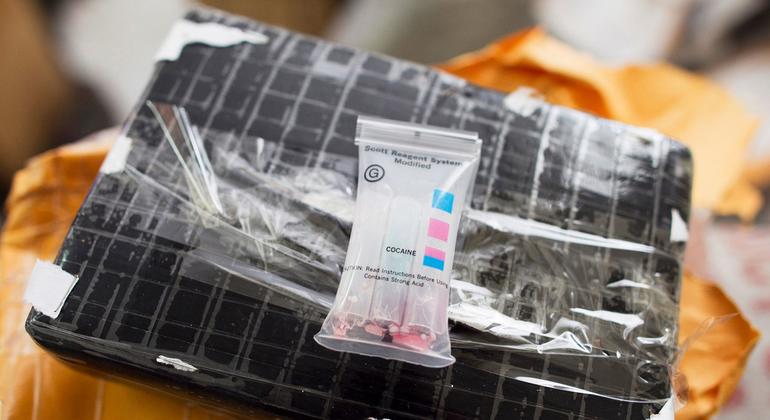
International Cooperation Thwarts Massive Fentanyl Precursor Shipment
A coordinated international effort has prevented the diversion of three metric tons of a key chemical precursor used in the illicit manufacture of fentanyl, potentially averting the production of a staggering 700 million to 1.6 billion lethal doses of the synthetic opioid. The interception, detailed in the International Narcotics Control Board’s (INCB) 2025 Annual Report, underscores the critical role of global collaboration in combating the escalating fentanyl crisis. This success highlights the effectiveness of the pre-export notification platform, a cornerstone of international drug control efforts, in disrupting the supply chain of illicit substances.
The precursor chemical, 1-boc-4-piperidone, is a vital component in the synthesis of fentanyl, a drug approximately 50 to 100 times more potent than morphine. The potential scale of fentanyl production averted by this intervention is immense, representing a significant blow to trafficking networks and a crucial step in protecting public health. The incident, which occurred in March 2025, demonstrates the proactive approach taken by authorities to identify and intercept suspicious shipments before they reach illicit manufacturers. The INCB’s report emphasizes that this case is not isolated, but rather exemplifies a growing trend of successful international cooperation in drug control.
“Tackling the trafficking and misuse of drugs, while ensuring the availability of essential medicines, has been carried out effectively over the last 60 years through the drug control conventions, a robust framework for working together with almost universal support,” said Professor Sevil Atasoy, President of the INCB, in a statement accompanying the report’s release. “Our role is to reinforce the cooperative efforts of countries and territories through our work.” This sentiment reflects the INCB’s core mission: to promote international cooperation in preventing the diversion of controlled substances while ensuring their availability for legitimate medical and scientific purposes.
The INCB and the Global Drug Control System
The International Narcotics Control Board (INCB) is an independent, quasi-judicial body established in 1968 under the framework of the 1961 Single Convention on Narcotic Drugs. As outlined on the INCB’s official website, the Board’s mandate is to monitor the implementation of three key international drug control conventions – adopted in 1961, 1971 and 1988 – which collectively form the foundation of the global drug control system. These conventions aim to balance the need for medical access to controlled substances with the prevention of their diversion into illicit channels.
Under these treaties, governments are obligated to provide the INCB with estimates and statistical reports regarding the cultivation, manufacture, and trade of controlled substances. This data allows the Board to monitor global trends, identify potential diversion risks, and provide recommendations to member states. The INCB’s pre-export notification (PEN) system, central to the recent fentanyl precursor interception, allows countries to share information about planned shipments of controlled chemicals, enabling authorities to scrutinize potentially suspicious transactions. More than 190 countries and territories participated in the PEN system in 2025, monitoring over 34,000 planned shipments of internationally controlled drug precursors, according to the INCB report.
Shifting Global Drug Trafficking Trends
While the interception of the fentanyl precursor represents a significant success, the INCB’s 2025 report too highlights evolving challenges in the global drug landscape. Cocaine trafficking remains the fastest-growing illicit drug market, fueled by increased production in South America and expanding routes into Asia and Africa. According to the United Nations Office on Drugs and Crime’s (UNODC) 2023 Cocaine Report, global cocaine production reached record levels, posing a significant threat to international stability.
In Europe, cocaine trafficking to Western and Central Europe has seen a “dramatic increase,” while the illicit manufacture of synthetic drugs continues to expand. The proliferation of clandestine laboratories producing synthetic opioids, stimulants, and new psychoactive substances poses a growing challenge for law enforcement agencies. In North America, while synthetic drug overdoses decreased by 17% in Canada and 27% in the United States in 2025, the INCB cautioned that it is “too early to assess whether the decrease will develop into a sustained trend.” These figures are based on preliminary data released by the U.S. Centers for Disease Control and Prevention (CDC) and Health Canada.
Africa is facing a growing crisis related to the trafficking of pharmaceutical opioids, including substandard and falsified products. This trend poses a serious threat to public health, as these unregulated medications often contain incorrect dosages or harmful contaminants. The South Asian region continues to bear a disproportionate burden of opioid use, accounting for approximately one-third of the world’s estimated opioid users. Methamphetamine remains the dominant synthetic drug threat in East and Southeast Asia, with record seizures reported in several countries. The UNODC Regional Office for Southeast Asia and the Pacific has been actively working with member states to address this issue through enhanced law enforcement cooperation and demand reduction programs.
Unequal Access to Essential Medicines
Despite the successes in disrupting illicit drug trafficking, the INCB report also highlights persistent inequalities in access to essential medicines, particularly opioid painkillers, in low- and middle-income countries. Many nations continue to face difficulties in procuring medications containing morphine and other vital pain relief substances. This disparity underscores the need for greater efforts to ensure equitable access to these medications for individuals suffering from chronic pain and other debilitating conditions. Increasing the availability and affordability of psychotropic substances, while preventing their diversion into illicit markets, remains a critical priority for the INCB and its member states.
“Protecting the health of people around the world from the dangers of illicit drugs is a common and shared responsibility,” Professor Atasoy reiterated. “The international drug control system relies on the willingness and capacity of countries to work together.” This collaborative approach, facilitated by organizations like the INCB and UNODC, is essential for addressing the complex challenges posed by the global drug trade and ensuring a healthier and safer future for all.
Key Takeaways
- A significant shipment of fentanyl precursor, 1-boc-4-piperidone, was intercepted through international cooperation, potentially preventing the manufacture of 700 million to 1.6 billion fentanyl doses.
- The INCB’s pre-export notification (PEN) system played a crucial role in identifying and disrupting the illicit shipment.
- Cocaine trafficking remains the fastest-growing illicit drug market globally, with expanding routes into Asia and Africa.
- Access to essential opioid painkillers remains unevenly distributed, with significant disparities between high-income and low-income countries.
- Continued international collaboration is vital for addressing the evolving challenges of the global drug trade and ensuring public health.
The INCB is scheduled to present its findings to the United Nations Commission on Narcotic Drugs (CND) in Vienna in March 2026. Further updates on global drug trends and international cooperation efforts will be available on the INCB website. We encourage readers to share their thoughts and perspectives on this critical issue in the comments below.
Related reading