International Cooperation Thwarts Massive Fentanyl Precursor Shipment
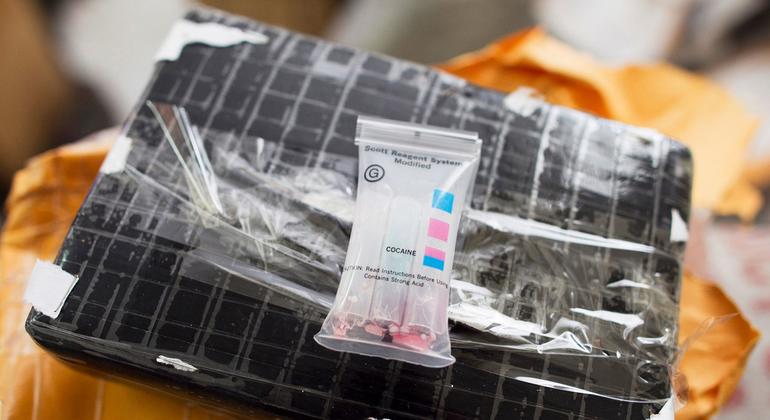
Global efforts to combat the escalating fentanyl crisis received a significant boost earlier this year with the interception of a massive shipment of a key precursor chemical. Authorities, working through the International Narcotics Control Board’s (INCB) pre-export notification system, prevented the diversion of three metric tons of 1-boc-4-piperidone – a crucial intermediary in the illicit manufacture of fentanyl. Had this shipment reached its intended destination, experts estimate it could have yielded between 1.4 and 3.3 tons of fentanyl, enough to create an estimated 700 million to 1.6 billion potentially lethal doses of the synthetic opioid. This successful intervention underscores the critical role of international collaboration in disrupting the complex supply chains fueling the opioid epidemic, a public health crisis impacting nations worldwide.
The case, which unfolded in March 2025, is highlighted in the INCB’s 2025 Annual Report as a prime example of how coordinated action can effectively counter the evolving tactics of drug traffickers. Fentanyl, a synthetic opioid 50 to 100 times more potent than morphine, has become a leading driver of overdose deaths in North America and is increasingly appearing in illicit drug markets across Europe and beyond. The precursor chemical, 1-boc-4-piperidone, is not a controlled substance in itself, making its diversion a significant challenge for law enforcement. The INCB’s pre-export notification system, however, allows governments to monitor shipments of these chemicals and intervene when suspicious activity is detected. This system relies on the adherence to international drug control conventions, established in 1961, 1971 and 1988, which provide a legal framework for global cooperation.
“Tackling the trafficking and misuse of drugs, whereas ensuring the availability of essential medicines, has been carried out effectively over the last 60 years through the drug control conventions, a robust framework for working together with almost universal support,” stated Professor Sevil Atasoy, President of the INCB, in a press release accompanying the report. “Our role is to reinforce the cooperative efforts of countries and territories through our operate.” The INCB functions as an independent, quasi-judicial body, monitoring the implementation of these conventions and promoting international cooperation to prevent the diversion of controlled substances. Its work is supported by the United Nations Office on Drugs and Crime (UNODC), which provides technical assistance and supports member states in their efforts to combat drug trafficking and abuse. The UNODC reported in 2024 that global illicit drug markets were estimated at $600 billion annually, highlighting the scale of the challenge.
The INCB’s Pre-Export Notification System: A Vital Tool
The success of the March 2025 interception hinges on the effectiveness of the INCB’s pre-export notification (PEN) system. This system, established under the international drug control conventions, requires countries to notify the INCB of planned exports of certain precursor chemicals. The INCB then shares this information with importing countries, allowing them to assess the legitimacy of the shipment and prevent diversion. In 2025 alone, over 190 countries and territories participated in the PEN system, monitoring more than 34,000 planned shipments of internationally controlled drug precursors. This represents a significant increase from the 28,000 shipments monitored in 2020, demonstrating the growing importance of this collaborative approach. The system’s effectiveness is predicated on the timely and accurate reporting of data by member states, as well as the willingness of countries to cooperate in investigations and share information.
Shifting Trends in the Global Drug Trade
While the interception of the fentanyl precursor represents a significant victory, the INCB report also warns of evolving threats and shifting dynamics in the global drug trade. Cocaine trafficking remains the fastest-growing illicit drug market, fueled by increased production in South America, particularly in Colombia, Peru, and Bolivia. According to the U.S. Drug Enforcement Administration (DEA), cocaine production in Colombia reached a record high of 1,700 metric tons in 2023. This increased supply is driving expansion into new markets in Asia and Africa, posing new challenges for law enforcement agencies. In Europe, cocaine trafficking to Western and Central Europe has “dramatically increased,” with seizures reaching record levels in countries like Belgium and the Netherlands. The port of Rotterdam, a major entry point for cocaine into Europe, seized over 100 metric tons of the drug in 2023, according to Dutch customs officials.
Alongside cocaine, the illicit manufacture of synthetic drugs continues to expand globally. Methamphetamine remains the dominant synthetic drug threat in East and Southeast Asia, with record seizures reported in countries like Myanmar and Thailand. The Golden Triangle region, encompassing parts of Myanmar, Laos, and Thailand, remains a major source of methamphetamine production. In North America, while synthetic drug overdoses decreased by 17% in Canada and 27% in the United States in 2024, the INCB cautioned that This proves “too early to assess whether the decrease will develop into a sustained trend.” These decreases are potentially linked to increased access to naloxone, a medication that can reverse opioid overdoses, and expanded harm reduction programs. However, the ongoing availability of potent fentanyl analogs continues to pose a significant risk.
The report also highlights emerging concerns in Africa, where trafficking in pharmaceutical opioids – including substandard and falsified products – is a growing problem. These illicit opioids often lack quality control and can be particularly dangerous for consumers. The South Asian region continues to bear a heavy burden of opioid use, accounting for approximately one-third of the world’s estimated opioid users. Addressing this issue requires a comprehensive approach that includes prevention, treatment, and harm reduction strategies. The World Health Organization (WHO) estimates that over 53 million people worldwide suffer from opioid use disorder.
Unequal Access to Pain Relief and the Demand for Balance
Despite the focus on combating illicit drug trafficking, the INCB report also emphasizes the importance of ensuring access to essential medicines, particularly opioid painkillers, for those in need. Many countries continue to report difficulties in procuring medications containing morphine and other opioids, particularly in low- and middle-income countries. This disparity in access to pain relief is a significant ethical concern, as millions of people worldwide suffer from moderate to severe pain that could be alleviated with appropriate medication. The INCB advocates for a balanced approach that prioritizes both preventing drug abuse and ensuring access to essential medicines for legitimate medical purposes. This requires strengthening regulatory frameworks, improving supply chain management, and addressing barriers to access, such as stigma and affordability.
The INCB’s work is crucial in navigating this complex landscape. By fostering international cooperation and promoting evidence-based policies, the organization aims to protect the health and well-being of people around the world from the dangers of illicit drugs while ensuring that those in need have access to the medications they require. The ongoing success of the pre-export notification system, as demonstrated by the recent interception of the fentanyl precursor, underscores the importance of continued investment in these collaborative efforts. The challenge, however, remains significant, as trafficking networks are constantly adapting and seeking new ways to circumvent law enforcement efforts. Continued vigilance, innovation, and international cooperation are essential to effectively address the evolving threat of illicit drugs.
Key Takeaways
- The interception of three tons of fentanyl precursor 1-boc-4-piperidone prevented the potential manufacture of 700 million to 1.6 billion doses of the deadly drug.
- The INCB’s pre-export notification system is a vital tool for disrupting the illicit drug trade, relying on cooperation from over 190 countries and territories.
- Cocaine trafficking remains the fastest-growing illicit drug market, with increased production in South America and expansion into new regions.
- Ensuring access to essential medicines, particularly opioid painkillers, remains a critical challenge, especially in low- and middle-income countries.
- Ongoing international cooperation and a balanced approach are essential to effectively address the evolving threat of illicit drugs.
The INCB is scheduled to present its findings to the United Nations Commission on Narcotic Drugs in Vienna in April 2026. Further updates on global drug trends and the INCB’s work can be found on their official website: https://www.incb.org/incb/index.html. We encourage readers to share their thoughts and perspectives on this critical issue in the comments below.