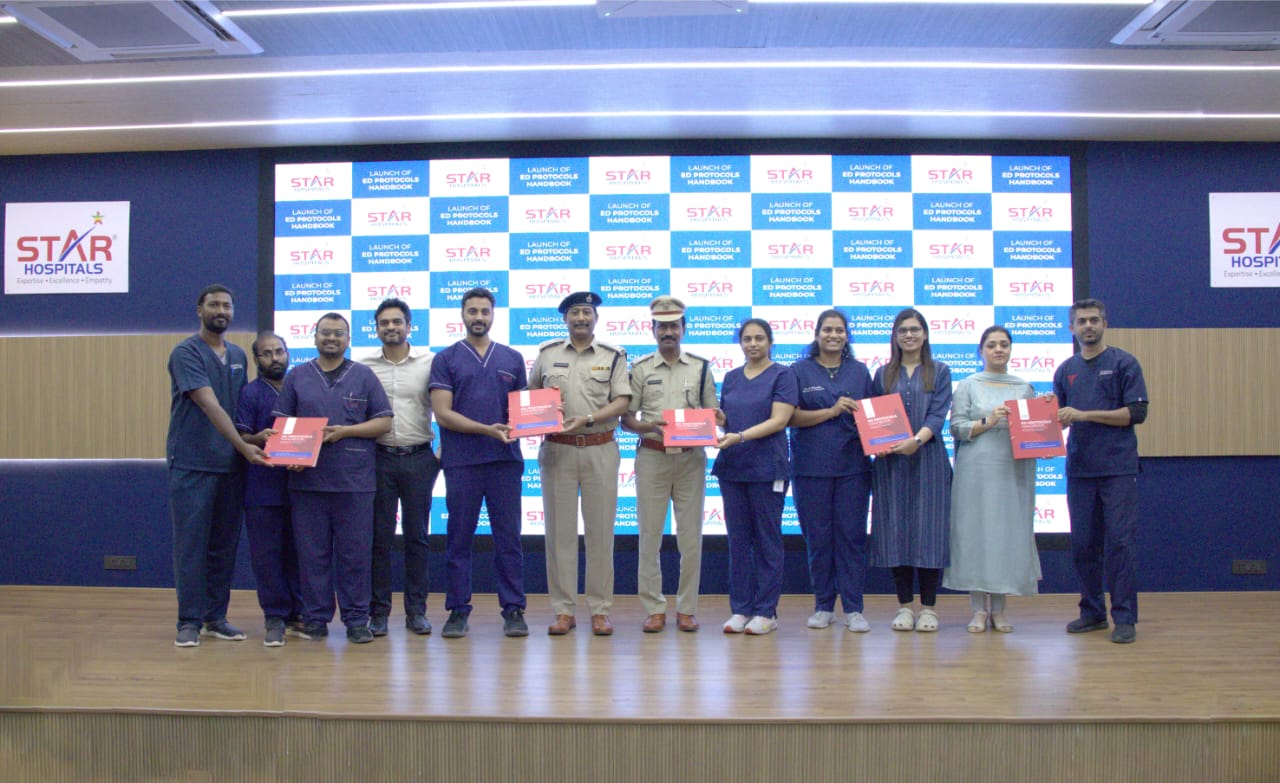
STAR Hospitals Revolutionizes Emergency Care with Global Best Practices Handbook
Hyderabad, India – In the critical moments following a medical emergency, swift and standardized care can be the difference between life and death. Recognizing this, the Department of Emergency Medicine at STAR Hospitals, Nanakramguda, has officially launched its “ED Protocol Handbook,” a comprehensive guide integrating international emergency care standards tailored for the Indian context. The unveiling coincides with a significant milestone for the hospital: the completion of 1.5 million minutes of dedicated emergency service at its Nanakramguda facility, demonstrating a sustained commitment to 24/7 vigilance and rapid response. This initiative represents a significant step forward in elevating emergency medical services within the region and potentially serving as a model for other hospitals across India.
The ED Protocol Handbook isn’t simply a collection of procedures; it’s the culmination of an intensive global study undertaken by the STAR Emergency Team. Researchers analyzed and incorporated best practices from leading emergency departments in the United Kingdom, the United States, Australia, and other countries, adapting them to address the unique clinical needs and demographic characteristics of the Indian population. This meticulous customization ensures that clinicians have a step-by-step tactical guide, minimizing delays and maximizing efficiency from the moment a patient arrives. The handbook aims to eliminate indecision and process gaps, streamlining care during the most crucial moments.
A Global Blueprint, Locally Adapted
The development of the handbook underscores a growing recognition that simply acquiring advanced medical technology isn’t enough. As Dr. Rahul Katta, Group Lead for the Emergency Department at STAR Hospitals, explained, “In a rapidly growing city like Hyderabad, having the best technology is only half the battle.” He emphasized that “the real lifesaver is a standardized guideline that makes every minute count. Our journey over the last 1.5 million minutes has taught us that precision in protocol is what truly scales the impact of our medical expertise.” This focus on process standardization is central to STAR Hospital’s approach to emergency care.
The hospital’s commitment to efficient emergency response extends beyond the hospital walls. STAR Hospitals’ advanced, tech-enabled ambulances function as mobile emergency rooms, equipped to initiate life-saving interventions while en route. Paramedics provide oxygen support, cardiac monitoring, intravenous medications, and airway management, adhering to internationally accepted emergency protocols. Crucially, these ambulances are integrated with a real-time virtual consultation system, connecting paramedics with emergency physicians and specialists at the hospital. This allows for live sharing of vital parameters, continuous clinical updates, and expert guidance even before the patient arrives, ensuring the emergency team is fully prepared upon arrival. This pre-hospital care is designed to protect what is known as the “Golden Hour” – the critical first hour after a traumatic injury when prompt medical treatment is most likely to prevent death or long-term disability.
Seamless Handover and the ‘Golden Hour’
The newly launched Emergency Handbook further reinforces this seamless transition from ambulance to emergency department, eliminating potential delays and maintaining continuity of care. The handbook’s protocols are designed to ensure a structured handover, allowing the emergency room team to immediately build upon the care already initiated in the ambulance. This coordinated approach is vital in maximizing the effectiveness of treatment during the critical “Golden Hour.”
The official unveiling of the protocol handbook took place on February 28, 2026, and was attended by Sri. Ranjan Rathan Kumar, Dy. Commissioner of Police (Traffic Cyberabad), who served as the Chief Guest. Also present were key members of the STAR Hospitals leadership team, including Dr. Gopichand Mannam (Managing Director, STAR Hospitals Group), Dr. Ramesh Gudapati (Joint Managing Director, STAR Hospitals Group), and Dr. Rahul Medakkar (CEO, STAR Hospitals Group). The leadership team collectively noted, “We are perfecting every step of the emergency process. Navigating traffic and reaching a hospital is a massive challenge for patients today. Our goal is to ensure that once they reach us, the care they receive is world-class, immediate, and beyond reproach.”
Addressing the Challenges of Emergency Care in Hyderabad
The implementation of this handbook is particularly relevant in a rapidly growing city like Hyderabad, where traffic congestion and logistical challenges can significantly delay access to emergency medical care. By streamlining protocols and leveraging technology, STAR Hospitals aims to mitigate these challenges and provide timely, effective treatment to patients in need. The hospital’s integrated system, encompassing pre-hospital care, real-time consultation, and standardized in-hospital protocols, represents a holistic approach to emergency medicine.
The focus on international best practices is also noteworthy. Emergency medical protocols are constantly evolving based on research and experience. By actively studying and adapting these advancements, STAR Hospitals demonstrates a commitment to providing patients with the highest possible standard of care. The integration of protocols from the United Kingdom, the United States, and Australia suggests a comprehensive review of global emergency medicine techniques.
Looking Ahead: Continued Commitment to Emergency Excellence
The launch of the ED Protocol Handbook marks a significant milestone for STAR Hospitals, but it is also a testament to the ongoing dedication of its emergency department team. With 1.5 million minutes of emergency service already completed, the hospital is well-positioned to continue leading the way in emergency medical care in the region. The hospital leadership has indicated a continued focus on refining and improving its protocols, ensuring that it remains at the forefront of emergency medicine innovation.
As Hyderabad continues to grow and evolve, the need for efficient and effective emergency medical services will only become more critical. STAR Hospitals’ commitment to standardization, technology, and international best practices positions it as a key player in meeting this challenge. The hospital’s proactive approach to emergency care has the potential to save lives and improve the health and well-being of the community it serves.
The next step for STAR Hospitals will be the ongoing monitoring and evaluation of the ED Protocol Handbook’s effectiveness. Data collection and analysis will be crucial in identifying areas for improvement and ensuring that the protocols remain aligned with the latest medical advancements. The hospital is expected to share its findings and best practices with other healthcare providers in the region, fostering a collaborative approach to emergency medicine.
What are your thoughts on the importance of standardized emergency protocols? Share your comments below, and let us recognize how you think hospitals can best prepare for medical emergencies in rapidly growing cities.
Related reading