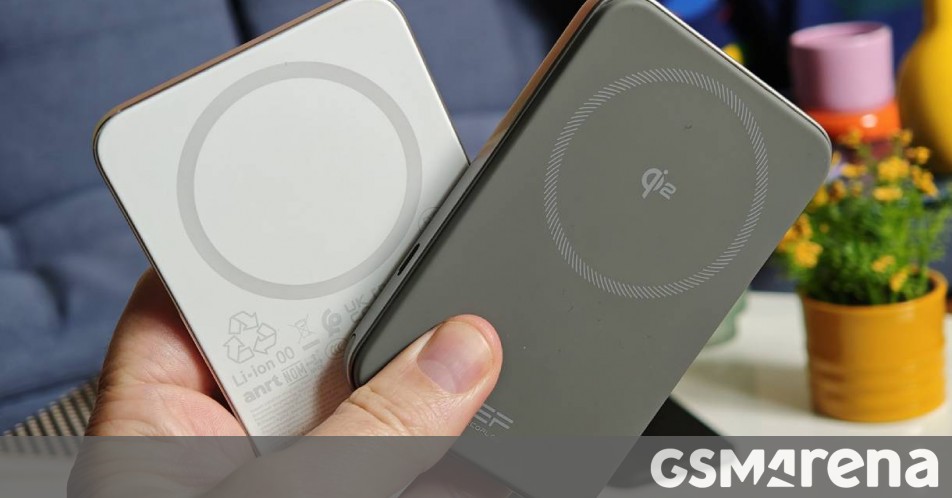
The quest for portable power often leads to a simple question: are all power banks created equal? While a 5,000mAh rating might suggest comparable performance, the reality, as demonstrated by recent testing, is far more nuanced. A direct comparison between the Xiaomi UltraThin Magnetic Power Bank 5000 15W and a comparable model from EcoFlow reveals significant differences in both physical size and charging efficiency. This isn’t simply about aesthetics; it speaks to the evolving technologies within the portable power landscape and how manufacturers are balancing capacity with portability.
The Xiaomi UltraThin Magnetic Power Bank 5000 15W immediately stands out for its remarkably slim profile. Measuring just 98.5 x 71.5 x 6.0mm and weighing a mere 98g, it’s designed for ultimate portability. In contrast, the EcoFlow power bank tips the scales at 180g and measures 108.0 x 70.0 x 14.4mm – nearly double the thickness. This disparity isn’t accidental. Xiaomi has incorporated a Silicon-Carbon battery, boasting 16% silicon content, which allows for a higher energy density in a smaller space. This technology is key to achieving the power bank’s impressively thin form factor.
Size and Weight: A Clear Distinction
The physical differences are immediately apparent. The EcoFlow’s larger size is partially attributable to its integrated charging cable and kickstand, features absent in the minimalist design of the Xiaomi model. However, the core difference lies in the battery technology itself. The Silicon-Carbon battery used by Xiaomi allows for a more compact and lightweight design without sacrificing significant capacity. This represents a growing trend in portable power, as manufacturers strive to deliver more power in increasingly smaller packages. According to Xiaomi, the battery features a high-energy-density silicon-carbon composition paired with a 4369mm² graphite sheet, contributing to its powerful 5,000mAh capacity within the ultra-slim body.
Charging Performance: Beyond the mAh Rating
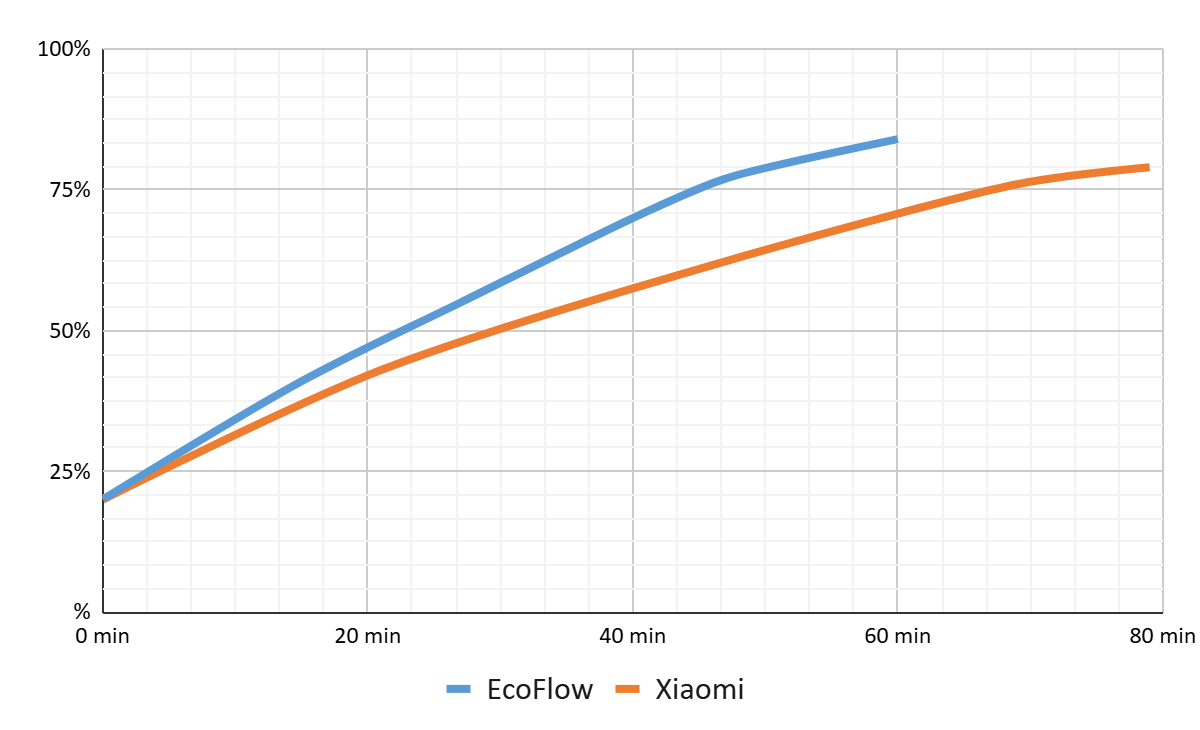
While both power banks advertise a 5,000mAh capacity, real-world performance testing reveals a noticeable difference in charging speed and efficiency. Using an Oppo Identify X8 Ultra as a test device, researchers discharged the phone to 20% before connecting each power bank via a wired USB-C connection – a method chosen for its efficiency compared to wireless charging. The Xiaomi and EcoFlow power banks support different maximum wired charging speeds: 22.5W for the Xiaomi and 30W for the EcoFlow, while the Oppo Find X8 Ultra supports up to 55W via PPS.
The EcoFlow demonstrated a faster charging rate from the outset, boosting the Find X8 Ultra from 20% to 41% in just 15 minutes. The Xiaomi power bank required approximately 20 minutes to achieve the same level. Throughout the entire charging cycle, the EcoFlow consistently outperformed the Xiaomi, charging approximately 35% faster – a figure that aligns closely with the stated specifications of both devices. The EcoFlow fully charged the phone to 84% in one hour, while the Xiaomi took 19 minutes longer to reach 79%.
Real-World Capacity: A Closer Look at mAh Delivery
The difference in charging speed translates to a difference in usable capacity. The testing revealed that the EcoFlow delivered approximately 3,900mAh of power to the Oppo Find X8 Ultra, while the Xiaomi provided around 3,600mAh. This means the EcoFlow offered roughly 8.5% more usable power than the Xiaomi, despite both being rated at 5,000mAh. This discrepancy highlights the fact that the advertised mAh rating doesn’t always tell the whole story. Inefficiencies in power conversion and delivery contribute to a loss of usable capacity, and these losses can vary significantly between different power bank designs.
The Technology Behind the Difference
The superior performance of the EcoFlow power bank can likely be attributed to several factors, including its more robust power delivery circuitry and potentially more efficient voltage regulation. The Xiaomi, prioritizing a slim form factor, may have made compromises in these areas. The Silicon-Carbon battery technology employed by Xiaomi is a significant advancement, but it doesn’t negate the importance of other components in the power delivery chain. Silicon-carbon batteries are known for their higher energy density, allowing for smaller and lighter designs, but optimizing the overall system for maximum efficiency requires careful engineering.
The choice between the Xiaomi UltraThin Magnetic Power Bank 5000 15W and the EcoFlow model ultimately comes down to individual priorities. If portability is paramount, the Xiaomi is the clear winner. Its incredibly slim and lightweight design makes it ideal for slipping into a pocket or bag. However, if charging speed and maximum usable capacity are more important, the EcoFlow offers a more compelling solution. Consumers should carefully consider their needs and usage patterns when selecting a portable power bank.
Wireless Charging Considerations
Both power banks offer wireless charging capabilities, supporting up to 15W. However, as noted in the testing, wired charging is significantly more efficient. Wireless charging inherently involves energy loss during transmission, reducing the overall amount of power delivered to the device. While convenient, wireless charging should be viewed as a secondary option when maximizing charging speed and efficiency is the goal. The Xiaomi supports up to 15W wireless fast charging with the Xiaomi 17 Series, while the EcoFlow offers a 25W Qi2.2 wireless charging option.
EcoFlow’s Expanding Power Bank Lineup
EcoFlow currently offers a range of power bank solutions, including the RAPID Power Bank (25,000mAh, 170W) and the RAPID Mag Qi2.2 Magnetic Power Bank (10,000mAh, 25W). These models cater to different user needs, from those requiring massive capacity for extended trips to those prioritizing fast wireless charging. EcoFlow is currently running a promotion offering discounts on purchases of two or three power banks, valid from February 16th to March 2nd, 2026.
Key Takeaways
- Size Matters: The Xiaomi UltraThin prioritizes portability with its incredibly slim design, while the EcoFlow offers more capacity at the expense of size.
- mAh Isn’t Everything: Real-world capacity can differ from advertised mAh ratings due to inefficiencies in power conversion.
- Wired vs. Wireless: Wired charging is significantly more efficient than wireless charging, delivering more power to your device.
- Technology Trade-offs: Silicon-Carbon batteries enable smaller designs, but overall system optimization is crucial for maximizing performance.
The portable power bank market continues to evolve, with manufacturers constantly innovating to deliver more power in smaller and more efficient packages. As battery technology advances and power delivery systems turn into more refined, People can expect to see even greater improvements in both capacity and portability. For now, consumers should carefully evaluate their needs and prioritize the features that matter most to them when choosing a power bank. Keep an eye out for further developments in battery technology, as these innovations will undoubtedly shape the future of portable power.
Further testing and analysis of different power bank models will be conducted in the coming months. Stay tuned to World Today Journal for the latest updates and reviews. We encourage readers to share their experiences with portable power banks in the comments below.
Keep reading