Iran’s Economic Lifeline: China’s Role Amidst Rising Tensions
The recent exchange of attacks between Israel and the United States and Iran has sent ripples through global markets, particularly impacting energy prices. While a full-scale conflict remains uncertain, the potential for disruption to vital shipping lanes – most notably the Strait of Hormuz – has raised concerns about global trade and economic stability. However, a complete blockade of the Strait, a critical artery for global oil supply, appears unlikely, at least in the short term, due to the significant economic repercussions it would have on Iran itself. Iran relies heavily on maritime trade, with approximately 70% of its commerce, excluding oil exports, traversing ports dependent on access through the Strait of Hormuz, according to experts like Dalga Khatinoglu of Iran International.
The strategic importance of the Strait of Hormuz cannot be overstated. Roughly 20% of the world’s oil consumption passes through this narrow waterway, with over 80% of that volume destined for Asian buyers, primarily China, India, and Japan, as reported by the U.S. Energy Information Administration (EIA). A disruption to this flow would not only drive up oil prices – estimates suggest a potential surge to $100 a barrel or higher – but also impact the supply of aviation fuel and liquefied natural gas (LNG), with approximately 30% of Europe’s jet fuel supply and a fifth of global LNG shipments also transiting the Strait. Despite these risks, many nations, including the United States, European Union member states, Great Britain, Japan, and Canada, maintain strategic reserves to mitigate the impact of temporary disruptions.
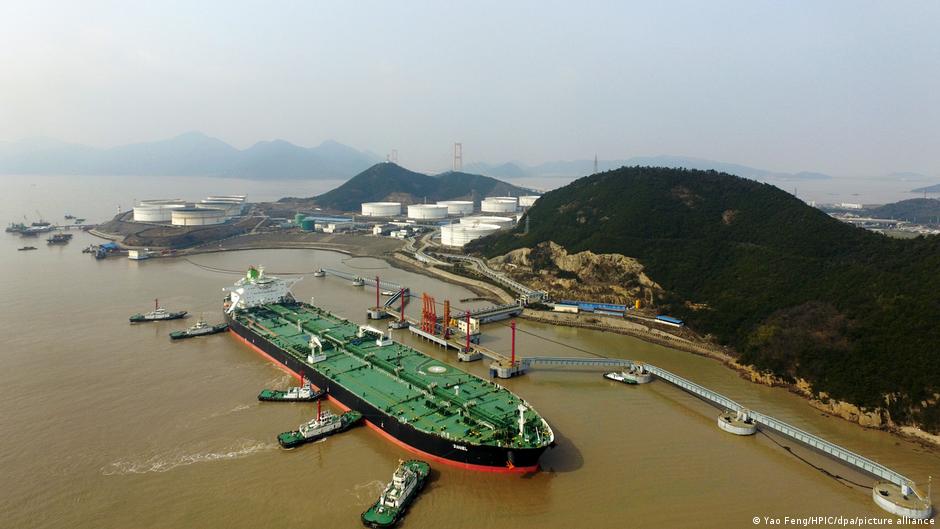
However, the most critical factor influencing Iran’s calculus is its economic dependence on China. Sanctions imposed by Western nations, stemming from the 1979 Islamic Revolution and intensified over Iran’s nuclear program, have severely limited Iran’s access to international markets. These sanctions, which included restrictions on oil exports, were briefly eased following the 2016 Joint Comprehensive Plan of Action (JCPOA), also known as the Iran nuclear deal, but were reimposed by the United States in 2018 after withdrawing from the agreement. This has left China as Iran’s primary economic partner, absorbing the vast majority of its oil exports – over 80%, according to analysis from Kpler.
China as Iran’s Economic Anchor
China’s appetite for Iranian oil isn’t solely driven by its own energy needs. It also benefits from discounted prices resulting from the sanctions imposed on Iran, Venezuela, and Russia. As Nikolay Kozhanov, an expert at Qatar University’s Institute for International Relations, explained in a recent report for the Clingendael Institute, “China is currently indispensable for Iranian oil exports, as it buys the majority of the sanctioned crude.” This dynamic effectively shields Iran from the worst effects of international sanctions, providing a crucial economic lifeline. The relationship extends beyond oil, with China also being a major purchaser of Iranian petrochemicals and other commodities.
The dependence on China isn’t merely economic; it’s increasingly strategic. Beijing has actively sought to distance itself from Washington’s traditional allies in the Gulf region, forging closer ties with countries like Iran and Saudi Arabia. This shift reflects China’s broader ambition to reshape the geopolitical landscape and challenge U.S. Dominance. In March 2023, China brokered a landmark agreement between Saudi Arabia and Iran to restore diplomatic relations, a move that underscored Beijing’s growing influence in the Middle East. Reuters reported on this significant diplomatic achievement.
The Strait of Hormuz: A Complex Calculation
Despite the potential for economic gain from maintaining trade flows, the possibility of Iran disrupting shipping through the Strait of Hormuz remains a concern. However, experts believe a prolonged blockade is unlikely. Sara Vakhshouri, founder of SVB Energy International, argues that closing the Strait would be “irrational” from Iran’s perspective, as it relies on the waterway for essential imports, including food, medicine, and machinery. A complete shutdown would inflict significant damage on Iran’s own economy, exacerbating existing challenges.
The potential consequences of a blockade extend beyond Iran and the immediate region. Global energy markets would face significant volatility, potentially triggering a recession. The disruption to LNG supplies could particularly impact Europe, which is seeking to reduce its reliance on Russian gas. While strategic reserves would provide some buffer, they are not unlimited and would only offer temporary relief. The International Energy Agency (IEA) coordinates releases from member countries’ strategic petroleum reserves, but these releases are typically intended for short-term emergencies, not prolonged disruptions.
The Impact of Western Sanctions
The history of Western sanctions against Iran is complex, and multifaceted. Following the 1979 revolution, the United States imposed a series of economic sanctions, initially focused on restricting arms sales and financial transactions. These sanctions were gradually expanded over the years, particularly in response to Iran’s nuclear program and its support for regional proxies. The United Nations Security Council also imposed sanctions on Iran in 2006 and 2007, further tightening the economic pressure. The JCPOA, signed in 2015, offered a temporary reprieve, lifting many of the sanctions in exchange for verifiable limits on Iran’s nuclear activities. However, the Trump administration’s withdrawal from the JCPOA in 2018 led to the reimposition of crippling sanctions, effectively cutting off Iran from much of the global financial system.
These sanctions have had a devastating impact on the Iranian economy, leading to hyperinflation, currency devaluation, and widespread unemployment. While China has provided a crucial lifeline, it has not been enough to fully offset the effects of the sanctions. Iran’s oil production has plummeted, and its access to foreign investment has been severely restricted. The economic hardship has fueled social unrest and political instability, posing a significant challenge to the Iranian regime.
Looking Ahead
The current situation remains highly volatile. While a full-scale military conflict may be avoided, the risk of escalation remains significant. Iran’s economic dependence on China provides a degree of insulation from the worst effects of Western sanctions, but it also makes it vulnerable to Beijing’s political and economic influence. The future of the Strait of Hormuz, and the stability of global energy markets, will depend on a complex interplay of geopolitical factors, economic pressures, and diplomatic efforts.
The next key development to watch will be the response of the United Nations Security Council to the recent escalation. Any attempt to impose further sanctions on Iran will likely be met with resistance from China and Russia, potentially leading to a stalemate. Continued monitoring of oil prices and shipping activity through the Strait of Hormuz will also be crucial in assessing the evolving situation. Readers are encouraged to share their perspectives and engage in constructive dialogue in the comments section below.
Related reading