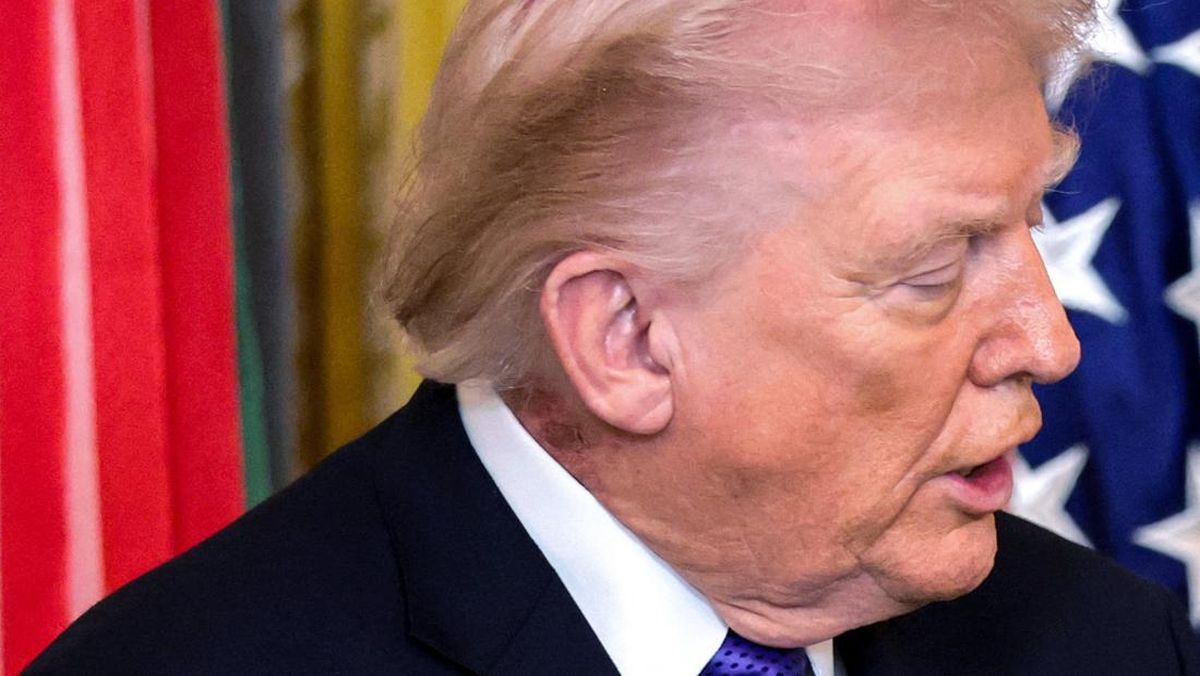
Former U.S. President Donald Trump has publicly expressed dissatisfaction with a recent military action undertaken by the United States Navy, which resulted in the sinking of an Iranian warship in the Indian Ocean, near Sri Lanka, on March 4th. The incident, which reportedly led to the deaths of 87 crew members and the rescue of 32, has sparked debate regarding the appropriate response to perceived Iranian aggression in key waterways. Trump questioned why the vessel wasn’t captured rather than destroyed, suggesting it could have been repurposed for use by the U.S. Navy.
The controversy stems from a broader context of escalating tensions in the Middle East and surrounding regions. Iran has been accused of harassing commercial vessels in the Strait of Hormuz, a vital shipping lane, and providing support to proxy groups involved in regional conflicts. The sinking of the Iranian warship is seen by some as a demonstration of U.S. Resolve, while others, including Trump, have raised concerns about the proportionality of the response. The incident underscores the complex geopolitical dynamics at play and the potential for further escalation.
Trump Questions Military Judgment, Recounts General’s Response
During a rally in Hebron, Kentucky, Trump voiced his frustration with the decision to sink the Iranian vessel. According to a report by Al Jazeera, Trump stated, “I said, ‘What’s going on, why are we killing them? Why don’t we just capture them and use them in our Navy?’” He further claimed that military officials responded by saying the crew would not have been suitable for service, a justification he found unconvincing. “And one of my generals said, ‘Sir, this was much more fun,’” Trump reportedly added, highlighting a perceived disconnect between his own approach and that of his military advisors.
This account, while reported by Al Jazeera, raises questions about the internal deliberations within the U.S. Military regarding the handling of potential threats. The suggestion that a military official found the destruction of a warship and its crew “fun” is particularly jarring and has drawn criticism. It’s important to note that this is Trump’s recounting of the event, and independent verification of the general’s exact statement is currently unavailable.
U.S. Military Justification and Historical Context
The U.S. Military has defended its actions, framing the sinking of the Iranian warship as a necessary response to Iranian aggression and a demonstration of American power. Pete Hegseth, a figure associated with the Department of Defense, described the operation as “the first strike against the enemy since World War II,” according to reports. He stated that a U.S. Submarine destroyed the Iranian vessel, which was operating in international waters, with a torpedo. This claim, yet, requires careful consideration given the numerous naval engagements that have occurred since World War II.
General Dan Caine, another U.S. Military official, reportedly stated that this was the first time a U.S. Submarine had sunk an enemy warship since World War II. This statement, while potentially accurate in a narrow technical sense, overlooks numerous other instances of U.S. Naval engagements and strikes against enemy vessels in the decades following the war. The framing of the event as a unique historical occurrence appears to be part of a broader effort to emphasize the significance of the operation.
Sri Lankan Navy Confirms Casualties and Rescue Efforts
The Sri Lankan Navy confirmed that the incident resulted in the recovery of 87 bodies and the rescue of 32 sailors. The vessel, which reportedly carried approximately 180 crew members, was operating in the Indian Ocean when it was attacked. The Sri Lankan Navy’s involvement in the recovery and rescue operations highlights the regional implications of the incident and the potential for broader maritime security concerns. The exact type of Iranian vessel sunk has not been officially confirmed, though reports suggest it was a warship.
Escalating Tensions and Regional Implications
The sinking of the Iranian warship occurs against a backdrop of heightened tensions between the United States, Iran, and Israel. Iran has been accused of supporting various militant groups throughout the Middle East and of developing a nuclear weapons program, allegations that Iran denies. The U.S. Has maintained a strong military presence in the region, and has repeatedly warned Iran against further escalation. The Strait of Hormuz, a critical chokepoint for global oil supplies, has been a focal point of these tensions, with Iran threatening to disrupt shipping in the event of a conflict.
The incident as well has implications for India, which has close ties to both Iran and the United States. Al Jazeera reported that the sinking of the Iranian warship has undermined India’s claims of being a “guardian” in the region, as it demonstrates the limitations of India’s ability to independently manage security challenges in the Indian Ocean. This highlights the complex geopolitical calculations that India must navigate as it seeks to balance its relationships with major powers.
The Broader Context of U.S.-Iran Relations
The relationship between the United States and Iran has been fraught with tension for decades, dating back to the 1979 Iranian Revolution and the subsequent hostage crisis. The U.S. Imposed sanctions on Iran in response to its nuclear program and its support for terrorism, and the two countries have engaged in a series of proxy conflicts throughout the Middle East. The 2015 nuclear deal, formally known as the Joint Comprehensive Plan of Action (JCPOA), offered a brief period of détente, but the U.S. Withdrew from the agreement in 2018 under the Trump administration, leading to a renewed escalation of tensions.
The Biden administration has expressed a willingness to rejoin the JCPOA, but negotiations have stalled amid disagreements over the terms of the agreement. Iran has continued to expand its nuclear program, and the risk of a military confrontation remains high. The sinking of the Iranian warship is a stark reminder of the potential for miscalculation and escalation in the region, and underscores the urgent necessitate for diplomatic solutions.
The incident also raises questions about the rules of engagement in international waters and the potential for unintended consequences. While the U.S. Maintains the right to defend its interests and protect freedom of navigation, the use of lethal force must be carefully considered and proportionate to the threat. The sinking of the Iranian warship, with the loss of life, is a tragic event that underscores the human cost of geopolitical conflict.
As of March 12, 2026, there have been no further reported incidents between U.S. And Iranian naval forces. However, the situation remains volatile, and the potential for further escalation remains a significant concern. The international community continues to monitor the situation closely, urging both sides to exercise restraint and engage in constructive dialogue. The next key development to watch will be the outcome of ongoing diplomatic efforts to revive the JCPOA and address the underlying causes of tension between the United States and Iran.
What are your thoughts on this developing situation? Share your comments below and consider sharing this article with your network.
Worth a look
- Stunning Australian Wildlife Encounter: Photographer Mistakes Blood for Predator Attack
- Tonight’s Weather: Showers and Storms Continue Before Clearing
- The Senate Blue Slip, Explained: The Custom Trump Wants Gone (daybreakwire.com)
- At typically tranquil Camp David, Trump publicly lashes out at political enemies (archyworldys.com)