UN Chief Urges Middle East Ceasefire as Region Faces ‘Breaking Point’
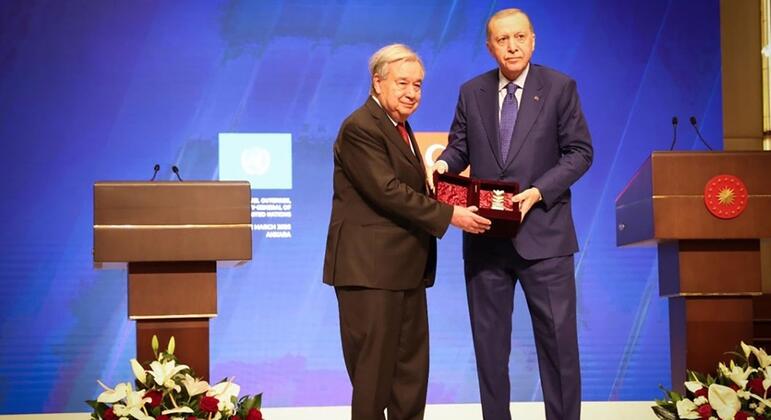
Ankara, Türkiye – United Nations Secretary-General António Guterres issued a stark warning Thursday, stating the Middle East is being “pushed to the breaking point” amid escalating tensions and widespread civilian suffering. Speaking in Ankara, Türkiye, while accepting the Atatürk International Peace Award, Guterres implored all combatants to immediately cease hostilities and return to the negotiating table. His remarks come as the region grapples with the fallout from recent military strikes by the United States and Israel, and retaliatory attacks by Iran, creating a volatile and increasingly dangerous situation with global repercussions.
The Secretary-General’s plea for de-escalation underscores a growing international concern over the potential for a wider regional conflict. Guterres highlighted the devastating impact on civilians, emphasizing that they are consistently bearing the brunt of the violence. He also warned that the consequences of continued conflict are “cascading around the world,” disrupting trade, driving up energy and food prices, and exacerbating existing insecurities. This assessment reflects a broader anxiety about the interconnectedness of global systems and the potential for localized conflicts to trigger wider economic and political instability.
International Law and Rising Inequalities
Guterres’ address extended beyond the immediate crisis in the Middle East, touching on broader global challenges. He expressed deep concern over the erosion of international law, the growing influence of “power politics,” and the widening gap in inequalities. He warned that new technologies, particularly artificial intelligence (AI), pose a risk of accelerating violence rather than preventing it. This concern aligns with increasing scrutiny of the ethical implications of AI in warfare and the potential for autonomous weapons systems to escalate conflicts. A 2025 report by the Stockholm International Peace Research Institute (SIPRI) noted a significant increase in global military expenditure, reaching a record US$2.44 trillion in 2023, further fueling these anxieties.
The Secretary-General also lamented the decline in funding for vital humanitarian aid, stating that “lifesaving aid is in freefall.” This reduction in assistance comes at a time when the demand for humanitarian support is greater than ever, with conflicts and natural disasters displacing millions of people worldwide. The United Nations Office for the Coordination of Humanitarian Affairs (OCHA) reported in early 2026 that a record 300 million people require humanitarian assistance, a significant increase from previous years.
Türkiye’s Role and the Spirit of Ramadan
The award ceremony in Türkiye, a long-standing annual tradition for Guterres during the holy month of Ramadan, provided a platform to highlight the importance of diplomacy and interfaith dialogue. Turkish President Recep Tayyip Erdoğan presented Guterres with the Atatürk International Peace Award, praising his efforts in promoting peace and multilateral cooperation. According to Turkish state broadcaster TRT World, Erdoğan reaffirmed Türkiye’s commitment to strengthening the United Nations and making it a more inclusive organization.
Guterres, in turn, emphasized the significance of his visit to Türkiye, noting that it served as a “powerful reminder…of the true spirit of Islam: compassion, community and empathy.” He underscored the generosity of the Turkish people and their commitment to humanitarian values. The Secretary-General accepted the award on behalf of all UN staff, acknowledging their dedication to providing assistance and building peace, while also mourning the loss of aid workers, including those operating in Gaza. The UN has reported a record number of aid workers killed in the line of duty in recent years, highlighting the increasing dangers faced by those providing humanitarian assistance in conflict zones.
The Need for an ‘Off-Ramp’
Central to Guterres’ message was the urgent need for an “off-ramp” to the escalating violence in the Middle East. He stressed that de-escalation and dialogue are the only viable paths to resolving the crisis and preventing further suffering. This call for diplomacy echoes similar appeals from other international leaders and organizations, including the European Union and the Arab League. The United States State Department has also indicated its support for diplomatic efforts, but has maintained its commitment to Israel’s security.
The Secretary-General’s warning that “the most vulnerable are being hurt first and worst” underscores the disproportionate impact of conflict on civilians, particularly women and children. Human rights organizations, such as Amnesty International and Human Rights Watch, have documented widespread violations of international humanitarian law in the region, including indiscriminate attacks on civilian areas and the use of prohibited weapons. These reports highlight the urgent need for accountability and protection of civilians.
The situation remains highly fluid and unpredictable. The potential for miscalculation or escalation is significant, and the consequences could be far-reaching. Guterres’ plea for a ceasefire and a return to diplomacy represents a critical effort to avert a wider catastrophe and to prioritize the safety and well-being of civilians caught in the crossfire. The international community faces a daunting challenge in navigating this complex crisis and in finding a sustainable path to peace.
Key Takeaways
- Escalating Tensions: The Middle East is at a “breaking point” due to recent military actions and retaliatory attacks.
- Civilian Suffering: Civilians are disproportionately affected by the conflict, facing rising death tolls and shattered lives.
- Global Repercussions: The crisis is having cascading effects on global trade, energy prices, and security.
- Call for Diplomacy: UN Secretary-General António Guterres urges all parties to cease hostilities and return to negotiations.
- Erosion of International Law: Guterres expressed concern over the weakening of international law and the rise of “power politics.”
The United Nations Security Council is scheduled to convene an emergency session on March 15, 2026, to discuss the situation in the Middle East and to consider potential resolutions. Further updates will be provided as the situation evolves. The World Today Journal will continue to provide comprehensive coverage of this critical issue, offering analysis and insights from experts around the globe.
What are your thoughts on the UN’s role in mediating the Middle East conflict? Share your comments below and join the conversation.
Worth a look