Rising Tensions: Trump’s Cuba Rhetoric and Havana’s Defiant Response Amidst Energy Crisis
The relationship between the United States and Cuba is once again strained, as recent pronouncements from former U.S. President Donald Trump have drawn a sharp rebuke from Havana. Trump has publicly stated his desire to “take Cuba,” even suggesting he could act with little restraint once in control, whereas Cuban President Miguel Díaz-Canel has warned that any such attempt would be met with “impregnable resistance.” This escalating rhetoric comes as Cuba grapples with a severe energy crisis, recently experiencing a nationwide blackout that left the island in darkness for nearly 30 hours before being largely restored on Tuesday. The situation underscores a complex interplay of political posturing, economic hardship, and the enduring legacy of U.S. Policy towards Cuba.
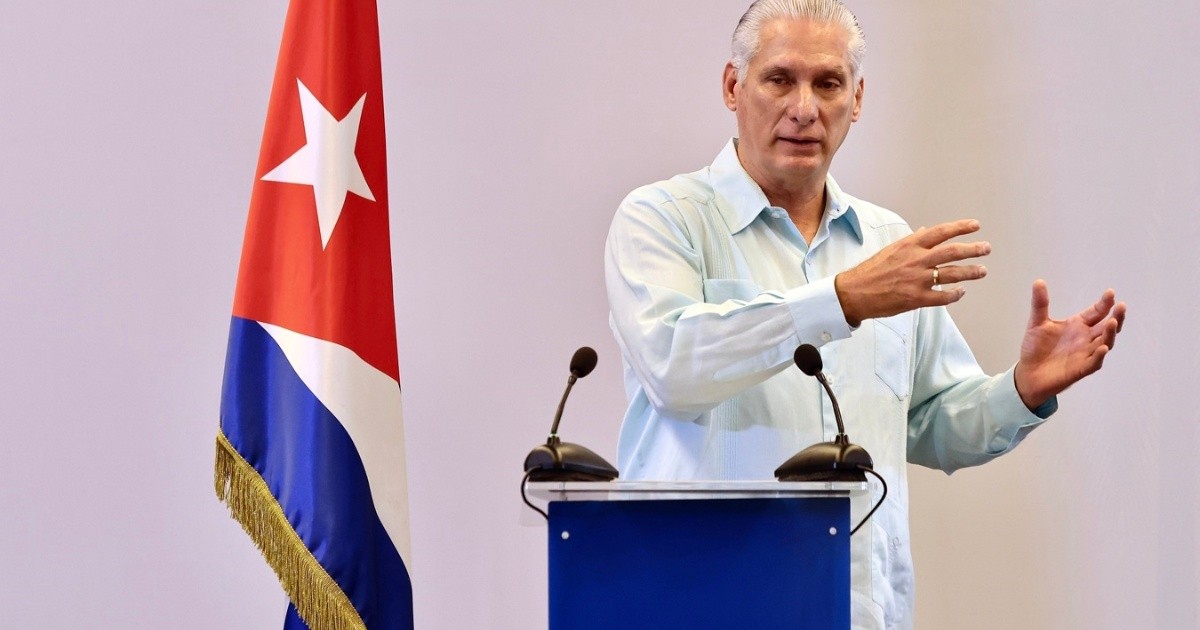
Díaz-Canel’s strong words, delivered via a post on X (formerly Twitter) on March 18, 2026, directly addressed Trump’s comments. The Cuban president accused the United States of routinely threatening the forceful overthrow of Cuba’s constitutional order, framing this as a pretext rooted in the economic difficulties inflicted upon the island nation through decades of U.S. Sanctions and isolation. He asserted that Washington is actively formulating plans to seize control of Cuba’s resources and economy, aiming to dismantle the country’s sovereignty. The Cuban leader’s statement reflects a deep-seated concern over what he perceives as a renewed and aggressive U.S. Posture towards the island. The core of the dispute centers on the long-standing U.S. Embargo and its impact on Cuba’s economic stability, a point frequently raised by Cuban officials as the primary cause of the current hardships.
The recent nationwide blackout, the sixth such incident in the past 18 months, has exacerbated the already precarious situation in Cuba. While power was largely restored after almost 30 hours, significant service disruptions persist due to limited energy generation capacity. The state-run electricity company, Unión Eléctrica de Cuba (UNE), reported that all 15 provinces were reconnected to the national grid, but acknowledged ongoing outages. This latest crisis highlights the vulnerability of Cuba’s aging infrastructure and its dependence on limited fuel supplies, a situation compounded by the U.S. Embargo. The energy shortages have led to widespread hardship, with residents facing extended periods without electricity, impacting daily life and economic activity.
Trump’s Assertions and Historical Context
Donald Trump’s recent statements regarding Cuba have reignited concerns about a potential shift in U.S. Policy. He has repeatedly suggested that Cuba is ripe for takeover, describing the country as “in ruins” and claiming it would be a “great honor” to assume control. According to reports, Trump stated he “could do whatever [he] wanted” with the island. These remarks echo historical instances of U.S. Intervention in Latin America, raising fears of a more assertive and potentially destabilizing approach to Cuba. The historical context of U.S.-Cuba relations is marked by decades of tension, stemming from the 1959 Cuban Revolution and the subsequent Cold War rivalry. The U.S. Imposed a trade embargo on Cuba in 1962, which remains in effect today, despite repeated calls for its lifting by the international community.
#EEUU amenaza públicamente a #Cuba, casi a diario, con derrocar por la fuerza el orden constitucional. Y usa un indignante pretexto: las duras limitaciones de la debilitada economía que ellos han agredido y pretendido aislar hace más de seis décadas.
Pretenden y anuncian planes…
— Miguel Díaz-Canel Bermúdez (@DiazCanelB) March 18, 2026
The U.S. Embargo, intended to pressure the Cuban government to adopt democratic reforms, has had a significant impact on the Cuban economy, limiting access to essential goods, including fuel and medicine. While the Obama administration initiated a period of rapprochement with Cuba, easing some restrictions, the Trump administration reversed many of these policies, tightening the embargo and increasing pressure on the Cuban government. The Biden administration has taken some steps to ease restrictions on remittances and travel, but the core of the embargo remains in place. The current situation is further complicated by a broader geopolitical context, including increasing U.S. Competition with other global powers in the region.
Energy Crisis and Economic Challenges
Cuba’s energy crisis is not solely a result of the recent blackout. The island has been facing chronic energy shortages for years, stemming from aging infrastructure, limited access to fuel, and a lack of investment in renewable energy sources. The UNE reported that the restoration of power was hampered by a shortage of fuel needed to operate backup generators, a direct consequence of the ongoing economic challenges. EFE news agency reported that the process of reconnecting the national grid was “complex” due to these fuel limitations. Before the latest blackout, Havana residents were already experiencing power outages of up to 15 hours per day, while some provinces faced cuts lasting as long as 48 hours. This prolonged lack of electricity has severely disrupted daily life, impacting businesses, schools, and essential services.
The economic situation in Cuba is further exacerbated by the U.S. Embargo and the global economic downturn. The country is facing shortages of food, medicine, and other essential goods, leading to rising prices and widespread hardship. The Cuban government has implemented austerity measures in an attempt to address the economic crisis, but these measures have had limited success. The lack of foreign investment and the limited access to international markets are also hindering Cuba’s economic recovery. The ongoing energy crisis is not only a symptom of these economic problems but also a major obstacle to addressing them, as it disrupts production and hinders economic activity.
The U.S. Position and Potential Scenarios
While Trump’s rhetoric has been particularly forceful, the broader U.S. Policy towards Cuba remains a subject of debate. Some policymakers advocate for a continuation of the current approach, arguing that maintaining pressure on the Cuban government is the best way to promote democratic reforms. Others argue for a more engagement-based approach, believing that easing the embargo and fostering economic ties would be more effective in bringing about positive change. The Biden administration has signaled a willingness to explore some limited engagement, but has also maintained a firm stance on human rights and political freedoms in Cuba. The potential scenarios for the future of U.S.-Cuba relations range from a continuation of the status quo to a more significant shift in policy, potentially including a further tightening of the embargo or a more comprehensive effort to normalize relations.
The possibility of a U.S. Intervention in Cuba, as suggested by Trump, remains a remote but concerning prospect. Such an intervention would likely face strong international condemnation and could destabilize the region. Díaz-Canel’s warning of “impregnable resistance” underscores the Cuban government’s determination to defend its sovereignty. The Cuban military, while relatively small, is well-trained and equipped, and the country has a long history of resisting foreign intervention. Any attempt to forcibly overthrow the Cuban government would likely be met with significant resistance, both from the military and from the Cuban population.
The current situation highlights the complex and multifaceted challenges facing both the United States and Cuba. Addressing these challenges will require a nuanced and pragmatic approach, based on mutual respect and a willingness to engage in constructive dialogue. The immediate priority is to alleviate the humanitarian crisis in Cuba, ensuring that the Cuban people have access to essential goods and services. Longer-term solutions will require addressing the underlying economic and political issues that have fueled the tensions between the two countries for decades.
Looking ahead, the situation in Cuba will likely remain volatile. The ongoing energy crisis, coupled with the escalating rhetoric from Washington, creates a climate of uncertainty and instability. Further developments will depend on a number of factors, including the outcome of the U.S. Presidential election in November 2026 and the Cuban government’s ability to address its economic challenges. The international community will also play a role, as will regional actors who have a vested interest in maintaining stability in the Caribbean.
Key Takeaways:
- Former U.S. President Trump has made assertive statements about potentially “taking” Cuba, sparking a strong response from Havana.
- Cuba recently experienced a nationwide blackout, highlighting its ongoing energy crisis and aging infrastructure.
- The U.S. Embargo remains a significant obstacle to Cuba’s economic recovery.
- Cuban President Díaz-Canel has warned of “impregnable resistance” to any U.S. Intervention.
- The future of U.S.-Cuba relations remains uncertain, with a range of potential scenarios.
The situation in Cuba warrants close monitoring as it unfolds. We will continue to provide updates as recent information becomes available. Share your thoughts and perspectives on this critical issue in the comments below.
Worth a look