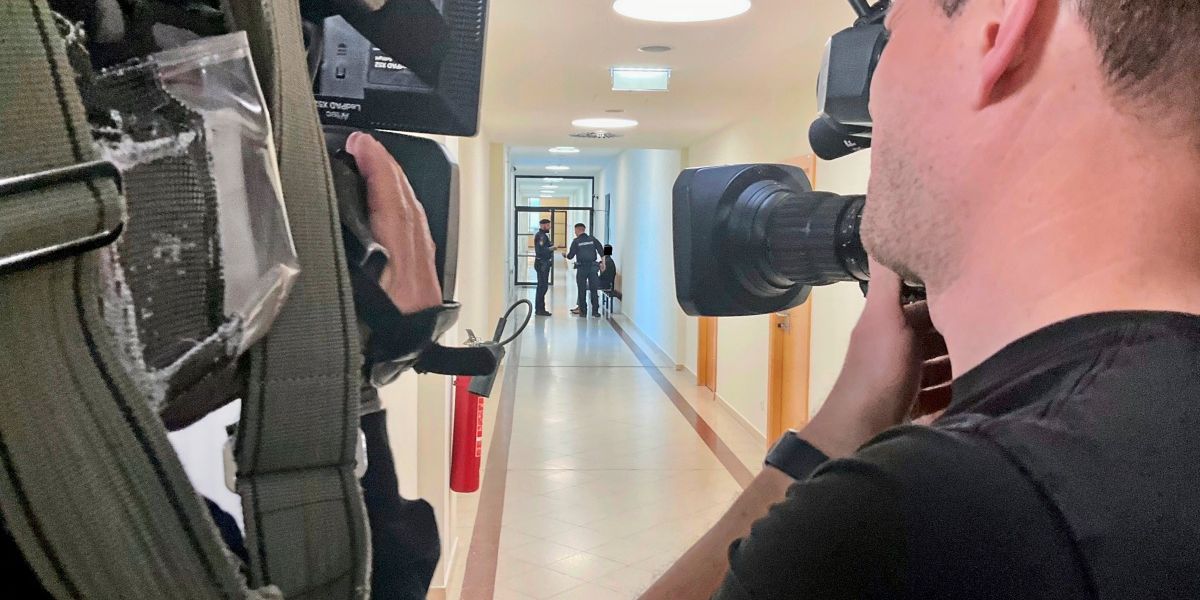
Vienna, Austria – A disturbing case involving a group of nine young individuals accused of systematically targeting vulnerable members of society – including the homeless, drug users, and individuals they falsely accused of being pedophiles – is unfolding in Vienna. The trial, which commenced on March 18, 2026, at the Vienna Regional Court, has laid bare a chilling pattern of violence motivated by a warped sense of vigilante justice and fueled by online radicalization. The case has sent shockwaves through Austria, prompting questions about the rise of extremist ideologies among youth and the role of social media in facilitating such harmful behavior.
The accused, aged between 14 and 19, stand accused of attempted murder, aggravated assault, and robbery. According to prosecutors, the group operated as a self-styled “pedophile hunter” collective, meticulously planning attacks on individuals identified through online platforms like Telegram, and Snapchat. The alleged crimes took place between late June and late August 2025, with authorities investigating a total of 22 attacks during that period. The disturbing element of the case lies not only in the brutality of the assaults but also in the fact that the perpetrators documented their actions, sharing the footage on social media, amplifying their twisted ideology and potentially inspiring copycat behavior.
The “Pädo-Hunter” Phenomenon and its Roots
The term “Pädo-Hunter,” originating from online communities, refers to individuals or groups who claim to identify and expose alleged child predators. While some operate within legal boundaries, reporting suspected abuse to authorities, others engage in dangerous and illegal activities, taking the law into their own hands. This case in Vienna falls squarely into the latter category, with prosecutors stating unequivocally that none of the victims were actually involved in any form of child sexual abuse. oe24.at reports that the accused falsely accused their victims of “an immoral or dishonest lifestyle.”
The investigation revealed a disturbing pattern of online recruitment and coordination. The group reportedly used Telegram to plan attacks, selecting victims based on perceived vulnerabilities. A 16-year-old female member of the group acted as a lure, using Snapchat to pose as a younger individual and entice potential victims into meeting, where they were then ambushed and brutally assaulted. This tactic highlights the insidious way in which social media platforms can be exploited to facilitate criminal activity and underscores the challenges faced by law enforcement in monitoring and preventing such incidents. The Heute.at reports that the violence is “verstörend” (disturbing).
Details of the Attacks and the Victims
The attacks were characterized by extreme violence and a complete lack of empathy. Victims, often already marginalized and vulnerable, were subjected to severe beatings and, in some cases, robbed of their belongings. The brutality extended to former friends of the perpetrators, some of whom were hospitalized with serious injuries. The oe24.at reports that the attacks were “carried out with extreme violence and driven by sadism and complete lack of empathy.”
While the exact number of victims remains under investigation, authorities have confirmed at least ten individuals were targeted. The victims included individuals experiencing homelessness, those struggling with drug addiction, and individuals falsely identified as potential child predators. The motivations behind the attacks appear to stem from a combination of boredom, a lack of perspective, and a high level of aggression, as stated by the prosecutor in court. The case also raises concerns about the potential for copycat crimes, as the perpetrators’ actions were widely disseminated online.
Legal Proceedings and Sentencing
The trial is currently underway at the Vienna Regional Court, with eight of the nine accused remaining in custody since August 2025. The proceedings are expected to be lengthy and complex, given the number of charges and the severity of the alleged crimes. As of March 18, 2026, six of the accused have already received sentencing, though the penalties have been criticized by some as being too lenient.
According to reports from Kurier, five of the defendants received suspended sentences, while one received a partially suspended sentence. The three alleged ringleaders are scheduled to appear in court again on April 2, 2026. The relatively light sentences have sparked outrage among victims’ advocates and raised questions about the effectiveness of the Austrian justice system in dealing with violent extremism. The 15-year-old female member of the group, who acted as the lure, received a five-month suspended sentence.
Broader Implications and Concerns
This case is not an isolated incident. Austria, like many other European countries, has seen a rise in right-wing extremism and vigilante groups in recent years. In March 2025, Austrian police conducted nationwide raids targeting a network of “pedophile hunters” who were using social media to lure and attack homosexual men. taz.de reported on these raids, highlighting the increasing threat of right-wing violence in the country. The current case in Vienna underscores the need for greater vigilance and proactive measures to combat extremism and protect vulnerable populations.
The case also raises important questions about the responsibility of social media platforms in preventing the spread of extremist content and facilitating criminal activity. While platforms have taken steps to address these issues, critics argue that more needs to be done to monitor and remove harmful content, as well as to cooperate with law enforcement agencies. The utilize of encrypted messaging apps like Telegram, which offer a high degree of anonymity, poses a particular challenge for authorities.
What Happens Next?
The trial of the three alleged ringleaders is scheduled to resume on April 2, 2026. Prosecutors are expected to present further evidence and arguments in an attempt to secure harsher sentences. The outcome of the trial will likely have a significant impact on the broader debate about violent extremism and the role of social media in Austria. Authorities are also expected to review and strengthen measures to prevent similar incidents from occurring in the future.
This case serves as a stark reminder of the dangers of online radicalization and the importance of protecting vulnerable members of society. It also highlights the need for a comprehensive approach to combating extremism, involving law enforcement, social media platforms, and community organizations. The investigation is ongoing, and further details may emerge as the trial progresses.
Do you have thoughts on this disturbing case? Share your comments below and help us spread awareness about the dangers of online extremism.
Keep reading
- Abelardo De La Espriella: Special Manager for Bogotá and Transforming Casa de Nariño into a Museum
- Day Trips from Bremen to the Netherlands: Hidden Gems & Top Cities
- Shreveport Police Confront Rising Domestic Violence and Child Trauma (archyworldys.com)
- Trump Pauses Iran Attacks to Allow Space for Diplomatic Talks, UN Envoy Says (time.news)