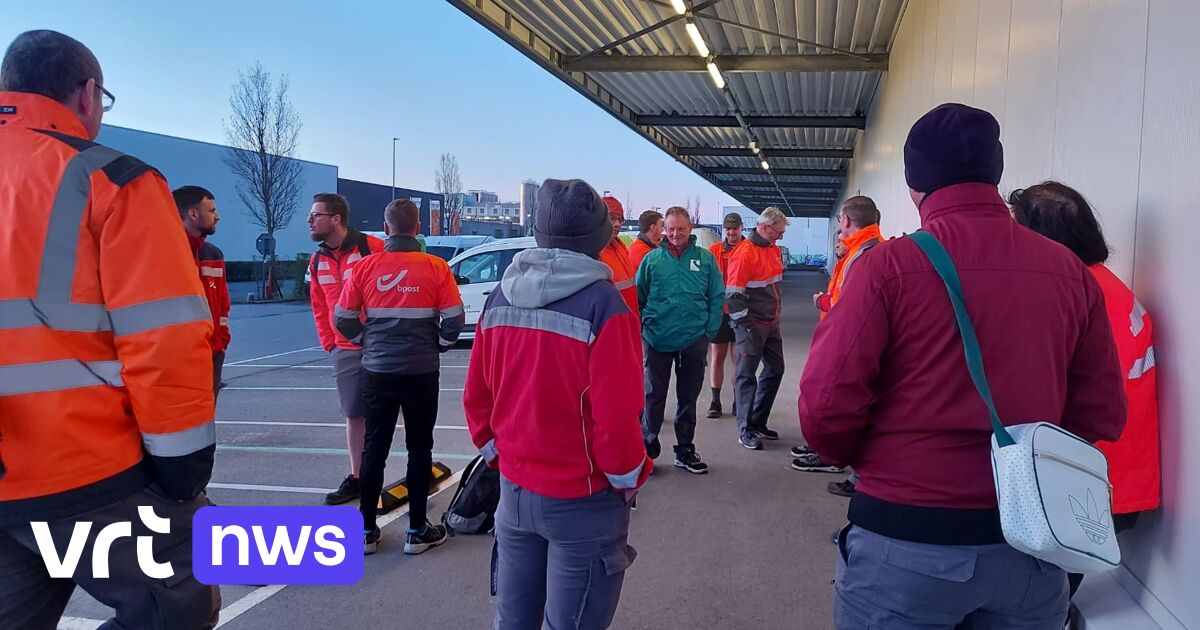
The Belgian postal landscape is facing significant turbulence this week as Bpost workers continue to push back against a sweeping operational overhaul. On Tuesday, April 7, postal workers in Oostkamp walked off the job, marking the latest flashpoint in a series of regional protests that have disrupted mail and parcel delivery across Flanders.
These Bpost postal worker strikes are not merely about wages, but are rooted in a fundamental struggle over the “transformation plan” the company is implementing to survive a shifting economic reality. As traditional letter volumes plummet and e-commerce parcel deliveries surge, the company is attempting to pivot its entire logistics model—a move that has left many of its frontline employees feeling sidelined and financially squeezed.
For the workers, the conflict centers on the erosion of established work patterns and the loss of critical premiums. The strikes reflect a growing tension between a corporate demand for agility in a digital age and a workforce clinging to the stability of long-standing labor agreements.
The Oostkamp Strike: A Breaking Point for Staff
The action in Oostkamp on April 7 is a direct response to what employees describe as an accumulation of burdensome changes. According to reports, the current unrest is a culmination of grievances that began last year when workers were forced to adapt to a new operational structure that saw the removal of newspaper deliveries Focus and WTV.
This specific change had a tangible financial impact: the loss of newspaper delivery meant the loss of associated night premiums, leading to a decrease in take-home pay for many staff members. Now, with the introduction of a new directive to shift work hours, the workforce in Oostkamp has reached a limit, choosing to strike to voice their dissatisfaction with the direction of the management’s reforms Focus and WTV.
Regional Contagion: From Limburg to Antwerp
Whereas Oostkamp is the current focus, the unrest has been spreading across the region. Earlier in April, the province of Limburg saw a massive disruption. On Friday, April 3, Bpost reported that only one-quarter of its postal workers in Limburg were on the job due to the strike VRT NWS. This meant that only 25% of parcels could be delivered in that region on that day, creating a significant logistics bottleneck VRT NWS.
The scale of the Limburg action was substantial, with estimates suggesting more than 100 postal employees laid down their tools Het Belang van Limburg. Although some areas like Sint-Truiden and Tongeren remained operational, the overall impact on the regional supply chain was severe VRT NWS.
The unrest quickly expanded to Antwerp. On the morning of April 3, approximately 70 postal workers in Antwerp joined the strike, citing the same grievances regarding the transformation plan VRT NWS.
Analyzing the Transformation Plan: Letters vs. Parcels
To understand why Bpost is pushing these changes, one must look at the macro-economic shift in the postal industry. Bpost is currently transitioning from being primarily a “letter company” to a “parcel company.” This is a necessity driven by the global decline in physical mail and the explosion of e-commerce. As fewer people send letters, the revenue model must shift toward the delivery of packages.
To optimize this shift, Bpost management wants to significantly push back the start times for postal workers. The logic is that parcel delivery patterns differ from letter delivery; packages often arrive at sorting centers later or require different routing schedules than the early-morning rush associated with letters and newspapers VRT NWS.
However, for the employees, these “shifted hours” are more than just a scheduling change. They represent a loss of the early-morning routine and, more importantly, the loss of the financial incentives (premiums) that were tied to those early hours Focus and WTV. The workers view this not as a necessary evolution, but as a degradation of their working conditions.
Key Drivers of the Conflict
- Start Time Shifts: Management’s push to move start hours later to align with parcel logistics.
- Financial Loss: The removal of newspaper delivery led to the disappearance of night premiums, reducing overall income Focus and WTV.
- Operational Stress: A feeling among staff that changes are being “stacked” on top of each other without sufficient consultation.
- Market Pivot: The systemic transition from a letter-based service to a parcel-based logistics provider.
What So for the Belgian Economy
From an economic perspective, this friction is a textbook example of the “digital disruption” of legacy industries. When a company’s core product (letters) becomes obsolete, the transition to a new product (parcels) requires not just new technology, but a new labor contract. Bpost is attempting to rewrite the terms of employment to match the needs of the modern consumer, but they are meeting resistance from a workforce that values the stability of the old model.
The disruption to parcel delivery—such as the 75% drop in capacity seen in parts of Limburg on April 3—highlights the fragility of the “last mile” in the supply chain VRT NWS. For a company trying to grow its parcel business, these strikes are counterproductive, as they erode consumer trust in the reliability of the delivery service.
The situation now rests on the outcome of meetings between trade unions and Bpost management. The goal is to find a middle ground where the company can achieve the flexibility it needs for parcel logistics without stripping workers of the financial stability they have relied upon for decades.
The next critical checkpoint will be the results of the ongoing social dialogue between the unions and Bpost management to determine if a compromise on start times and compensation can be reached to end the regional strikes.
Do you think postal services should prioritize operational flexibility or worker stability in the age of e-commerce? Share your thoughts in the comments below.
Keep reading