
A high-stakes legal battle in the Netherlands has centered on the validity of statements allegedly made by former lawyer Inez Weski during her arrest. At the heart of the dispute is whether a series of emotional outbursts were genuine admissions of guilt or the result of a severe medical crisis during a high-pressure police operation.
Weski, who is facing charges related to her alleged involvement with the criminal organization of drug kingpin Ridouan Taghi, has formally denied making several incriminating remarks. The defense argues that the Public Prosecution Service (OM) has “selectively shopped” quotes from police reports to create the illusion of a confession, while Weski maintains that her words have been distorted or entirely fabricated.
The controversy emerged during court proceedings in Rotterdam, where the prosecution has presented police records as “ultimate proof” of guilt. These records claim that during her arrest on April 21, 2023, Weski expressed deep regret and a sense of inevitability regarding her legal situation.
The Disputed ‘Confessions’
According to the Public Prosecution Service, Weski was panicky during her apprehension and uttered several statements that suggest an admission of wrongdoing. The prosecution alleges she said, “Had ik het allemaal maar niet gedaan” (I wish I hadn’t done it all), and “Ik denk dat jullie het weten” (I think you know). Other cited phrases include, “Jullie weten dat ik dit niet wilde” (You know I didn’t want this) and “Ik ga nu dood. Ik ga dit niet overleven” (I’m dying now. I won’t survive this).
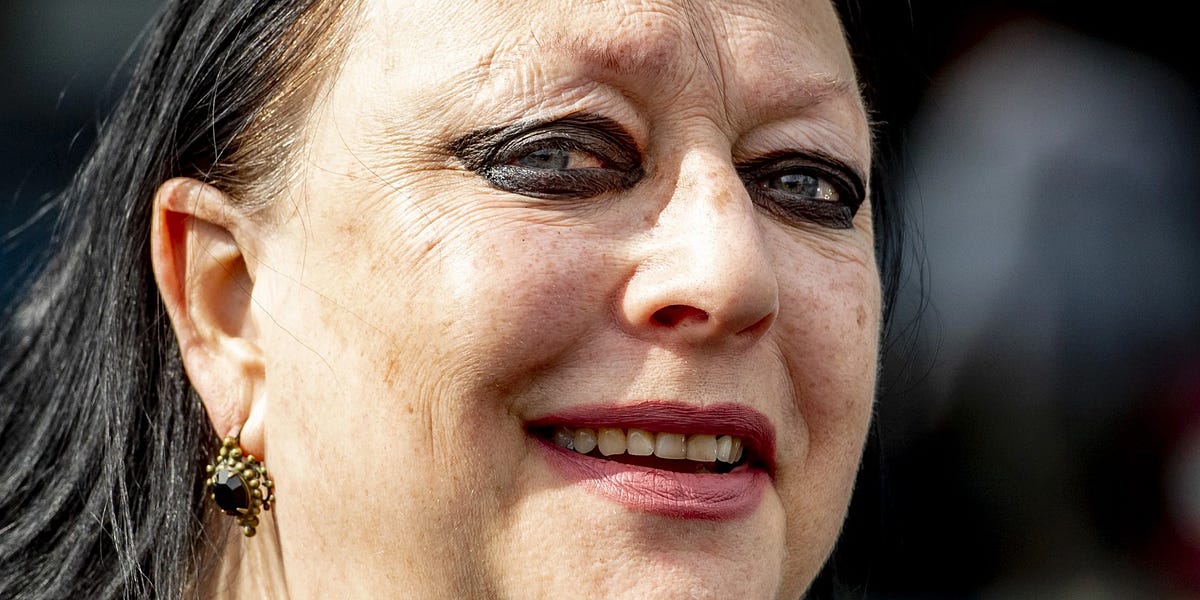
For the prosecution, these words serve as a critical link in proving Weski’s role as a facilitator for the criminal organization of Ridouan Taghi. However, Weski and her legal team, including attorneys Geert-Jan Knoops and Carry Knoops, have pushed back aggressively against this interpretation.
Weski contends that she does not recognize the words being placed in her mouth and has explicitly stated that a portion of the quotes attributed to her were never spoken. Her defense emphasizes that any emotional reactions were not acknowledgments of criminal activity but reactions to an “extremely stressful” environment.
Medical Crisis and Contextual Rebuttal
A central pillar of Weski’s defense is her health status at the time of the arrest. Weski suffers from diabetes and heart problems, and she described her state during the police raid as “very stressful and medically concerning.” She recalled being unsteady on her feet and needing to sit down repeatedly immediately following the intervention.
This medical context is used to explain the most contentious phrase: “Anders lost het zich op een natuurlijke wijze wel op” (Otherwise it will resolve itself in a natural way). While the prosecution viewed this as a veiled admission, Weski clarifies that she was referring to the risk of dying from her health conditions while in custody. She argued that her fear was focused on her inability to survive imprisonment due to her physical fragility, rather than a confession of membership in a criminal syndicate.
The defense further questioned the procedural integrity of the police reports. Weski claims she was not given the opportunity to review or sign the official police report (proces-verbaal) containing these statements at the time of her arrest. According to her legal team, these quotes only became available for her review during the court sessions, preventing any timely correction of the record.
Legal Stakes and Sentence Demands
The resolution of this dispute over the arrest statements is critical, as they form a significant part of the evidence used to justify the prosecution’s sentencing request. The Public Prosecution Service has demanded a prison sentence of 4.5 years for the former lawyer.
The prosecution’s theory is that Weski acted as a crucial communication link for Taghi’s organization. In determining the 4.5-year demand, the OM stated it took into account Weski’s advanced age and her current health status. Due to these medical concerns, Weski has not been physically present in the courtroom for recent hearings, instead following the proceedings via a video connection.
Weski continues to contest the charges of membership in the criminal organization. Her defense maintains that the prosecution’s reliance on “selectively shopped” quotes from a medical crisis is insufficient to prove the charges beyond a reasonable doubt.
Key Dispute Summary
| Statement/Detail | Prosecution (OM) View | Defense (Weski) View |
|---|---|---|
| “I wish I hadn’t done it all” | Direct admission of guilt/participation. | Denied; claims the quote is fabricated or distorted. |
| “It will resolve itself naturally” | Admission that the situation was inevitable. | Reference to dying of natural causes due to illness. |
| “I won’t survive this” | Fear of the legal consequences of her actions. | Fear of death due to diabetes and heart problems. |
| Police Report Process | Accurate record of events during arrest. | Unverified report not signed or checked by the accused. |
The proceedings continue in Rotterdam, with the court tasked with weighing the reliability of the police reports against the medical evidence and the denials provided by the defense. The outcome will depend largely on whether the judge views the statements as a “disguised confession” or the ramblings of a patient in medical distress.
The court is expected to provide further updates as the defense continues its pleadings and the judge evaluates the evidence regarding the alleged criminal association. We will continue to monitor the official court filings for the final ruling.
Do you believe medical distress should invalidate statements made during an arrest? Share your thoughts in the comments below and share this story for more updates on this international legal development.
Related reading