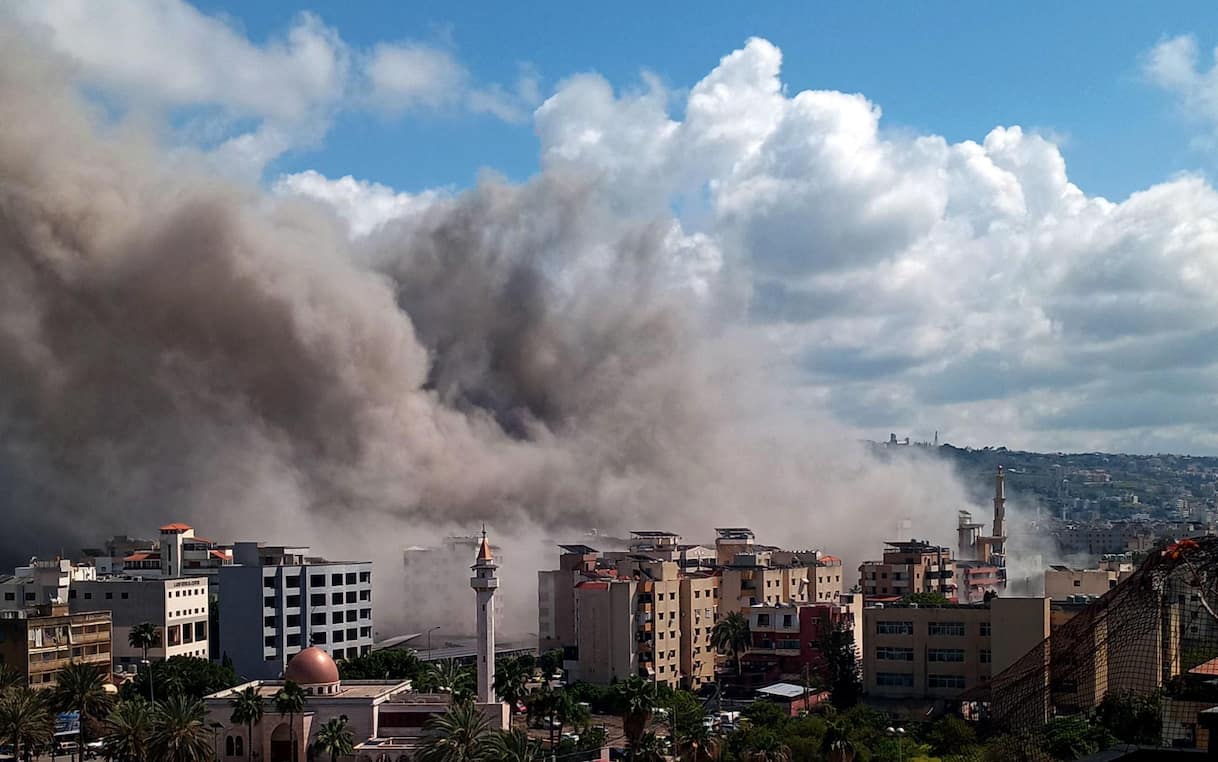
A fragile diplomatic breakthrough between the United States and Iran has been overshadowed by a violent escalation in Lebanon, as Israel continues its military offensive against Hezbollah despite a newly brokered ceasefire with Tehran. The strategic tension reached a breaking point on Wednesday, April 8, 2026, as the Israeli government clarified that the suspension of hostilities with Iran does not extend to the “Country of the Cedars.”
The current crisis is a critical juncture in the 2026 Lebanon war, a conflict that began on March 2, 2026, and has already resulted in more than 1,500 deaths according to reports on the continuing war. The humanitarian toll is staggering, with nearly 1 million people—roughly 20% of Lebanon’s population—displaced from their homes per Wikipedia’s conflict documentation.
The diplomatic effort, spearheaded by Pakistani Prime Minister Shehbaz Sharif and announced by U.S. President Donald Trump, aimed to silence weapons across the region. However, the hope for a comprehensive peace lasted only hours. The office of Israeli Prime Minister Benjamin Netanyahu issued a statement in English, explicitly excluding Lebanon from the two-week truce, ensuring that the war against Hezbollah remains active.
This divergence in diplomatic goals has sparked immediate international concern. Even as the U.S. And Iran have agreed to a 38-day suspension of hostilities—contingent on Iran opening the Strait and ceasing attacks on regional allies—the continued bombardment of Lebanese territory has led European leaders to demand a broader peace agreement.
The Anatomy of the U.S.-Iran Ceasefire
The agreement between Washington and Tehran is a conditional suspension of attacks rather than a permanent peace treaty. According to a communication from the office of Prime Minister Benjamin Netanyahu, Israel supports President Trump’s decision to suspend attacks against Iran for two weeks, provided that Iran immediately opens the Strait and halts all attacks against the United States, Israel, and other regional nations as detailed by Huffington Post Italy.
The deal also includes a U.S. Commitment to ensure that Iran no longer poses a nuclear, missile, or terrorist threat to the United States, Israel, and neighboring Arab countries. This commitment is intended to be the foundation for upcoming negotiations. However, the path to this agreement was fraught with tension. Netanyahu spent much of the preceding afternoon on the phone with the White House, attempting to slow the deal, which he viewed as too rushed.
The timing of the truce was precise. An ultimatum from Donald Trump to the Islamic Republic was set to expire around 3:00 a.m. On April 8. In a final show of force before the deadline, the Israel Defense Forces (IDF) announced that their fighter jets returned to base only after bombing “dozens of launch sites” and “critical infrastructure” in Iran, responding to a barrage of missiles fired by Tehran via TPI reports.
Escalation in Lebanon: A Humanitarian Crisis
While the skies over Iran may have quieted, the conflict in Lebanon has intensified. The Israeli military has maintained that it will “continue to fight against the terrorist organization Hezbollah in Lebanon” as stated by the IDF. This persistence has led to a rapid increase in casualties, and displacement.

The 2026 Lebanon war has seen a significant escalation in ground operations, which began in southern Lebanon on March 16, 2026 per Wikipedia. The human cost is documented through varying reports: Israeli sources claim approximately 1,000 militants have been killed, while other internal sources suggest over 400 according to casualty records. Beyond combatants, the conflict has claimed the lives of peacekeepers and civilians, including three UNIFIL peacekeepers per conflict data.
The scale of displacement is particularly alarming. With over 1.2 million people displaced within Lebanon, the country is facing a systemic humanitarian collapse per verified data. The instability has reached a point where general elections, originally scheduled for the current cycle, have been postponed until 2028 per Wikipedia.
International Pressure for a Comprehensive Truce
The decision by Israel to exclude Lebanon from the ceasefire has drawn sharp criticism from European allies who argue that a partial peace is unsustainable. France, Italy, and Spain are currently leading the diplomatic push to expand the truce to include the Lebanese border.
- France: President Emmanuel Macron has explicitly called for the ceasefire to include Lebanon, echoing the initial hopes expressed by the Pakistani mediation team per Huffington Post Italy.
- Italy: Foreign Minister Antonio Tajani has described the situation in Lebanon as “critical” and emphasized that the country must be included in the Middle East ceasefire via Tajani’s statements on Tg5.
- Spain: Foreign Minister José Manuel Albares has expressed support for Lebanese sovereignty and the UNIFIL mission, calling for an complete to attacks by both Hezbollah and Israel per Albares’ communications with Youssef Raggi.
Summary of the Current Military and Diplomatic Status
| Region | Status | Key Condition/Detail |
|---|---|---|
| Iran | Ceasefire (2 Weeks) | Must open the Strait. cease attacks on US/Israel. |
| Lebanon | Active War | Excluded from truce; IDF continuing operations against Hezbollah. |
| US-Iran Relations | Negotiating | Focus on nuclear and missile threat reduction. |
The geopolitical stakes remain high. While the U.S. Attempts to stabilize the broader region through a deal with Tehran, the tactical reality on the ground in Lebanon continues to be one of high-intensity warfare. The exclusion of Lebanon from the truce suggests that Israel views the threat from Hezbollah as a distinct operational priority that cannot be subsumed into a diplomatic arrangement with Iran.
The next critical checkpoint will be the outcome of the “upcoming negotiations” mentioned by the U.S. And Israel, which aim to permanently resolve Iran’s nuclear and missile capabilities per official communications. Whether these talks can eventually encompass a resolution for Lebanon remains the central question for the international community.
World Today Journal encourages readers to share this report and abandon their perspectives on the regional stability of the Middle East in the comments section below.
Keep reading