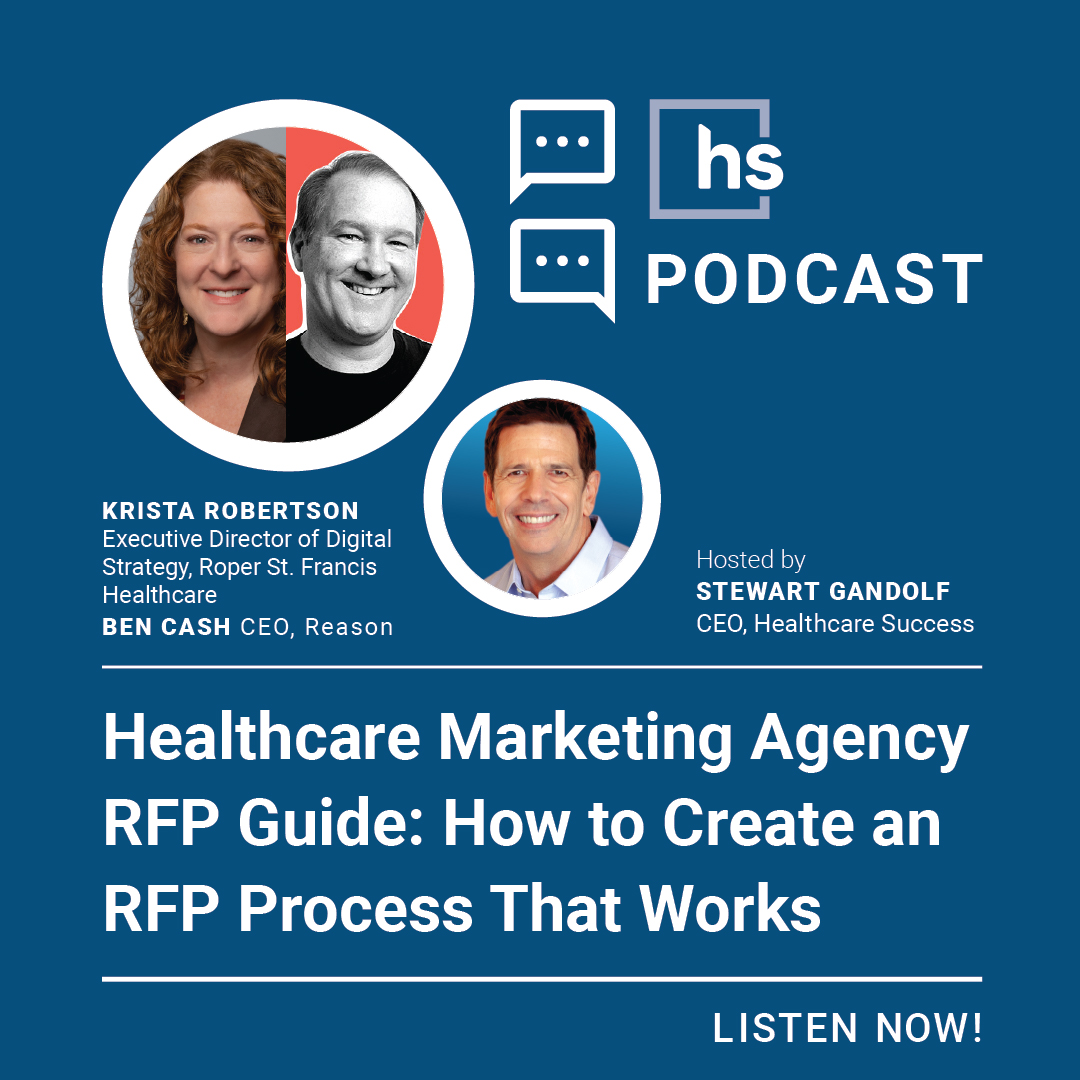
In the high-stakes environment of modern healthcare, the bridge between a clinical vision and a patient’s digital experience is often built by an external agency. Yet, the process used to select these partners—the Request for Proposal (RFP)—is frequently regarded as the most tedious and least effective part of the journey. For many health system executives, the RFP is a procurement hurdle; for agencies, it is often a resource-heavy gamble with a low probability of alignment.
When executed poorly, the RFP process creates a “mirage of clarity.” It produces a document that looks precise on paper but fails to address the actual strategic needs of the organization. The result is a common industry paradox: a winning vendor is selected based on a checklist, only to find that the project scope shifts dramatically the moment the contract is signed. This misalignment doesn’t just waste budget—it delays critical digital infrastructure that patients rely on for access to care.
To move beyond this friction, healthcare leaders must shift their perspective. A successful healthcare marketing agency RFP guide is not about creating a more exhaustive list of requirements; it is about designing a process that prioritizes strategic fit and human partnership over procurement mechanics. By focusing on outcomes rather than features, health systems can transform the RFP from a bureaucratic exercise into a strategic asset.
The stakes for this transition are higher than ever. As healthcare organizations increasingly lean on digital platforms for patient acquisition, service line growth, and physician referral strategies, the quality of the agency partnership directly impacts the organization’s competitive standing and patient satisfaction scores. The goal is no longer simply to “buy a website” or “hire a firm,” but to identify a long-term strategic partner capable of navigating the complexities of a regulated, multi-stakeholder environment.
The Alignment Gap: Why Traditional RFPs Fail
The fundamental failure of the traditional RFP process is its inability to create genuine alignment. In many cases, the process is designed to treat a strategic marketing partnership like the purchase of a piece of medical equipment. While a standardized checklist works for buying monitors or syringes, it fails when the goal is to solve complex human problems, such as improving the digital patient journey or enhancing brand trust.
Data shared during industry discussions at the Healthcare IT News (HCIC) sessions suggests a systemic breakdown in this process. According to survey data presented by Reason One, a significant majority of respondents indicated that the winning vendor met expectations only sometimes or rarely. A staggering 88% of agencies reported that the initial RFP scopes rarely matched the actual project requirements once the work was awarded. This suggests that the “clarity” sought during the bidding process is often illusory.
This gap exists because most RFPs are written based on the “current state” of the organization. Health systems often inventory the features of their existing website or marketing plan and ask agencies to replicate or slightly improve them. This approach locks the organization into outdated assumptions and prevents the agency from offering the very strategic innovation the health system is actually seeking. When the RFP is too tightly tied to existing functions, it stifles the discovery phase and forces the partner to be a vendor rather than a consultant.
Phase One: The Pre-RFP Foundation
The most successful agency searches begin long before a formal document is drafted. The “suckage” of the RFP process—as it is colloquially known in the industry—usually stems from a lack of internal preparation. When marketing leaders throw an RFP “over the castle wall” to agencies without first aligning their own house, they invite confusion and mismatched proposals.
Securing Internal Stakeholder Buy-In
In a health system, a digital project is never just a “marketing” project. It is an IT project, a legal project, and a clinical project. Before writing a single requirement, leadership must align stakeholders across several critical silos:
- Marketing and Communications: To define brand goals and patient acquisition targets.
- IT and Digital Teams: To ensure technical compatibility with existing Electronic Health Records (EHR) and CMS platforms.
- Procurement and Legal: To understand the constraints of the bidding process and compliance mandates.
- Executive Leadership: To ensure the project is tied to the organization’s broader strategic plan (e.g., a “2030 Vision”).
Without this early alignment, the RFP often contains conflicting goals. For example, Marketing may want a cutting-edge, high-conversion interface, while IT may demand a rigid, low-maintenance structure that limits design flexibility. Resolving these tensions internally prevents the agency from being caught in the middle of a corporate tug-of-war.
The Curated Bidder List
There is a common misconception that inviting more agencies increases the chance of finding the “perfect” partner. In reality, a massive bidder list creates more work for the health system and degrades the quality of the responses. High-tier agencies, who are often the best fit for complex healthcare needs, are frequently deterred by 80-page RFIs that demand exhaustive samples before a single conversation has taken place.
A more effective strategy is to research and narrow the field upfront. This involves speaking with peers at other health systems, attending industry conferences, and conducting one-on-one exploratory meetings. By the time the formal RFP is issued, the organization should have a small, qualified group—typically three to six firms—who have already demonstrated a baseline of cultural and technical fit. This respectful approach signals to agencies that the health system values their time, which in turn encourages more thoughtful and tailored proposals.
Phase Two: Writing for Outcomes, Not Features
The shift from a “vendor mindset” to a “partner mindset” happens in the way the RFP is written. Traditional RFPs are feature-heavy; they ask if the agency can provide a specific search tool, a certain CMS, or a specific number of social media posts per month. While these details are necessary for the final contract, they should not be the center of the selection process.
Defining Strategic Outcomes
Instead of a checklist of “what” the agency should do, the RFP should focus on “why” the project exists. This means defining organizational outcomes. For example:
- Instead of: “The website must have an integrated appointment scheduler.”
- Focus on: “We need to reduce the friction in patient access to care and increase online appointment volume by 20%.”
- Instead of: “The agency must provide SEO services.”
- Focus on: “We aim to increase the visibility of our oncology service line to attract more regional referrals.”
When agencies are given a strategic goal, they can propose the best solution to achieve it, rather than simply confirming they can check a box. This allows the agency to act as a strategic partner, bringing their own expertise to the table to suggest platforms or strategies the health system may not have considered.
The Budget Paradox
Budget is consistently the primary pain point for both sides. Agencies fear “fishbowling”—where a vendor grows their price to fit the maximum available budget—while health systems fear overpaying due to a lack of market transparency. This often leads to a stalemate where neither side discloses a number.
A more productive approach is to use the RFP process itself to assist define the budget. By providing a general range or asking agencies to provide “low-end” and “high-end” estimates based on different tiers of service, the health system can gather the data needed to secure internal funding. Honesty about budget constraints early on prevents the heartbreak of selecting a “dream agency” only to find their proposal is three times the available budget.
Phase Three: Humanizing the Procurement Process
Procurement rules are often designed to be impersonal to ensure fairness, but marketing is a relationship business. The most successful partnerships are built on chemistry, trust, and a shared understanding of the healthcare landscape. If the process is purely document-driven, the organization risks hiring a firm that is technically capable but culturally incompatible.
Integrating Real Dialogue
To avoid a mismatch, health systems should create opportunities for real-time conversation. This can include:
- Pre-RFP Interviews: Brief meetings to gauge “vibes” and basic capabilities before the formal process begins.
- Live Q&A Sessions: Rather than aggregating 600 written questions into a spreadsheet, hosting a 60-minute open call allows agencies to get clarity and allows the health system to spot how the agency thinks on its feet.
- In-Person Presentations: Finalists should present their strategy live, allowing stakeholders to assess the team’s communication style and ability to handle pressure.
Closing the Loop
One of the most overlooked aspects of the RFP process is the post-decision phase. Agencies invest dozens, sometimes hundreds, of hours into a proposal. When a health system simply “ghosts” the unsuccessful bidders, it damages the organization’s reputation in the professional community.
Providing a brief, 15-minute debrief to unsuccessful finalists is not only a professional courtesy; it is a practical business move. The healthcare marketing world is small. Today’s unsuccessful bidder may be the perfect partner for a different project two years from now. Closing the loop with honest feedback helps agencies improve and maintains a positive relationship with a wide network of experts.
Summary Checklist for Healthcare Agency Selection
For leaders preparing to launch a search, the following framework can serve as a guide to ensure the process leads to a partnership rather than just a contract.
| Category | Critical Question | Goal |
|---|---|---|
| Internal Alignment | Are IT, Marketing, and Legal aligned on the project’s definition of success? | Eliminate conflicting goals before the RFP is issued. |
| Sourcing | Have we researched and limited the bidder list to 3–6 qualified firms? | Increase response quality and reduce evaluation fatigue. |
| Scope | Is the RFP focused on strategic outcomes rather than existing features? | Encourage agency innovation and strategic partnership. |
| Budget | Is there a realistic budget range or a structured way to define one? | Avoid proposals that are financially unfeasible. |
| Dialogue | Are there scheduled touchpoints for real-time human communication? | Assess cultural fit, and chemistry. |
Why the “Partner” Model Matters for Patient Care
the effort place into a better RFP process is an investment in the patient. In a digital-first healthcare economy, the website is often the “front door” of the hospital. If that door is difficult to navigate, if the information is outdated, or if the appointment process is broken, the patient’s care journey is compromised before they ever step foot in a clinic.
When a health system finds the right strategic partner, they gain more than a vendor; they gain an extension of their own team. This partner helps the organization navigate the shift toward value-based care, improves the accessibility of health information, and ensures that the digital experience reflects the quality of the clinical care provided inside the walls of the facility.
The transition from a checklist-driven RFP to an outcome-driven partnership is not just a procurement improvement—it is a commitment to excellence in the patient experience. By treating the RFP as the beginning of a relationship rather than the end of a search, healthcare leaders can ensure their digital infrastructure is built to last and designed to serve.
As healthcare systems continue to evolve their digital strategies, the next major checkpoint for many will be the annual budget planning cycle for the upcoming fiscal year. This is the ideal time to audit existing agency relationships and determine if a new, outcome-based RFP process is necessary to meet future growth goals.
We want to hear from you: Has your organization struggled with the RFP process, or have you found a method that actually works? Share your experiences in the comments below or reach out to us on social media.
Related reading
- Osteoarthritis and Rheumatoid Arthritis Differ in Cause and Treatment
- Inflation and Healthcare Costs: Why Americans Are Skipping Care in 2026
- OB/GYN Physician Job in Springfield, TN | HCA Healthcare (news-usa.today)
- Online Weight-Loss Drug Provider Challenges Agency Over Industry Standards (archyde.com)