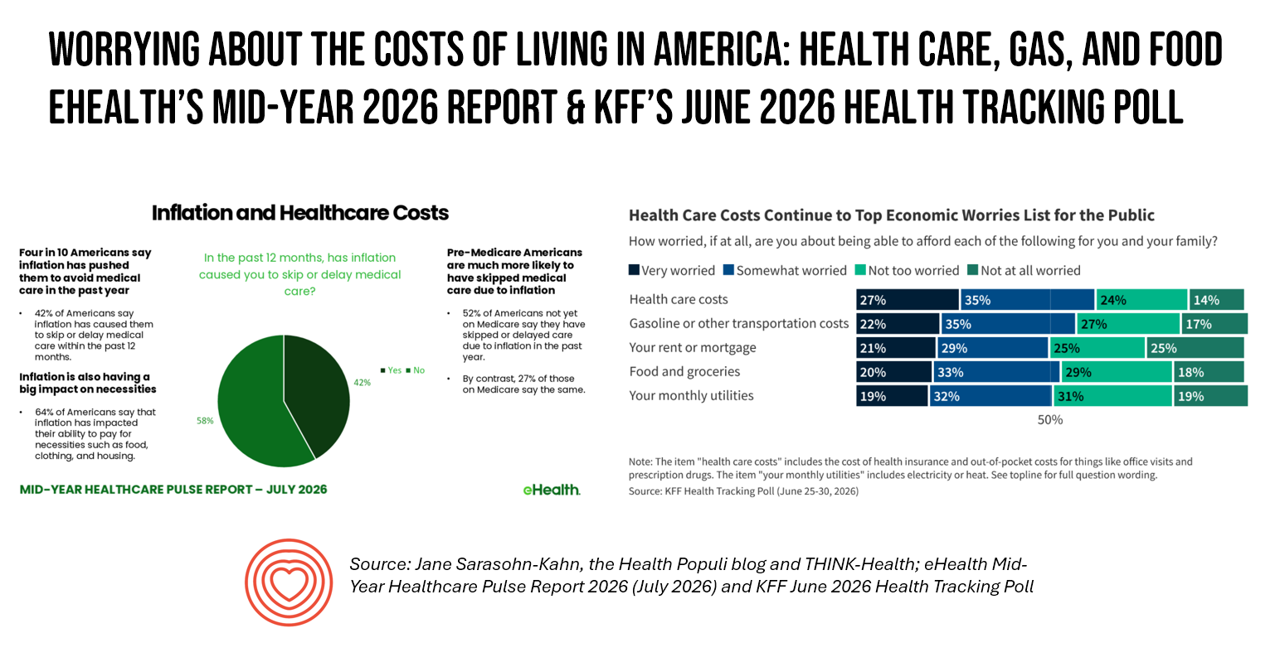
Americans are experiencing a relentless convergence of household financial pressures, where the surging cost of living, healthcare expenses, food, and housing merge into a single, acute burden on family budgets. According to the eHealth Mid-Year Healthcare Pulse Report 2026 published in July 2026, two in three U.S. adults state that recent high inflation has negatively impacted their ability to pay for essentials like food, clothing, and housing over the past twelve months. Conducted among a survey group of over 1,000 Americans, the findings reveal that macroeconomic pressures are forcing deep sacrifices in personal health management, with 42% of respondents reporting that they have skipped or delayed medical care in the past year.
The data highlights a stark divide across age groups and insurance statuses. Among adults not yet enrolled in Medicare, 52% report skipping or delaying care due to financial constraints, compared with 27% of current Medicare enrollees. Financial anxiety surrounding medical expenses casts a long shadow across generations, creating an environment where health consumers must constantly weigh basic survival needs against clinical care.
Drew Altman, CEO of Kaiser Family Foundation (KFF), examined these intersecting financial pressures in an essay published on July 20, 2026. Reviewing data from the late June 2026 KFF Health Tracking Poll, Altman noted that nearly two-thirds of U.S. adults expressed being somewhat or very worried about healthcare costs. This figure slightly outpaces worries regarding transportation and gas costs, while 53% expressed worry over affording food and groceries, and half of all U.S. adults reported anxiety over rent or mortgage expenses. Gallup polling from the same period reflected a similar trend, finding that 61% of U.S. adults worry a great deal about health care affordability.
“Both worries about unexpected health care costs and problems paying health care bills are motivating voter concern about health care,” Altman explained in his essay. “Voters clump health costs with a series of other problems and worries about their family budgets. I have come to the conclusion that the search for a single top issue through polling questions—whether it’s health costs, or gas prices, or the cost of food—is artificial. People worry about and experience these costs together. There is no top issue, unless that issue is the catchall, ‘cost of living.'”
Retirement Insecurities and Pre-Medicare Anxieties
For younger adults approaching their later years without yet qualifying for Medicare, the psychological and financial toll is particularly pronounced. Data from the mid-year report indicates that four in five younger adults not yet eligible for Medicare harbor worries regarding healthcare costs in today’s environment, with three in five describing themselves as “very worried.”
Looking further ahead toward retirement, these anxieties multiply. The majority of people express concern over future medical expenses, yet half of those surveyed underestimate what their medical spending will be during retirement. Compounding these fears, three in four Americans harbor doubts regarding the long-term viability of foundational safety nets, forecasting that Social Security and Medicare coverage will not be available to them.
Current Medicare beneficiaries are not immune to these doubts either. Among those already enrolled in the federal health insurance program, 75% report worrying that the system—into which they paid over their lives as working Americans—will be reduced in their times of need.
The Rising Prominence of Specialty Drug Costs
Reflecting the evolving clinical and economic zeitgeist of mid-2026, household budget pressures are further complicated by the arrival of high-cost pharmacological innovations. The eHealth survey investigated consumer perspectives on GLP-1 medicines for weight loss and their costs.
As consumer demand for these breakthrough therapies surges, patients increasingly confront the out-of-pocket realities of drug pricing, coverage restrictions, and formulary exclusions. These specialty pharmacy costs add another layer of fiscal strain to households that are already balancing rent, utility bills, groceries, and routine doctor visits.
Health Consumerism and the Evolving Household Budget
Public health analysts point out that medical expenses have been deeply embedded in the American household cost of living for a long, long time. However, the acute inflationary environment of 2026 has intensified the stress of fiscal health bills.
As consumers pay more out of pocket and feel the pinch across every category of consumer spending, individuals are increasingly adopting the mantle of empowered health consumers. Faced with rising deductibles, copays, and premium costs, patients are exercising greater self-agency in shopping for care, questioning treatment expenses, and carrying these economic frustrations directly into public civic life.
Official health policy tracking and ongoing public opinion updates regarding household economic pressures can be followed through resources provided by the Kaiser Family Foundation.
What are your thoughts on how healthcare costs impact your household budget? Join the conversation and share your perspectives in the comments below.
Worth a look