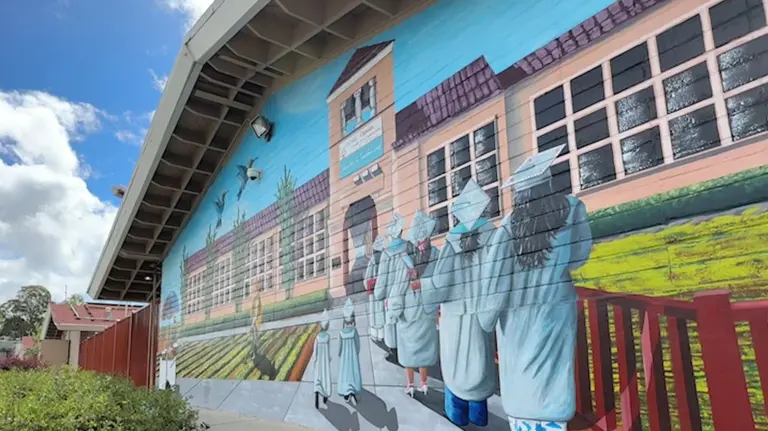
The Escuela Popular de East San José is preparing to appeal a district decision that would force the institution to close its doors. The school, which has reportedly served the Hispanic community for several decades, is facing the shutdown due to alleged non-compliance with specific requirements, though the exact nature of these failures has not been detailed in available reports.
The move to close a long-standing educational pillar comes at a time of heightened volatility and systemic pressure for Latino populations across the United States. For many in the community, the potential loss of local educational resources mirrors a broader trend of diminishing access to essential government services and institutional support.
A Climate of Institutional Instability
The struggle of the Escuela Popular de East San José unfolds against a backdrop of significant federal instability. Since the start of the second Donald Trump administration, the Hispanic community—which represents approximately 13.7% of the U.S. Population—has faced a series of policy shifts that have limited communication and access to state resources. For instance, on January 23, 2025, the White House closed its official portal and social media accounts in Spanish, a move that critics argue limits the accessibility of crucial government information for 43.4 million Spanish speakers reported by Cronista.
This linguistic barrier is compounded by economic precariousness. A partial government shutdown that began on October 1, 2025, has placed millions of vulnerable families at risk. According to the organization Voto Latino, more than 15 million Latinos have been affected by the dysfunction in Washington, with many losing access to critical nutrition and health programs via El País. Approximately 300,000 Latino federal employees—roughly 10.5% of the federal workforce—have seen their salaries jeopardized during this period.
The Ripple Effect of Budgetary Interruptions
The uncertainty surrounding the Escuela Popular de East San José’s future is reflective of the general instability seen in neighborhoods with high Latino populations. Budgetary interruptions at the federal level often lead to delayed disbursements and the freezing of modern projects, which disproportionately impacts community-based services. As of February 2026, the ongoing “government shutdown” mode has continued to generate uncertainty regarding public services and the processing of essential paperwork via La Opinión.
When local institutions like the Escuela Popular face closure, the impact extends beyond the classroom. Such schools often serve as hubs for community integration, providing a safe space for education and support in a climate where federal health programs, including Medicaid and Medicare, have faced proposed cuts and subsidy eliminations.
Key Factors Influencing Community Access
The intersection of local district decisions and federal policy creates a challenging environment for Hispanic educational initiatives. The following factors currently contribute to the instability of these services:
- Communication Gaps: The removal of bilingual government portals hinders the ability of non-English speakers to navigate legal and educational requirements.
- Funding Volatility: Federal shutdowns lead to the suspension of non-essential activities, which can trickle down to the funding and support available for community programs.
- Regulatory Pressure: Allegations of “non-compliance” often arise during periods of shifting administrative priorities and tighter oversight.
What Happens Next
The Escuela Popular de East San José will now move forward with its appeal to challenge the district’s decision. The outcome of this legal or administrative process will determine whether the institution can rectify the alleged requirements or if the closure will be finalized.
As the community awaits a ruling, the case highlights the precarious nature of minority-focused educational institutions in an era of tightening budgets and restrictive federal policies. The resolution of this appeal will likely serve as a bellwether for other community-led schools facing similar regulatory scrutiny.
We invite our readers to share their thoughts on the importance of community-led education in the comments below. Please share this story to keep the conversation on educational accessibility alive.
Related reading