
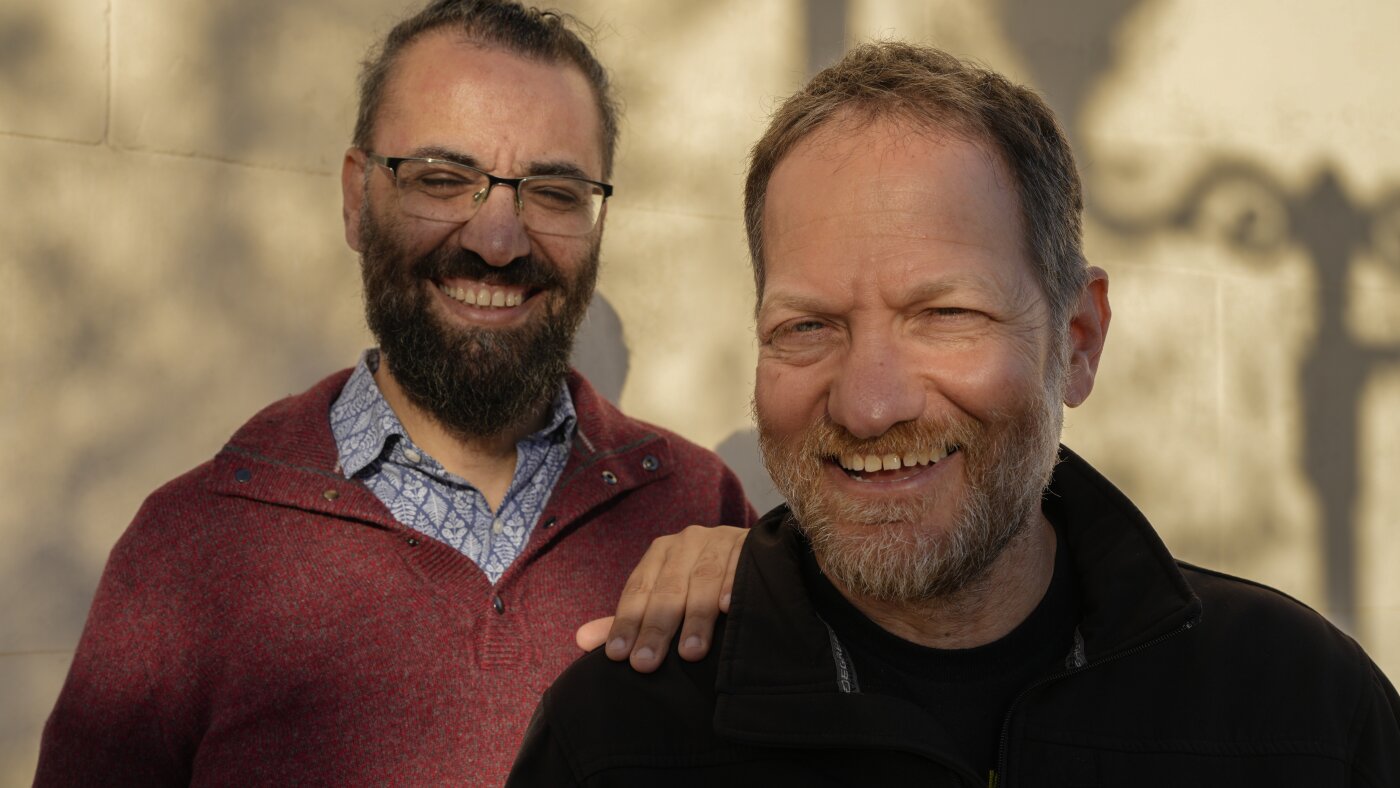
In a region where geopolitical tensions often dictate personal identities, an unlikely brotherhood has emerged between two men who have both endured the deepest possible grief. Maoz Inon, an Israeli, and Aziz Abu Sarah, a Palestinian, are transforming their shared experience of loss into a collaborative effort for Middle East peace, demonstrating that personal trauma can occasionally turn into a bridge rather than a barrier.
Their relationship, which they describe as a brotherhood rather than a mere partnership, is the central focus of their forthcoming book, The Future Is Peace: A Shared Journey Across the Holy Land. The work documents a peace activism born from the wreckage of conflict, illustrating how two individuals from opposing sides of a violent divide can respect each other’s narratives while daring to imagine a shared future.
The bond between Inon and Abu Sarah was forged through a decade of intermittent contact, beginning with a meeting over tea in Jerusalem. Both men previously ran travel agencies, operating under the belief that education and travel could bring disparate societies closer together. However, their connection shifted from a professional and friendly acquaintance to a profound emotional kinship following the events of late 2023.
For Maoz Inon, the turning point came on October 7, 2023, when Hamas-led militants launched a massive attack on Israel. Inon’s parents, Bilha and Yakovi Inon, were among the more than 1,100 people killed during that attack according to reports on the event. The couple was killed at their home in Kibbutz Netiv HaAsara, located near the border with Gaza.
A Brotherhood Born of Trauma
In the wake of the October 7 attacks, Inon describes a period of overwhelming sorrow. He credits Aziz Abu Sarah with providing the emotional support necessary to prevent him from drowning in that agony. “I lost my parents on Oct. 7, but I won a brother,” Inon told NPR, emphasizing that their connection transcends traditional friendship.

Abu Sarah’s own history is marked by similar tragedy. His brother died from injuries inflicted while in Israeli custody, a loss that mirrored the “bitterness of righteous anger” that both men have had to navigate. By acknowledging their respective pains without dismissing the other’s experience, they have created a framework for mutual understanding in a climate of extreme polarization.
‘The Future Is Peace’: A Roadmap for Reconciliation
The authors’ book, The Future Is Peace: A Shared Journey Across the Holy Land, has been selected as one of the most anticipated nonfiction books of 2026 via the official book site. The narrative serves as a walk through the land and history of Israel and Palestine, focusing on the ability to retain humanity despite enduring extreme pain.
The project has garnered praise from various international figures and authors. Pope Leo XIV described the embrace between Inon and Abu Sarah as a “testimony and sign of hope.” Other contributors, including Pulitzer Prize winner Geraldine Brooks and novelist Ece Temelkuran, have noted the book’s role in repairing faith in a shared future and providing a “vision of repair” for the “torn heart.”
The core philosophy of the work is that hope is not something to be found, but something that must be actively created. By documenting their shared journey, Inon and Abu Sarah aim to show that it is possible for an Israeli and a Palestinian to move past the role of enemies and instead act as guides for one another.
Key Dimensions of Their Peace Activism
- Narrative Respect: The authors emphasize the importance of respecting each other’s individual and national narratives rather than attempting to erase or overwrite them.
- Trauma-Informed Connection: Their bond is rooted in the shared experience of losing immediate family members to the conflict, creating a common ground of grief.
- Educational Outreach: Leveraging their backgrounds in the travel industry, they advocate for education as a primary tool for bringing societies closer together.
- Active Hope: The book argues that peace is a proactive choice made in the face of “unbearable personal suffering.”
The Broader Impact of Shared Grief
The partnership between Inon and Abu Sarah comes at a time when positions in the Middle East have hardened significantly. The war in Gaza has intensified divisions, making gestures of cross-border solidarity increasingly rare. Their collaboration suggests that the most effective path to peace may not be through political mandates, but through the recognition of shared human suffering.
By focusing on the “humanity” of the other, Inon and Abu Sarah challenge the expectation that they should be enemies. Their relationship serves as a practical example of how individuals can decouple their personal identities from the political animosities of their respective states.
The book is positioned not just as a memoir, but as a guide for others who have lost faith in the possibility of coexistence. It highlights the “courageous embrace” as a symbol of what is possible when two people refuse to let their anger define their future.
Summary of the Authors’ Perspectives
| Individual | Personal Loss | Shared Objective |
|---|---|---|
| Maoz Inon | Parents (Bilha and Yakovi) killed Oct. 7, 2023 | Creating a shared future in Israel Palestine |
| Aziz Abu Sarah | Brother died from injuries in Israeli custody | Documenting peace activism emerging from trauma |
As The Future Is Peace: A Shared Journey Across the Holy Land prepares for its 2026 release, it stands as a testament to the possibility of reconciliation amidst ongoing conflict. The authors continue to advocate for a path where the “bitterness of righteous anger” is replaced by a commitment to a shared, peaceful existence.
For those seeking further information or wishing to support the project, updates and ordering information are available through the official website thefutureispeace.com.
We encourage our readers to share their thoughts on the possibility of trauma-led reconciliation in the comments below.