
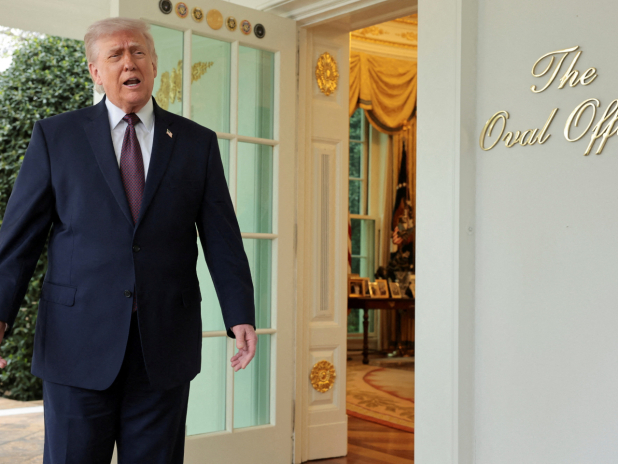
In a move that could signal a pivotal shift in Middle Eastern geopolitics, U.S. President Donald Trump has indicated that the ongoing conflict with Iran is “near end.” The statement, delivered during a high-profile media interview on April 14, comes as diplomats from both Washington and Tehran prepare for a potential return to the negotiating table in Pakistan, seeking a diplomatic resolution to a volatile confrontation.
The prospect of renewed U.S.-Iran negotiations arrives on the heels of a fraught first round of talks that failed to produce a formal agreement. However, the administration’s current optimism suggests that the machinery of diplomacy is moving faster than previously anticipated, with the White House eyeing a second round of face-to-face meetings as early as this week.
For a global community wary of further escalation in the region, the possibility of a ceasefire or a comprehensive peace deal is a welcome development. Yet, the road to a lasting settlement remains obstructed by deep-seated mistrust and significant disagreements over economic reparations and national security “red lines.”
Trump Signals Optimism Amid Diplomatic Push
During an interview with Fox News on April 14, President Trump addressed questions regarding his frequent assertions that the conflict was winding down. When asked why he continues to claim the war is over, Trump responded, “I think (the Iran conflict) is near end. Yes, I mean, I think it’s exceptionally close to ending,” according to reports from Xinhua News Agency.
This confidence is not merely rhetorical. Trump hinted that the U.S. And Iran could return to the negotiating table in Pakistan within the next two days. The President specifically praised the role of Pakistan’s Army Chief, General Munir, stating that Munir has “done a great job” in facilitating the process, which has increased the likelihood of the delegations returning to Islamabad via the Shanghai Observer.
The shift toward a diplomatic path to end the war reflects a strategy of high-level personal diplomacy. Trump has entrusted a small, tight-knit circle of advisors to navigate the complexities of the Iranian regime’s demands while maintaining U.S. Strategic interests. This approach aims to bypass traditional bureaucratic hurdles to achieve a rapid breakthrough.
The ‘Trio’ Leading the Diplomatic Charge
Should a second round of face-to-face negotiations materialize, the U.S. Delegation is expected to be led by Vice President JD Vance. This marks a significant role for Vance, who has been tasked with heading the American team in these high-stakes discussions per reports from Tencent News.

Joining Vance will be two other key figures in Trump’s inner circle: Special Envoy Witkoff and the President’s son-in-law, Jared Kushner. According to sources cited by CNN, Trump has specifically appointed these three individuals to identify an exit strategy through diplomatic channels, signaling his continued trust in their ability to finalize a deal. Since the conclusion of the first round of talks last weekend, Vance, Witkoff, and Kushner have remained in constant contact with Iranian representatives and various intermediaries.
The involvement of such high-ranking officials underscores the urgency of the current window of opportunity. The administration is attempting to leverage the current momentum to secure a deal before regional tensions can once again boil over. However, the composition of the team also highlights the “America First” approach to diplomacy, prioritizing personal trust and direct negotiation over broad institutional consensus.
Obstacles in Islamabad: Distrust and ‘Red Lines’
Despite the current optimism, the history of the recent encounters suggests a steep climb. The first round of negotiations, which began in Islamabad on April 11 and concluded on the morning of April 12, ended without any signed agreement according to the Shanghai Observer.
Iranian officials described the atmosphere of those talks as one characterized by “distrust and suspicion.” The two sides reportedly remained deadlocked on two or three critical issues. From the American perspective, the U.S. Government stated it had clearly defined its “red lines,” but noted that the Iranian delegation refused to accept these conditions.
The failure of the first round highlights the fundamental tension of the U.S.-Iran negotiations: the gap between the U.S. Requirement for verifiable security guarantees and Iran’s demand for the removal of economic pressures and recognition of its regional influence. The upcoming talks in Islamabad or potentially Geneva will need to address these core contradictions if they are to avoid the same fate as the April 11 meeting.
The $270 Billion Question: War Reparations
One of the most significant hurdles facing a diplomatic breakthrough is the issue of financial compensation. Iran has made it clear that war reparations are a non-negotiable component of any final settlement.
Iranian government spokesperson Mohajerani has stated that the scale of Iran’s losses is a primary topic of the consultations in Islamabad. Preliminary and rough estimates suggest that Iranian losses have reached approximately $270 billion as reported by the Shanghai Observer. Mohajerani noted that the Iranian government’s economic departments are currently implementing a multi-stage evaluation process to arrive at a more precise figure.
This evaluation is expected to follow a specific hierarchy of assessment:
- Infrastructure: Initial focus on the damage to physical buildings and facilities.
- Fiscal Impact: Analysis of lost government revenue and economic contraction.
- Industrial Stagnation: Assessing the cost of industrial shutdowns and production halts.
The demand for such a massive sum introduces a complex legal and political challenge for the Trump administration. While the U.S. May seek a rapid end to hostilities, agreeing to reparations could be seen domestically as a concession to an adversary, while refusing them may lead Tehran to walk away from the table entirely.
What Happens Next: The Road to a Deal
As of April 15, the world is watching Islamabad. Iranian media, including the Iran News Network, has reported that delegations from both countries may resume talks later this week in the Pakistani capital via Xinhua. Other possibilities, such as Geneva, remain on the table, though the current preference seems to lean toward Pakistan due to the facilitating role of the Pakistani military.

The success of these upcoming meetings depends on whether both parties are willing to move beyond their established “red lines.” For the U.S., the goal is a stable regional environment and the containment of Iranian influence. For Iran, the priority is economic relief and the compensation for war-time damages.
| Date | Event | Outcome/Status |
|---|---|---|
| April 11–12 | First round of face-to-face talks in Islamabad | Ended without agreement; high distrust reported. |
| April 13 | U.S. Government discusses details for second round | Continued contact between U.S. And Iran. |
| April 14 | President Trump Fox News interview | Claimed conflict is “near end”; hinted at talks within two days. |
| April 15 | Iranian media reports on potential resumption | Possibility of talks in Islamabad “later this week.” |
The next confirmed checkpoint will be the official announcement of the second round of negotiations, expected within the coming days. Whether these talks lead to a definitive ceasefire or further stalemate will depend on the willingness of JD Vance’s team and their Iranian counterparts to bridge the $270 billion gap and resolve the security dilemmas that have fueled the conflict.
World Today Journal will continue to monitor these developments. We invite our readers to share their perspectives on the potential for a diplomatic resolution in the comments below.