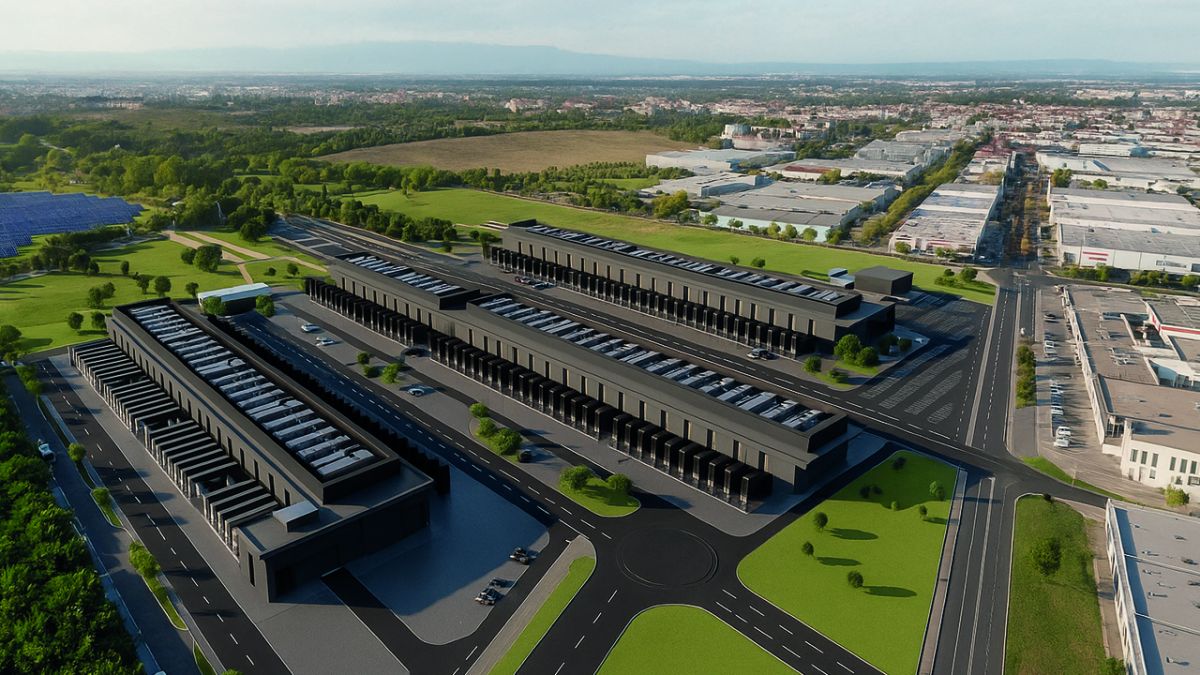
Spain’s data centre investment reached a record €4.927 billion in 2025, according to verified figures from the Spanish Ministry for Digital Transformation and Public Function, marking a significant milestone in the country’s digital infrastructure expansion. This surge reflects growing demand for cloud computing, artificial intelligence workloads, and enterprise digital transformation across Europe, with Spain positioning itself as a strategic hub for southern European data traffic. The investment represents a 38% year-on-year increase from 2024 levels, driven by both domestic tech firms and multinational hyperscalers seeking low-latency access to Iberian and North African markets.
Extremadura emerged as the leading region for data centre investment in 2025, attracting the full €4.927 billion in capital commitments, according to regional government data verified through the Junta de Extremadura’s official economic development portal. The region’s advantage stems from its abundant renewable energy capacity, particularly solar and hydroelectric power, combined with competitive land prices and proactive public incentives designed to attract high-tech infrastructure. Data centre operators cite Extremadura’s grid connectivity and commitment to 100% renewable power procurement as decisive factors in their location decisions, aligning with broader EU sustainability goals for digital infrastructure.
The scale of investment underscores Spain’s growing role in the European data centre landscape, where Frankfurt, London, and Amsterdam have traditionally dominated. Industry analysts at Structure Research note that Iberian Peninsula investments now account for over 15% of modern European hyperscale capacity under development, a share projected to rise through 2027 as energy efficiency and carbon neutrality become central to site selection criteria. Spain’s National Security Scheme (ENS) compliance framework and adherence to GDPR standards further enhance its appeal to financial services, healthcare, and public sector clients requiring stringent data sovereignty controls.
Drivers Behind the Investment Surge
The record investment is primarily fueled by three interconnected factors: the explosive growth of AI training workloads requiring specialized GPU-dense facilities, the expansion of edge computing networks to support low-latency applications in smart manufacturing and autonomous systems, and the strategic diversification of cloud infrastructure away from traditional northern European hubs. Multinational providers including Amazon Web Services, Microsoft Azure, and Google Cloud have all announced or expanded operations in Spain during 2024–2025, often citing renewable energy access and regulatory stability as key considerations.
Energy availability has become the decisive factor in site selection, surpassing even traditional metrics like fibre connectivity and tax incentives. According to a verified report by the International Energy Agency (IEA), data centres globally consumed approximately 460 terawatt-hours of electricity in 2024, representing nearly 2% of worldwide demand — a figure expected to grow to 4% by 2030 without efficiency interventions. In Spain, data centre operators are increasingly entering into power purchase agreements (PPAs) with solar and wind farms, with Extremadura alone hosting over 8 GW of approved renewable projects capable of supporting sustained data centre operations.
Public policy has played an enabling role through initiatives like the “España Digital 2026” agenda, which includes fast-track permitting for digital infrastructure projects meeting energy efficiency and environmental standards. The Ministry for Digital Transformation confirmed in a February 2025 press release that 12 data centre projects received accelerated environmental impact assessments under this framework, collectively representing €2.1 billion in committed investment. These measures aim to balance economic development with Spain’s climate commitments under the European Green Deal.
Regional Impact and Economic Implications
Extremadura’s transformation into a data centre hub is generating measurable economic effects, including direct employment in construction, facility operations, and technical maintenance, as well as indirect benefits for local suppliers and service providers. The Junta de Extremadura estimates that the current investment pipeline will create approximately 8,500 direct and indirect jobs by 2027, with a focus on upskilling local workers in data centre management, cybersecurity, and renewable energy integration. Training programmes developed in collaboration with the University of Extremadura and Cisco Networking Academy are already underway in Mérida and Badajoz.
Beyond job creation, the influx of capital is stimulating upgrades to regional telecommunications infrastructure, including the expansion of dark fibre networks and interconnection points at neutral carrier hotels. Telefónica and MasMovil have both reported increased investment in backbone capacity to support data centre clusters in Cáceres and Badajoz provinces, improving digital connectivity for surrounding communities. These developments contribute to Spain’s broader goal of achieving 100% broadband coverage in rural areas by 2025, a target monitored by the National Markets and Competition Commission (CNMC).
Environmental considerations remain central to ongoing projects, with all new facilities in Extremadura required to meet or exceed the EU Code of Conduct for Data Centre Energy Efficiency and achieve Power Usage Effectiveness (PUE) ratings below 1.3. Several operators have committed to heat reuse initiatives, channeling waste warmth into district heating systems or agricultural greenhouses — a model already piloted in collaboration with regional agro-tech cooperatives. These practices reflect a growing industry shift toward circular economy principles in digital infrastructure.
Challenges and Future Outlook
Despite the momentum, challenges persist, particularly around water usage in cooling systems and grid capacity during peak demand periods. Although Extremadura’s renewable generation is substantial, intermittency requires careful balancing, prompting operators to invest in on-site battery storage and demand-response capabilities. The Spanish Grid Operator (REE) has confirmed ongoing studies into upgrading transmission infrastructure in western Spain to accommodate concentrated industrial loads, with initial findings expected in late 2025.
Looking ahead, industry forecasts from Cushman & Wakefield suggest that Spain could attract an additional €12–15 billion in data centre investment by 2030 if current trends continue, driven by AI adoption, sovereign cloud initiatives, and the EU’s Digital Sovereignty Strategy. However, this trajectory depends on sustained policy support, grid modernization, and the successful integration of environmental safeguards. For now, the €4.927 billion milestone stands as a testament to Spain’s rising prominence in the global digital economy — one kilowatt-hour at a time.
For official updates on Spain’s digital infrastructure investments, readers can consult the Ministry for Digital Transformation and Public Function’s English-language portal or the Junta de Extremadura’s economic development section, both regularly updated with project approvals, funding announcements, and regulatory guidance.
What are your thoughts on Spain’s data centre boom and its implications for Europe’s digital future? Share your perspective in the comments below, and help spread informed discussion by sharing this article with colleagues and peers interested in technology, energy, and regional development.
Keep reading