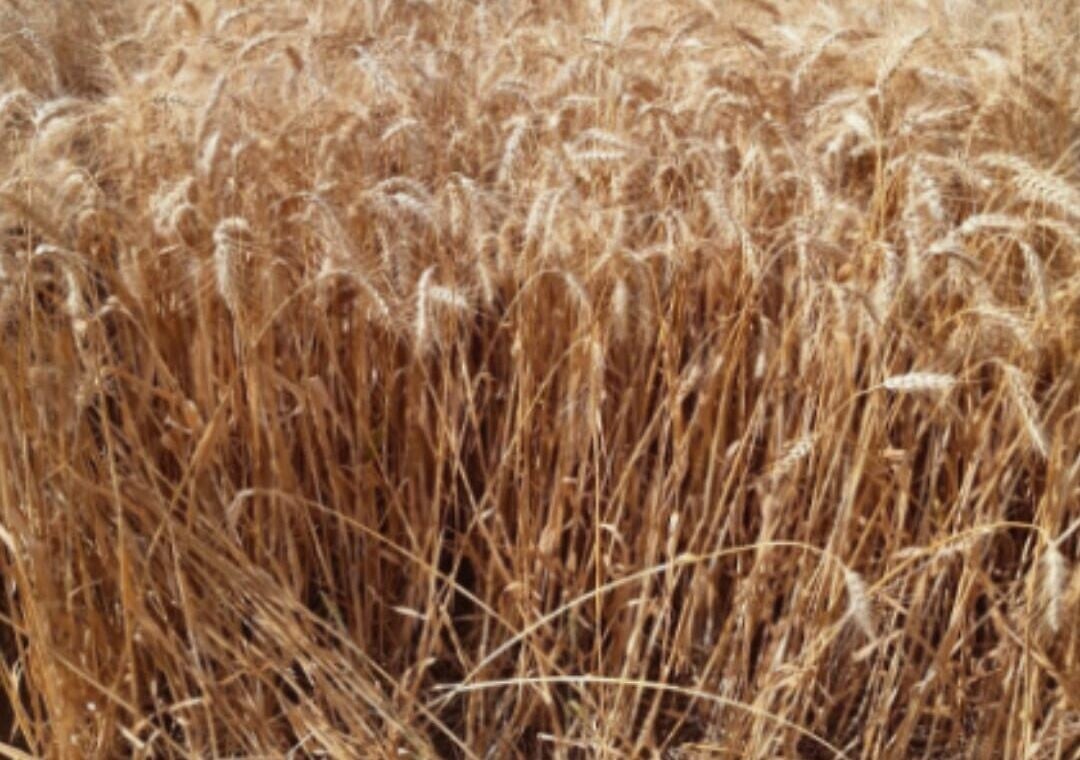
In the quiet fields of southern Israel, a new strain of wheat is taking root — one bred not only for resilience against drought but also as a quiet tribute to a life cut short. Scientists at Israel’s Agricultural Research Organization, commonly known as the Volcani Institute, have officially named a recently developed drought-resistant wheat variety after Yakov Inon, an agronomist who was killed alongside his wife Bilha during the October 7, 2023 attacks by Hamas militants.
The variety, designated as “Yakob 1,” represents more than agricultural innovation. It stands as a symbol of continuity — of knowledge preserved, of livelihoods honored, and of scientific function persisting in the face of tragedy. Inon had served as a consultant to the Volcani Institute for years, contributing his expertise in field crops and sustainable farming practices to projects aimed at strengthening Israel’s agricultural resilience under changing climate conditions.
His work focused particularly on adapting crops to arid environments, a critical concern in a region where water scarcity and rising temperatures threaten food security. The development of Yakob 1 builds directly on that legacy, incorporating traits that allow the wheat to maintain yield under limited irrigation — a trait increasingly vital as Mediterranean climates grow hotter and drier.
According to the Volcani Institute’s official announcement released in early 2024, Yakob 1 underwent multi-year testing across various soil types and climate zones in Israel, including the northern Negev and the Judean foothills. Field trials showed the variety maintained stable grain production even under 30% less water than conventional strains, without significant loss in protein content or baking quality.
Dr. Avital Levi, a lead researcher in the institute’s Field Crops Department, explained in a press briefing that the naming was both a scientific and personal decision. “Yakov’s deep understanding of wheat physiology and his passion for helping farmers adapt to environmental stress made him an ideal namesake for this variety,” she said. “His contributions were not just technical — they were rooted in a commitment to the land and the people who work it.”
The naming ceremony took place at the Volcani Institute’s headquarters in Beit Dagan, attended by colleagues, agricultural officials, and members of the Inon family. While not a public event, the institute shared a statement expressing that the tribute was meant to honor Inon’s dual legacy: as a scientist and as a member of the farming community he sought to serve.
Yakov Inon, 62, and his wife Bilha, 60, were among the civilians killed when Hamas militants infiltrated the kibbutz-adjacent community of Moshav Netiv Ha’asara on October 7, 2023. The moshav, located just kilometers from the Gaza Strip, has long been known for its agricultural cooperatives and close ties to rural livelihoods. Inon had lived and worked there for decades, advising local growers on crop rotation, soil health, and water-efficient practices.
His expertise was frequently sought by extension services and regional agricultural councils. Colleagues described him as a bridge between research and practice — someone who could translate complex agronomic data into actionable advice for farmers facing unpredictable weather and resource constraints.
The development of Yakob 1 aligns with broader national efforts to bolster food security through climate-smart agriculture. Israel’s Ministry of Agriculture and Rural Development has prioritized drought tolerance in its recent crop improvement programs, particularly for staple grains like wheat and barley. Officials note that domestic wheat production currently meets only about 20% of national consumption, making advances in yield stability under stress conditions a matter of both economic and strategic importance.
Independent agricultural experts have noted that while Yakob 1 shows promise, widespread adoption will depend on seed availability, farmer training, and integration into existing supply chains. The Volcani Institute plans to begin limited distribution of certified seeds to cooperatives and research farms later in 2024, with broader availability contingent on regulatory approval and multiplication efforts.
Beyond its technical merits, the variety has become a quiet point of reflection in Israel’s agricultural communities. In kibbutzim and moshavim near the Gaza perimeter, where farming continues despite ongoing security challenges, the story of Yakob 1 is shared as an example of how science and memory can intertwine — how a life devoted to the land can, in its absence, still help nourish it.
As of mid-2024, the Volcani Institute has not announced plans to name additional varieties after other victims of the October 7 attacks, though internal discussions about honoring colleagues lost in the tragedy are reportedly underway. For now, Yakob 1 grows in test plots and seed banks — a living reminder that even in the face of loss, the pursuit of resilience endures.
The next step in the variety’s rollout involves submission for official registration with Israel’s Plant Protection and Inspection Services (PPIS), a process expected to conclude by late 2024. Once registered, Yakob 1 will be eligible for inclusion in national seed certification programs and potential inclusion in future agricultural extension demonstrations.
For updates on the development and release of Yakob 1, readers can follow the Volcani Institute’s official publications and field trial reports, which are periodically updated on its website.
We invite our readers to reflect on the intersection of science, memory, and resilience in agriculture. Share your thoughts in the comments below, and consider sharing this story to highlight how innovation can carry forward the legacy of those who came before.
Worth a look