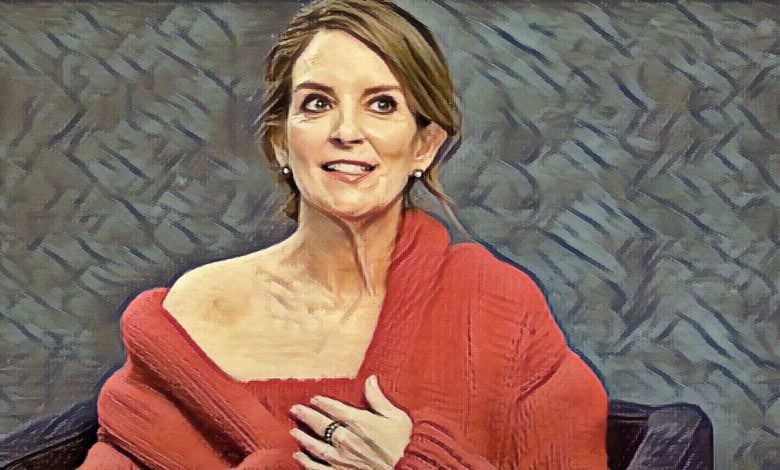
Tina Fey’s recent comments about “Saturday Night Live” and its approach to political satire have reignited a long-standing debate about the show’s perceived ideological leanings. Speaking at the History Talks speaker series in April 2026, Fey defended SNL’s portrayals of public figures, asserting that the writers “always worked really hard” to ensure their political jokes were “fair hits” rooted in truth. She added that SNL does not attempt to control political narratives, arguing that satire only works when it’s based in reality. These remarks, widely shared across social media, drew both support and sharp criticism, with critics pointing to perceived inconsistencies in how the show has handled Democratic and Republican figures in recent years.
The discussion comes amid ongoing scrutiny of SNL’s political comedy, particularly regarding its treatment of President Joe Biden, former President Donald Trump, and other prominent political figures. While Fey highlighted her own acclaimed impression of Sarah Palin during the 2008 presidential campaign as an example of truth-based satire, critics argue that the show’s balance has shifted over time. The conversation reflects broader questions about the role of satire in a polarized media landscape and whether comedy shows can maintain perceived neutrality while commenting on highly charged political events.
To understand the context of Fey’s remarks, it’s important to revisit her history with SNL. Fey joined the show in 1997 as a writer and became its first female head writer in 1999. She gained widespread recognition for her portrayal of Sarah Palin during the 2008 election season, a performance praised for its accuracy and comedic timing. Her impersonation, which famously included the line “I can see Russia from my house,” became a cultural touchstone and was widely interpreted as a satirical take on Palin’s actual foreign policy remarks. Fey left SNL in 2006 but returned periodically to host and contribute sketches, maintaining a visible connection to the show’s legacy.
Her recent defense of SNL’s editorial approach was delivered during a public talk focused on media, politics, and comedy. According to verified reports from the event, Fey emphasized that the show’s writers prioritize factual grounding when crafting political sketches. “It only felt like it would work if it was based in something that was true,” she stated, adding that “if it’s not true, it will not be funny.” She explicitly rejected the idea that SNL seeks to control political narratives, saying, “Sometimes people will ask me, ‘Does SNL attempt to control the narrative of politics?’ And they really do not.” These comments were captured in video clips shared by Variety and widely circulated on platforms like X (formerly Twitter).
However, the assertion that SNL avoids narrative control has been challenged by media analysts and viewers who point to patterns in the show’s recent political coverage. Critics argue that while SNL has historically mocked figures across the ideological spectrum, its treatment of Democratic presidents Barack Obama and Joe Biden has been notably more restrained compared to its coverage of Republican figures like George W. Bush, Sarah Palin, and Donald Trump. For example, during Obama’s presidency, SNL produced relatively few recurring sketches satirizing the president, with Jay Pharoah — who portrayed Obama from 2010 to 2016 — later commenting in interviews that the show “gave up on the Obama thing” due to a lack of broadly recognizable comedic traits to exaggerate.
Similarly, during Biden’s presidency, SNL has featured limited portrayals of the president, with cast member James Austin Johnson taking on the role intermittently. Johnson’s impressions have focused on Biden’s verbal stumbles and age-related mannerisms, but the frequency and intensity of these sketches have been notably lower than the sustained satirical campaigns against Trump during his presidency. In contrast, SNL’s Trump portrayals — performed by Alec Baldwin from 2016 to 2022 and later by James Austin Johnson — were frequent, widely promoted, and often dominated cold opens and weekend update segments throughout the 2016–2020 election cycle, and beyond.
This disparity has fueled accusations of liberal bias, a claim SNL and its longtime producer Lorne Michaels have consistently denied. Michaels has stated in multiple interviews that the show’s target is not political affiliation but rather “behavior, hypocrisy, and absurdity,” arguing that any perceived imbalance reflects what material is available rather than editorial intent. In a 2021 interview with The Hollywood Reporter, Michaels said, “We don’t have an agenda. We go after what’s funny. If one side is giving us more to work with, that’s not bias — that’s just what’s happening.”
Fact-checking these perceptions requires examining actual broadcast content. According to the SNL Archives and episode databases maintained by NBC and third-party tracking sites, the number of sketches featuring Trump as a central figure significantly outpaced those centered on Obama or Biden during their respective presidencies. For instance, during the 2015–2016 election season alone, Trump appeared in over 20 SNL sketches, including multiple cold opens and parody commercials. By comparison, Obama appeared in fewer than 10 major sketches during his two terms, with many of those occurring early in his presidency. Biden’s appearances have been similarly infrequent, with notable sketches emerging primarily around debate performances or viral moments.
Supporters of SNL counter that the difference in satirical frequency reflects real-world events and public perception, not ideological preference. They point to the unprecedented volume of news-generating behavior during Trump’s presidency — including frequent Twitter activity, controversial rallies, and norm-challenging actions — as providing more fertile ground for comedy. In contrast, they argue, Obama and Biden’s presidencies featured fewer widely recognized, exaggeratable moments that lent themselves to recurring sketch formats. This perspective aligns with Fey’s emphasis on truth as the foundation of comedy: if there’s less broadly perceived absurdity or contradiction in a figure’s public persona, there may be less material to work with.
The debate also touches on evolving standards in comedy and representation. Fey herself has acknowledged shifts in what is considered acceptable satire, particularly regarding race and identity. In recent years, she has expressed regret over certain sketches from her 30 Rock era that included blackface or racially insensitive elements, stating that she and the show’s team have since worked to remove such content from circulation and avoid similar missteps. This reflection underscores a broader industry reckoning with the impact of comedy on marginalized communities and the responsibility of performers to reassess past work in light of new understanding.
Meanwhile, SNL continues to navigate its role as a cultural barometer. The show has addressed political polarization directly in sketches, such as a 2021 weekend update segment that mocked both parties’ inability to communicate across divides, and a 2022 parody of cable news that depicted hosts shouting past each other regardless of factual accuracy. These pieces suggest an awareness of the show’s own position within the media ecosystem and an attempt to critique systemic dysfunction rather than partisan allegiance.
As of April 2026, SNL remains in its 51st season, airing live from NBC’s Studio 8H in Rockefeller Center. The show continues to be produced under the guidance of Lorne Michaels, who has been with the program since its 1975 debut. While no official changes to the show’s political approach have been announced, ongoing audience feedback and media criticism suggest that the question of balance will remain a topic of discussion among viewers, critics, and former cast members alike.
For those interested in examining the show’s content directly, NBC makes recent episodes available via its Peacock streaming service, with full seasons accessible to subscribers. Clips and transcripts are also frequently shared through NBC’s official YouTube channel and social media accounts. Academic researchers and media analysts often rely on the Vanderbilt Television News Archive and the Internet Archive’s TV News collection for longitudinal studies of broadcast content, including political satire.
The conversation sparked by Fey’s remarks highlights the enduring tension between comedy’s role as a mirror of society and its potential to influence perception. While satire can expose hypocrisy and challenge power, its effectiveness depends on shared understanding of what is being mocked and why. As audiences become more fragmented and media landscapes more ideologically sorted, maintaining perceived fairness in political comedy presents an ongoing challenge — one that SNL, like many satirical institutions, continues to grapple with in real time.
Moving forward, viewers seeking to assess SNL’s political coverage may find it useful to compare sketch frequency, tone, and public reception across administrations, using verified episode guides and reputable media analyses as reference points. Rather than relying on isolated impressions or viral clips, a broader examination of longitudinal patterns offers a more nuanced understanding of how the show engages with political figures and events.
What do you think is the most significant example of perceived bias in SNL’s recent political satire? Share your thoughts in the comments below, and consider passing this article along to others interested in the intersection of comedy, politics, and media culture.