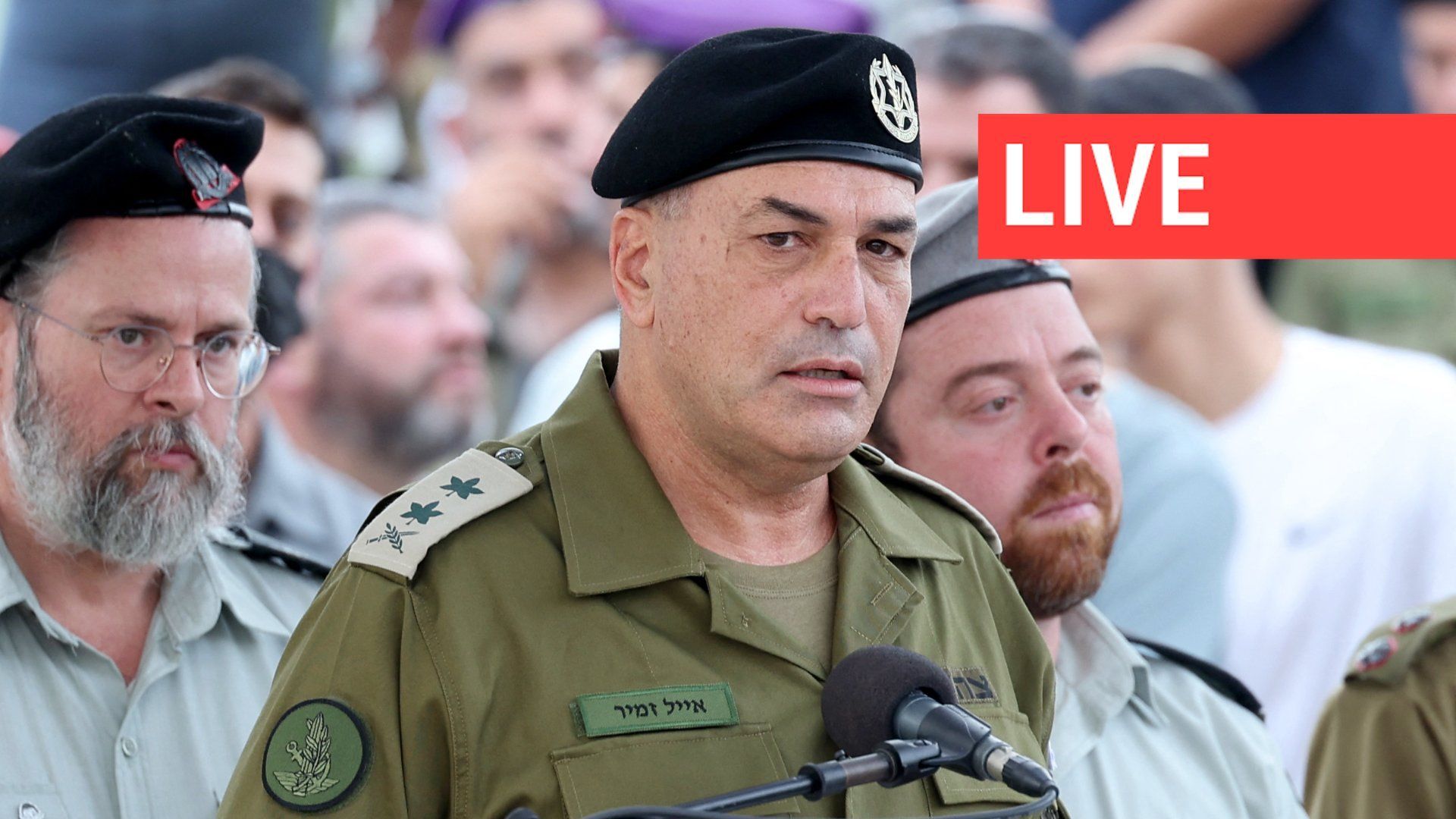
Middle East Conflict: Israel Warns 2026 Could Remain a Year of Fighting on All Fronts
As the Middle East enters its third month of escalated conflict, Israeli officials have signaled that 2026 may not bring an end to hostilities, despite diplomatic efforts to de-escalate tensions. The warning comes amid a complex geopolitical landscape, where military engagements, economic blockades, and international negotiations intersect, leaving millions in the region facing an uncertain future. The Strait of Hormuz, a critical chokepoint for global oil supplies, remains a flashpoint, with its near-total closure exacerbating economic instability worldwide.

The conflict, which erupted on February 28, 2026, following joint U.S.-Israeli airstrikes against Iranian targets—including the reported killing of Iran’s Supreme Leader Ali Khamenei—has since spiraled into a multi-front war. Iran’s retaliatory strikes against U.S. Military bases, Israeli territory, and Gulf states have drawn in regional and global powers, while maritime traffic in the Strait of Hormuz has ground to a halt. According to data from the maritime analytics firm Kpler, only 30 vessels traversed the strait between April 20 and April 24, 2026, compared to over 7,100 during the same period in 2025.
Israeli Prime Minister Benjamin Netanyahu, in a statement verified by The Times of Israel, emphasized that Israel remains prepared for prolonged conflict. “We are facing a determined adversary, and while we seek peace, we must be realistic about the challenges ahead,” Netanyahu said. “2026 could still be a year of fighting on all fronts—military, economic, and diplomatic.” His remarks underscore the difficulty of achieving a ceasefire in a war that has already claimed thousands of lives and disrupted global energy markets.
The Strait of Hormuz: A Global Economic Chokepoint
The Strait of Hormuz, a narrow waterway connecting the Persian Gulf to the Arabian Sea, has long been a strategic focal point in Middle Eastern geopolitics. Typically, the strait facilitates the transit of approximately 21 million barrels of oil per day, accounting for roughly one-quarter of global oil supplies. Since the onset of the current conflict, however, maritime traffic has collapsed. Radio-Canada reports that over 860 vessels remain stranded in the Persian Gulf, with both Iran and the U.S. Enforcing competing blockades that have effectively shut down commercial shipping.
Iran’s Islamic Revolutionary Guard Corps (IRGC) initially imposed restrictions on vessels attempting to pass through the strait, targeting those it accused of supporting U.S. Or Israeli interests. The U.S., in turn, established a naval blockade on April 13, 2026, to prevent Iranian oil exports, further tightening the noose on global energy supplies. The economic repercussions have been swift: oil prices have surged by over 30% since late February, and countries heavily reliant on Gulf oil, such as India and China, have scrambled to secure alternative supply routes.
The United Nations has condemned the blockades, passing Resolution 2817 on April 10, 2026, demanding the immediate reopening of the strait. However, enforcement remains elusive, with neither Iran nor the U.S. Indicating a willingness to back down. “The strait is a lifeline for the global economy,” said UN Secretary-General António Guterres. “Its closure is not just a regional issue—This proves a threat to international stability.”
Diplomatic Efforts: A Fragile Hope for De-escalation
Amid the military stalemate, diplomatic channels have shown tentative signs of life. On April 25, 2026, the White House confirmed that it was reviewing a new proposal from Iran aimed at reopening the Strait of Hormuz in exchange for negotiations on its nuclear program. According to Reuters, the proposal, delivered through Swiss intermediaries, outlines a phased approach: Iran would first lift restrictions on maritime traffic, followed by discussions on lifting U.S. Sanctions and addressing Iran’s nuclear ambitions.
French diplomats, however, have urged caution. A spokesperson for the French Foreign Ministry, known as the Quai d’Orsay, stated that Iran must make “major concessions” for any negotiations to proceed. “The reopening of the strait is a necessary but not sufficient condition,” the spokesperson said. “Iran must demonstrate a genuine commitment to de-escalation, including halting its support for proxy groups across the region.”
The proposal has also drawn the attention of Russia, which has positioned itself as a potential mediator. Russian President Vladimir Putin met with Iranian Foreign Minister Hossein Amir-Abdollahian in Moscow on April 26, 2026, to discuss the conflict. While details of the meeting remain scarce, Kremlin spokesperson Dmitry Peskov described the talks as “constructive” and emphasized Russia’s role in facilitating dialogue. However, analysts caution that Russia’s involvement may be driven as much by its own strategic interests as by a desire for peace, particularly given its reliance on Iranian drones in its war in Ukraine.
Humanitarian and Economic Toll
The conflict has exacted a devastating humanitarian toll. According to the United Nations Office for the Coordination of Humanitarian Affairs (OCHA), at least 10,000 civilians have been killed in Gaza, the West Bank, and southern Lebanon since February 2026. In Yemen, where Iranian-backed Houthi rebels have intensified attacks on Saudi Arabia and shipping routes in the Red Sea, the death toll has surpassed 2,000, with millions facing acute food shortages.
Economically, the war has disrupted supply chains far beyond the Middle East. The closure of the Strait of Hormuz has led to fuel shortages in Europe, where countries are already grappling with the fallout from the ongoing war in Ukraine. In Asia, manufacturers have reported delays in receiving critical components, particularly semiconductors and automotive parts, due to rerouted shipping lanes. The International Monetary Fund (IMF) has revised its 2026 global growth forecast downward by 0.7 percentage points, citing the conflict as a primary driver of economic uncertainty.
For civilians in the region, the war has brought daily hardships. In Israel, rocket attacks from Lebanon and Gaza have forced thousands into bomb shelters, while in Iran, U.S. Sanctions have led to shortages of medicine and basic goods. The Iranian rial has lost nearly 40% of its value since the start of the conflict, exacerbating inflation and unemployment.
What Happens Next?
The path to peace remains fraught with obstacles. While Iran’s proposal to reopen the Strait of Hormuz has injected a glimmer of hope into diplomatic efforts, significant hurdles remain. The U.S. And Israel have both insisted that any negotiations must address Iran’s nuclear program and its support for militant groups such as Hezbollah and Hamas. Iran, meanwhile, has demanded the lifting of U.S. Sanctions and an end to what it describes as “foreign interference” in the region.
Militarily, the conflict shows no signs of abating. Israel has continued its airstrikes against Hezbollah positions in southern Lebanon, while Iran has launched missile attacks on U.S. Bases in Iraq and Syria. The risk of further escalation remains high, particularly if either side miscalculates or if a third party, such as Russia or China, becomes more directly involved.
For now, the international community is closely watching the White House’s response to Iran’s proposal. U.S. Officials have indicated that they will consult with allies, including Israel and European partners, before formulating a response. The next round of talks, if they materialize, could take place in Geneva or Oman, both of which have served as neutral venues for previous negotiations.
Key Stakeholders and Their Interests
- Israel: Seeks to dismantle Iran’s nuclear capabilities and weaken its proxy groups, particularly Hezbollah and Hamas. Israel’s government has also emphasized the require to secure its northern border with Lebanon, where Hezbollah has launched thousands of rockets since February 2026.
- Iran: Aims to lift U.S. Sanctions, secure its nuclear program, and maintain its influence in the region through proxy groups. The death of Supreme Leader Ali Khamenei has left a power vacuum, with hardliners in the IRGC pushing for a more aggressive stance.
- United States: Focused on containing Iran’s nuclear ambitions, reopening the Strait of Hormuz, and preventing the conflict from spreading. The Biden administration has faced domestic pressure to avoid a prolonged military engagement in the Middle East.
- Russia: Seeks to expand its influence in the region, particularly through its relationship with Iran. Russia has also used the conflict as an opportunity to strengthen its ties with Gulf states, offering itself as an alternative to U.S. Leadership.
- Gulf States (Saudi Arabia, UAE, Qatar): Caught between their security alliances with the U.S. And their economic ties with Iran. Saudi Arabia has called for a ceasefire but has also increased its military presence along its border with Yemen.
- European Union: Focused on mitigating the economic fallout from the conflict, particularly the disruption to oil supplies. The EU has also called for a ceasefire and the reopening of the Strait of Hormuz.
What This Means for the Global Economy
The closure of the Strait of Hormuz has sent shockwaves through global energy markets. With nearly 30% of the world’s seaborne oil unable to reach international markets, prices have surged, and countries are scrambling to find alternative supply routes. The U.S. Has released oil from its Strategic Petroleum Reserve, while China has increased its imports from Russia and Venezuela. However, these measures are seen as temporary fixes, and analysts warn that a prolonged closure of the strait could lead to a full-blown energy crisis.
The conflict has also disrupted global trade. Shipping companies have rerouted vessels around the Cape of Good Hope, adding weeks to transit times and increasing costs. The World Bank estimates that the conflict has already added $120 billion in additional shipping costs in 2026 alone, with the burden falling disproportionately on developing countries.
Looking Ahead
The next few weeks will be critical in determining whether the conflict can be brought under control. The White House is expected to respond to Iran’s proposal by early May 2026, and any progress will likely hinge on the willingness of both sides to make concessions. In the meantime, the humanitarian crisis continues to worsen, and the economic fallout from the conflict shows no signs of abating.
For now, the world watches and waits, hoping for a breakthrough that could bring an end to the fighting and reopen one of the most vital waterways on the planet. As Israeli officials have made clear, however, the road to peace remains long and uncertain.
What do you think about the prospects for peace in the Middle East? Share your thoughts in the comments below, and don’t forget to share this article to keep the conversation going.
Keep reading